dailynewsnblog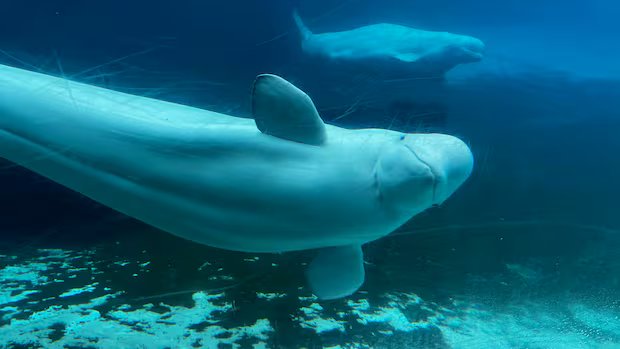

Listen to this article
Estimated 5 minutes
The audio version of this article is generated by AI-based technology. Mispronunciations can occur. We are working with our partners to continually review and improve the results.
Canadian government permits allowing most of the 30 Marineland beluga whales in Niagara Falls, Ont., to be shipped to U.S. aquariums should come with the condition that the whales aren’t to be bred, a national animal law advocacy organization is urging.
Animal Justice issued that challenge to Ottawa on Wednesday, the same day the U.S. National Oceanic and Atmospheric Administration (NOAA) approved an emergency rescue of what’s expected to be 28 of the whales split up between U.S. four aquariums.
Two other whales are supposed to be shipped to an aquarium in Spain, but that facility is still awaiting the necessary permits from the Spanish government, the collective of four American aquariums said.
Animal Justice also said it’s critical that the whales being transported not be forced to entertain at shows similar to ones that were staged at Marineland. For decades, orcas, belugas and dolphins performed tricks for massive crowds before entertainment featuring captive marine mammals fell out of public favour. Marineland closed to the public in 2024.
The office of Canadian Fisheries Minister Joanne Thompson stopped short on Thursday of saying it would ensure none of the Marineland whales become pregnant or be used for entertainment at their new homes.

Thompson’s office previously issued a statement saying that as a condition of export permits for the whales, each cetacean must have a health check completed by a Canadian veterinarian.
CBC News asked Thompson’s office for comment on Animal Justice’s call for the federal government to clarify whether it will include transport permit conditions to prevent the whales from being bred or forced to entertain at the U.S. aquariums. Erik Nosaluk, deputy director of communications with the minister’s office, said Thompson will provide final Fisheries Act authorizations to enable their transfer once the health assessments of the whales by an accredited Canadian veterinarian are completed.
“The minister has determined that the proposed plan is in the best interest of the animals, as required by Canadian law,” Nosaluk said in a statement Thursday.
The federal government’s policy for obtaining a ministerial permit to export a living cetacean says “the destination facility will not breed or impregnate the cetacean being exported from Canada.”
Focus is on safe rescue of whales, U.S. aquarium official says
The four U.S. aquariums are all accredited by the Association of Zoos and Aquariums. That accreditation includes a detailed application and a multiple-day, on-site inspection by an independent team of zoological professionals to examine all aspects of the facilities’ operations — from animal care and well-being to veterinary care and staff training, the association said.
CBC Niagara reached out to Johnny Ford, vice-president of communications for Shedd Aquarium in Chicago, one of the U.S. aquariums receiving the whales.
While he didn’t directly tackle the issue of breeding, Ford said Thursday that the aquarium experts are “laser focused” on safely and securely completing the rescue of the whales, the scale of which he said has never been done before.
With knowledge of the whales’ health being scant, Ford said, the experts are preparing for the possibility that some of them may require specialized or even critical care upon arrival.
“Ultimately, we expect to learn a lot more about the animals as they enter our care, at which time we will be able to create care and management plans that meet their individual needs.”
Hopes for ‘last generation to suffer in tanks’
Camille Labchuk, a lawyer and executive director at Animal Justice, said federal approval of the whales’ transport must include them being protected from breeding or forced performing, a requirement under Canadian law.
“This generation of whales must be the last generation to suffer in tanks,” she said. “If the whales are bred by U.S. aquariums, Canada’s goal of ending whale captivity will be severely undermined as the offspring of the Marineland whales will be made to suffer the same miserable fate of their parents.”
The four U.S. aquariums said this week that dedicated care staff from those facilities will soon arrive in Niagara Falls to assess the whales’ well-being and make preparations for transportation. Once the belugas are cleared for shipping, aquarium experts will accompany them to their new homes, where they’ll be met with “diverse seafood to meet their nutritional needs, high-quality environments with guaranteed water quality and onsite medical care should they require it at any time,” the partnership said.

Marineland said Wednesday “we recognize we can no longer provide the long-term care these animals require, and we believe this rescue. . .is in the whales’ best interest.”
CBC News also reached out to Marineland on Thursday for comment on the Animal Justice statement but didn’t receive a reply before publication.
CBC News reported in January that Marineland felt it may have no choice but to euthanize the 30 belugas and four dolphins unless Canada granted permission to ship them to the U.S. Weeks earlier, Ottawa denied Marineland’s request to export the belugas to a theme park in China.
The U.S. aquariums said completing shipment of the whales, once all the approvals are in place, may take several weeks.