dailynewsnblog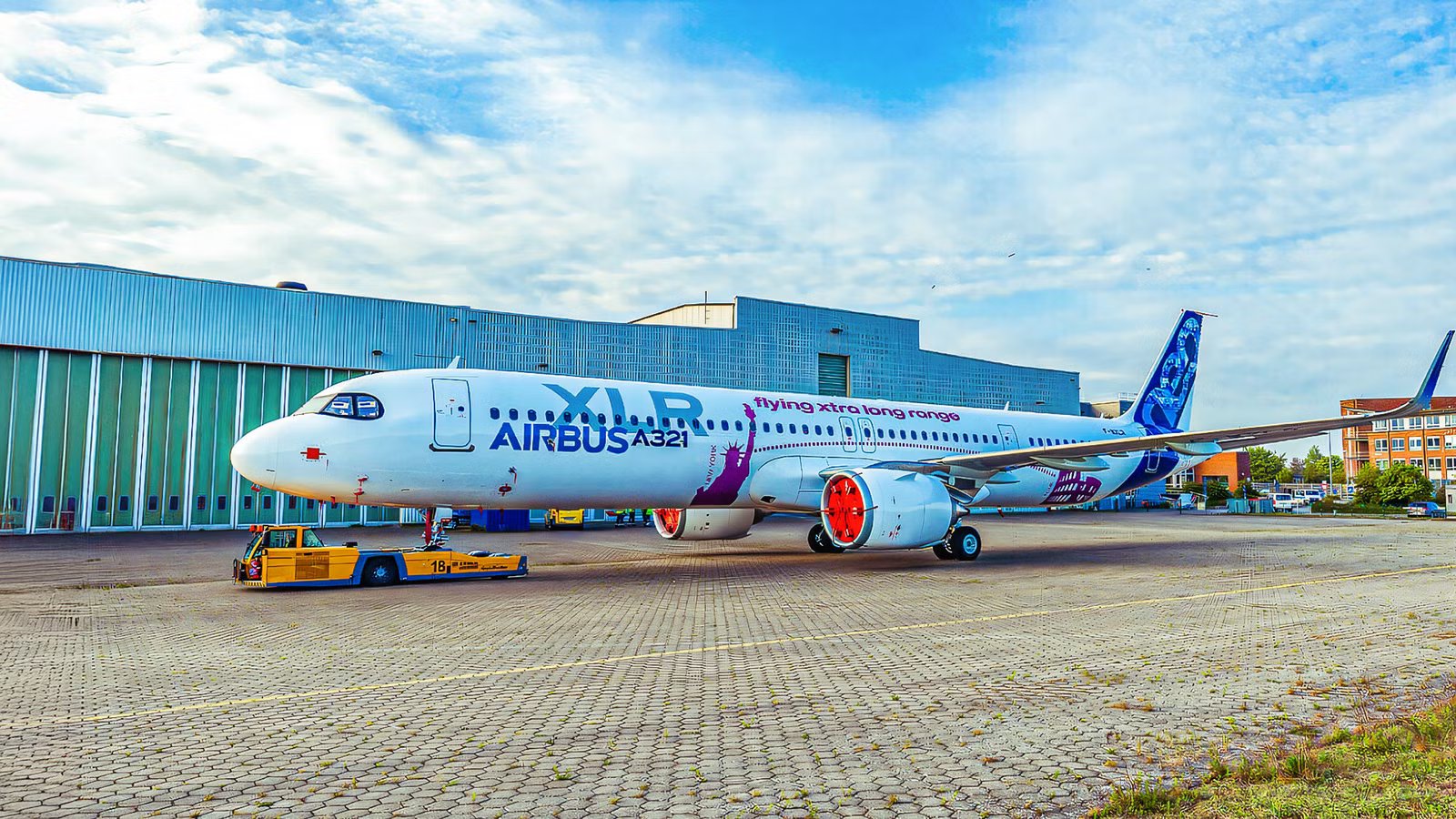
Looking at the number of new aircraft orders versus deliveries tells two different stories in the airline industry. In the first quarter of 2026, commercial aircraft manufacturers collectively received 569 orders for new planes, including 461 single-aisle aircraft. This is the highest first-quarter total since 2013, and it signals strong demand for more aircraft. Deliveries during this same time period, however, were logged at 261 aircraft, roughly 4% lower than the first quarter of 2025.
While airlines are facing financial challenges due to rising fuel prices, this isn’t the result of aircraft deferments. Instead, it’s because manufacturers are having difficulty delivering their aircraft. While Embraer is largely outperforming its competitors in terms of delivery timeliness, Airbus and  Boeing are continuing to struggle with maintaining production timelines, a result of supply chain constraints, quality control issues, engine issues, and more. There are multiple factors behind these delays, and there are few signs of improvement on the horizon.
Issues With Seats And Interiors

This first challenge doesn’t have anything to do with Airbus or Boeing, but rather, with seat manufacturers such as Safran and Collins Aerospace. These manufacturers are experiencing delays in building their seats, primarily due to supply chain delays. As they’re unable to construct the seats on time, some aircraft are leaving the assembly line with partially empty interiors. What’s more, some new seat models are experiencing certification delays due to heightened regulatory scrutiny of more innovative designs.
Lufthansa’s Allegris business class (which largely resolved its seat challenges in 2024 and 2025) is likely the best example of these delays. After years of delays due to issues with the Boeing 777-9 (on which the seats were supposed to debut), the Stelia-supplied business class seats were introduced on the Airbus A350 in 2024, but the Collins-supplied first class seats debuted months later because of supply-chain challenges. Later, Collins-supplied business class seats for the carrier’s Boeing 787 fleet were delivered, but the planes were delayed for months because of certification delays.
Another ongoing example is Delta Air Lines’ transcontinental Airbus A321neo subfleet. These aircraft were intended to be delivered in late 2024 with a new DeltaOne seat based on the Safran VUE, but the seats have not yet received FAA certification. Five half-empty aircraft have been constructed and placed in storage, with another two having recently been completed. The delays have led Delta to instead install 44 Delta First seats in place of the DeltaOne and PremiumSelect cabins, to be temporarily used as a premium-heavy domestic subfleet until the VUE is certified.
Issues With The Pratt & Whitney PW1000G

The Pratt& Whitney PW1000G is an innovative geared-turbofan engine, with its variants powering the Airbus A320neo family, the A220, and the Embraer E2. This engine family has experienced multiple quality issues that have resulted in high wear and tear. This has led to premature engine replacements, with aircraft needing to be grounded until new engines arrive, but the company has been unable to meet the demand. Considering that it also needs to deliver engines for new aircraft, this has resulted in many PW1000G-powered aircraft being grounded, while new planes are being assembled without engines.
The A320neo family (which can also be equipped with the competing CFM LEAP) has been significantly affected, as airlines are grounding affected planes while Airbus also awaits engines for new planes. But it’s the A220 that has been the most severely impacted. Unlike the A320neo, the A220 is solely powered by the PW1000G, meaning issues with this powerplant directly impact the program. Currently, nearly one-fifth of the worldwide A220 fleet is grounded, while Airbus continues to build A220 ‘gliders’ and place them into storage without their engines.
PW1000G Variant | Aircraft |
|---|---|
PW1100G | Airbus A319neo/A320neo/A321neo |
PW1500G | Airbus A220-100/300 |
PW1900G | Embraer E190-E2/E195-E2 |
CFM has also been suffering from supply chain bottlenecks, but CFM’s situation has improved, and production of the LEAP (powering the A320neo and Boeing 737 MAX) has ramped up. Furthermore, while the LEAP does have its own durability concerns, they’re not nearly as severe as those of the PW1000G, and CFM doesn’t have to produce engines for large numbers of grounded aircraft like Pratt & Whitney. However, concerns remain about CFM’s ability to meet future demand, given that the PW1000G issues have led to increased orders for the LEAP.
Why Boeing Has Seen Such A Rebound In 787 Dreamliner Production
The manufacturer has seen its production numbers increase notably.
Boeing 737 MAX Production Ramp Ups

The biggest issues coming from Boeing are that its 737 MAX 7, 737 MAX 10, and 777-9 are not yet certified. As the 737 MAX 10 and 777-9 in particular are in high demand, this has generally led to fewer deliveries than originally promised to airlines, with Emirates president Sir Tim Clark remarking that his company should have already received over 100 777-9s under the original contract with Boeing. But with the 737 MAX 8 and MAX 9 variants currently in production, Boeing is still working through issues.
The 737 MAX has been plagued by quality control issues since the COVID-19 pandemic, and the FAA imposed a production cap of 38 aircraft per month in 2024. This was later raised to the type’s current rate of 42 aircraft per month, with Boeing now aiming to raise production to 47 aircraft per month by summer 2026, and to 53 per month by year’s end. This requires Boeing to stabilize its production supply chain and ensure quality, but there is progress on this front.
Boeing Commercial Aircraft | Manufacturing Sites |
|---|---|
Boeing 737 MAX | Renton (three FALs), Everett (fourth FAL opening) |
Boeing 767-300F/KC-46 | Everett |
Boeing 777X | Everett |
Boeing 787 Dreamliner | Charleston (two FALs) |
Boeing has completed its acquisition of key Spirit Aerosystems manufacturing sites and plans to open a fourth 737 final assembly line in Everett, Washington, which will be the site’s first commercial narrowbody FAL. Currently, the 737 MAX is experiencing short-term delivery delays due to wiring issues that require rework, but the company has yet to alter its 2026 outlook for 737 deliveries, and production is continuing at 42 per month. In addition, Boeing has made significant improvements in its supply chain, with Reuters reporting that the company now spends 40% fewer hours resolving issues compared to 2024.
Challenges With Widebody Airliners

The Boeing 787 has suffered from severe quality control issues, which resulted in production halts, while delivery rates are far lower than in the pre-pandemic. With the 787, however, Boeing is stating that it has made significant improvements in production line issues and that delays are now primarily supply-chain related. This includes components such as seats, as well as engine issues. Both General Electric and Rolls-Royce are experiencing issues sourcing components for their engines, which has delayed engine delivery.
Airbus, too, is experiencing the same problems as Boeing with its A330neo and A350 programs. New seats are being delayed by their manufacturers, while Rolls-Royce is experiencing supply-chain constraints affecting the A330neo’s Trent 7000 engines and the A350’s Trent XWB motors. The seat issues have been particularly difficult for airlines to manage, especially since they delay new aircraft and also affect aircraft retrofits. Singapore Airlines, which originally planned to refurbish its A350 fleet in late 2026, has now pushed back the project start date to early 2027.
While supply chain issues are a challenge, they are being felt across the industry, and widebody airliners have generally experienced fewer production issues than the A220, A320neo, or 737 MAX. The 787’s production issues appear to have been largely resolved, and Boeing is ramping up production with the completion of a second FAL at its Charleston facility, which will allow it to return to pre-pandemic rates. Meanwhile, Airbus’s widebodies have been relatively trouble-free in regard to quality and reliability.

How Many New Aircraft Does Boeing Deliver Annually?
Where Boeing is now with its annual deliveries, and what its future production volumes will look like.
Why Supply Chains Continue To Be Problematic

The biggest news in aircraft manufacturing following the pandemic is ‘supply chain issues’. Despite the pandemic ending years ago, the industry continues to face significant bottlenecks in part due to decisions and events made during the crisis. For example, manufacturers are experiencing significant shortages of skilled labor, as they massively cut their workforces during the pandemic, only for demand to rise rapidly in the years that followed. While Airbus and Boeing are boosting hiring, it can take months to train a new employee, and years for workers to attain proficiency.
Engine manufacturers are heavily impacted by ongoing shortages in critical raw materials, such as titanium and aluminum, and engine production is generally behind airframe production. Aircraft interiors are also becoming a source of pain for manufacturers and airlines, with seat production falling behind airframe production rates due to bottlenecks in component shipping and materials sourcing. As a whole, supply chain challenges have become a structural issue in the aviation industry.
While efforts are being made to combat these challenges, they persist at multiple levels across manufacturers in various fields, and the continuing rise in demand for new planes has only made it more difficult to address them. As such, it’s expected that the industry won’t normalize until the early 2030s, meaning manufacturers will continue to experience delays in delivering planes, while airlines won’t be able to place them into service on time due to component and interior problems.