dailynewsnblog
Japan has long been one of the most enthusiastic partners in the Global Combat Air Programme, but patience in Tokyo is wearing thin. A £28 billion hole in the UK’s defense budget has cast a long shadow over the 2035 in-service deadline, and with  Boeing’s F-47 entering rapid development across the Pacific, the trilateral fighter project is facing what may be its most serious geopolitical stress test yet. This article examines how the funding crisis unfolded, what the F-47 means for GCAP’s future, and whether Japan might eventually have to choose between its European partnership and an American alternative.
The Global Combat Air Programme is one of the most ambitious multinational defense projects of the 21st century: a sixth-generation stealth fighter jointly developed by the United Kingdom, Italy, and Japan to replace their aging Eurofighter Typhoons and Mitsubishi F-2s. But ambition alone cannot keep a program on schedule. The combination of a stretched British defense budget and an accelerating American rival has created a set of tactical pressures that, taken together, are reshaping how Tokyo calculates its options. Understanding these dynamics requires a close look at money, timelines, and the rarely acknowledged tension that runs through every multinational arms program.
A £28 Billion Problem: How Britain’s Budget Crisis Stalled GCAP

The Global Combat Air Programme was not supposed to be in this position. When the UK, Italy, and Japan formalized the trilateral partnership in 2022, the project carried strong political momentum, a clear industrial structure built around BAE Systems, Leonardo, and Mitsubishi Heavy Industries, and a target to deliver a sixth-generation combat aircraft by 2035. What nobody could have fully anticipated was the scale of the financial turbulence that would engulf the British defense budget in the years that followed.
According to Defense News, the crisis comes down to a reported £28 billion (nearly $38 billion) funding gap in the UK’s Defence Investment Plan — a document that was supposed to confirm long-term GCAP funding but had not been published as of early 2026 amid a public spending crunch. The consequence was immediate and practical: the first major development contract with Edgewing, the joint venture created to build the aircraft, was delayed for months beyond its originally planned signing date. For Italy and Japan, watching from the sidelines, the uncertainty was increasingly difficult to absorb.
The situation was resolved, at least temporarily, when the GCAP International Government Organisation confirmed the signing of a £686 million ($906 million) stopgap development contract with Edgewing in April 2026. The contract covers three months of critical design and engineering work — enough to maintain momentum while Britain finalizes its broader defense financing plan. It is, in essence, a bridge to a bridge: a short-term solution to a structural problem that has not yet been fully resolved.
Japan’s Frustration: Reading Between The Lines Of A Diplomatic Alliance

Japan joined GCAP for a reason that goes beyond simply acquiring a new fighter jet. Tokyo wanted to co-own the technology embedded in the aircraft — a level of intellectual access that no American export program, whether the Lockheed MartinF-22 Raptor (which was never exported) or the Lockheed F-35, had ever been willing to offer. That technology-ownership principle was the cornerstone of Japan’s commitment. But a 2035 deadline only has value if the project is actually on track to meet it.
According to a report by National Security Journal, Japanese officials have made no secret of their concern that the GCAP is slipping behind schedule. Geography and threat perception, besides the British funding gap, are other sources of that anxiety. China’s growing air power, including its own sixth-generation programs, is an immediate and pressing operational reality for Japan. Every month of delay in GCAP is a month during which the Japan Air Self-Defense Force must rely on aging platforms against an adversary that is modernizing rapidly.
The key figures tell a stark story. GCAP is targeting 2035 for initial operational capability. The UK’s Defence Investment Plan — the document that was supposed to provide the long-term funding backbone — had not been finalized by early 2026. Meanwhile, the stopgap contract covers only three months. For Tokyo, which is simultaneously managing its own defense spending surge under a plan to double Japan’s defense budget by 2027, the situation is generating genuine political discomfort.
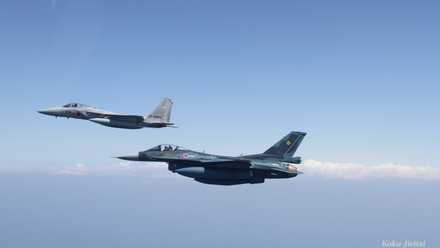
5 Ways The JASDF F-2 & F-15 Fighters Are Unique
The JASDF F-2 and F-15J exemplify Japan’s air power, combining cutting-edge technology with superior maneuverability.
Enter The F-47: Boeing’s Sixth-Generation Fighter And The Export Question

The timing of Boeing’s F-47 program could hardly be more consequential for GCAP. According to USNI News, this was the centerpiece of the most ambitious US combat-aircraft program since the 1980s. As Simple Flying has reported, Boeing’s victory over Lockheed Martin was driven by speed, lower risk, and a determination to avoid repeating the cost overruns of the F-35 era.
What makes the F-47 directly relevant to GCAP is not its timeline, as the first flight was originally targeted for 2028 (though more recent congressional testimony suggests service entry could slip toward the mid-2030s), but also its strategic positioning. Unlike the F-22, which Congress famously banned from export, the F-47 is being designed with allied interoperability in mind, with top-tier partners including Japan, the United Kingdom, and Australia explicitly identified in strategic discussions as potential export customers. The FY2026 US defense budget allocated approximately $3.5 billion toward F-47 development, with an estimated $5 billion reportedly allocated for FY2027 — though that figure, drawn from secondary sources, should be treated with caution pending official confirmation.
The export dimension is strategically significant and historically unusual. The F-22 Raptor, the F-47’s predecessor in the air dominance role, was never sold to any allied nation despite persistent interest from Japan, Australia, and Israel. The F-47’s export readiness, if confirmed, would represent a fundamental shift in US policy, one that creates a direct and tangible competitive dynamic with GCAP for the first time. Whether history will repeat itself here is a question that Tokyo, London, and Rome are all watching closely.
Trump, Ishiba, And The Diplomatic Sales Pitch

Diplomacy and arms procurement have always intersected, but rarely as visibly as in the case of the F-47 and Japan. According to Analisi Difesa, citing the Japanese newspaper Asahi Shimbun as the original source, in late May, 2025, President Trump used a phone call with then-Prime Minister Ishiba to pitch the F-47 directly.
Trump reportedly offered a capability-reduced export variant of the F-47 and told Ishiba Japan would get the “best.” The Italian defense journal noted pointedly that this appeared designed to undermine the GCAP trilateral, and drew a direct historical parallel: in 2011, strong US pressure had already caused Japan’s interest in the Eurofighter Typhoon to quietly evaporate.
It is a pitch that carries significant implications: coming directly from the US president to the Japanese prime minister, it signals that Washington views Japan as a serious potential F-47 customer. That signal is now carried forward under the current Prime Minister Sanae Takaichi, where the issue has shifted from diplomatic outreach to active strategic evaluation.
What was once a high-level pitch is now a live policy question: whether to remain fully committed to GCAP despite delays, or to seriously consider an American alternative that is being developed on a faster and more heavily funded timeline.
The logic, from Tokyo’s perspective, is not difficult to understand. Japan’s original motivation for joining GCAP was technology ownership, which is the ability to access and control the intellectual property inside the aircraft, something that a US export deal, even under favorable terms, would never fully replicate. But technological ownership has diminishing value if the aircraft it enables arrives a decade late.
This is not the first time a partner in a major Western fighter program has faced this kind of pressure. When the F-35 program was experiencing its most severe delays and cost overruns in the early 2010s, several partner nations openly reconsidered their commitments. As Simple Flying’s analysis of the F-35 development timeline has highlighted, the slow gestation of that program was “the price of trying to merge technological innovation with geopolitical cooperation” — a balancing act that GCAP is now attempting under very similar conditions. Japan, in 2026, is in a different position: a credible alternative now exists, and it is being sold directly by the US president.
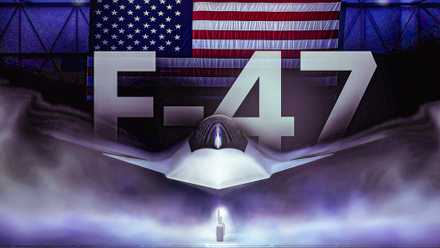
The Real Reason Why Boeing Is Building The F-47 Stealth Fighter And Not Lockheed
The jet will be built on stealth, speed, and strategy.
The Interoperability Argument: Can GCAP And The F-47 Coexist?

Not everyone in the GCAP community sees the F-47 as a threat. The strongest counterargument has come from inside the program itself. Italian Air Force General Giandomenico Taricco, who serves as commercial and corporate director at GIGO (the intergovernmental organization running GCAP) has made the case for complementarity rather than competition. In a statement reported by Defense News in June 2025, he set out the position with notable directness:
“The F-47 will be principally a US fighter and not a competitor to the GCAP. What we want is for the GCAP to be interoperable with the F-47, to make them two elements in an integrated system.”
This framing, GCAP and the F-47 as complementary nodes in a distributed allied network, is both diplomatically elegant and strategically coherent. The sixth-generation vision of Western air forces is a system of systems: crewed fighters, loyal wingman drones, and networked sensors operating together. In this architecture, an allied force might reasonably operate both an F-47 and a GCAP aircraft, assigning each to different mission profiles within an integrated theater.
The practical challenge to this vision is financial. Operating two separate sixth-generation platforms simultaneously would place an extraordinary burden on any defense budget. Analysis from 19FortyFive suggests that some European officials genuinely hope GCAP and the F-47 can be made interoperable and mutually reinforcing — but caution that a direct US sale of the F-47 to Japan could fracture GCAP’s political and financial cohesion. A Japan that has effectively chosen the F-47 for its primary air dominance requirement has far less reason to sustain its full financial and industrial commitment to a trilateral European program.
What Comes Next: A Decision That Will Define Indo-Pacific Airpower For Decades

The immediate focus for GCAP is stabilization. The £686 million April 2026 contract with Edgewing buys three months of hope, long enough for the UK to finalize its Defence Investment Plan and provide the long-term funding clarity that Italy and Japan have been waiting for. The key variables in the coming months include not only the content of that plan, but the political signals that accompany it: whether Britain’s commitment to GCAP is articulated as a core strategic priority or treated as one line item among many.
For Japan, the calculus involves at least three distinct but interrelated questions.
- Can GCAP genuinely deliver a capable sixth-generation fighter by 2035, or will delays push the in-service date deep into the following decade?
- Does Japan value technology co-ownership enough to accept the risk of delay, given the trajectory of Chinese air power in the Indo-Pacific?
- What is the cost, in terms of the UK–Japan–Italy relationship, and of Japan’s broader alignment with European defense, of signaling openness to the F-47?
There is a broader pattern worth acknowledging here. Multilateral defense programs have always been vulnerable to the emergence of faster, lower-risk national or bilateral alternatives. The history of Western fighter procurement is littered with programs that collapsed or shrank when one partner found a more convenient exit.
GCAP is a strong candidate: its industrial base is genuine, its political backing at the head-of-government level is on record, and the technology co-ownership principle gives Japan something no American export can fully replicate. But strength is not immunity. The F-47’s emergence has introduced a choice where previously there was none. That may shape the future of allied airpower in the Indo-Pacific for generations.