dailynewsnblog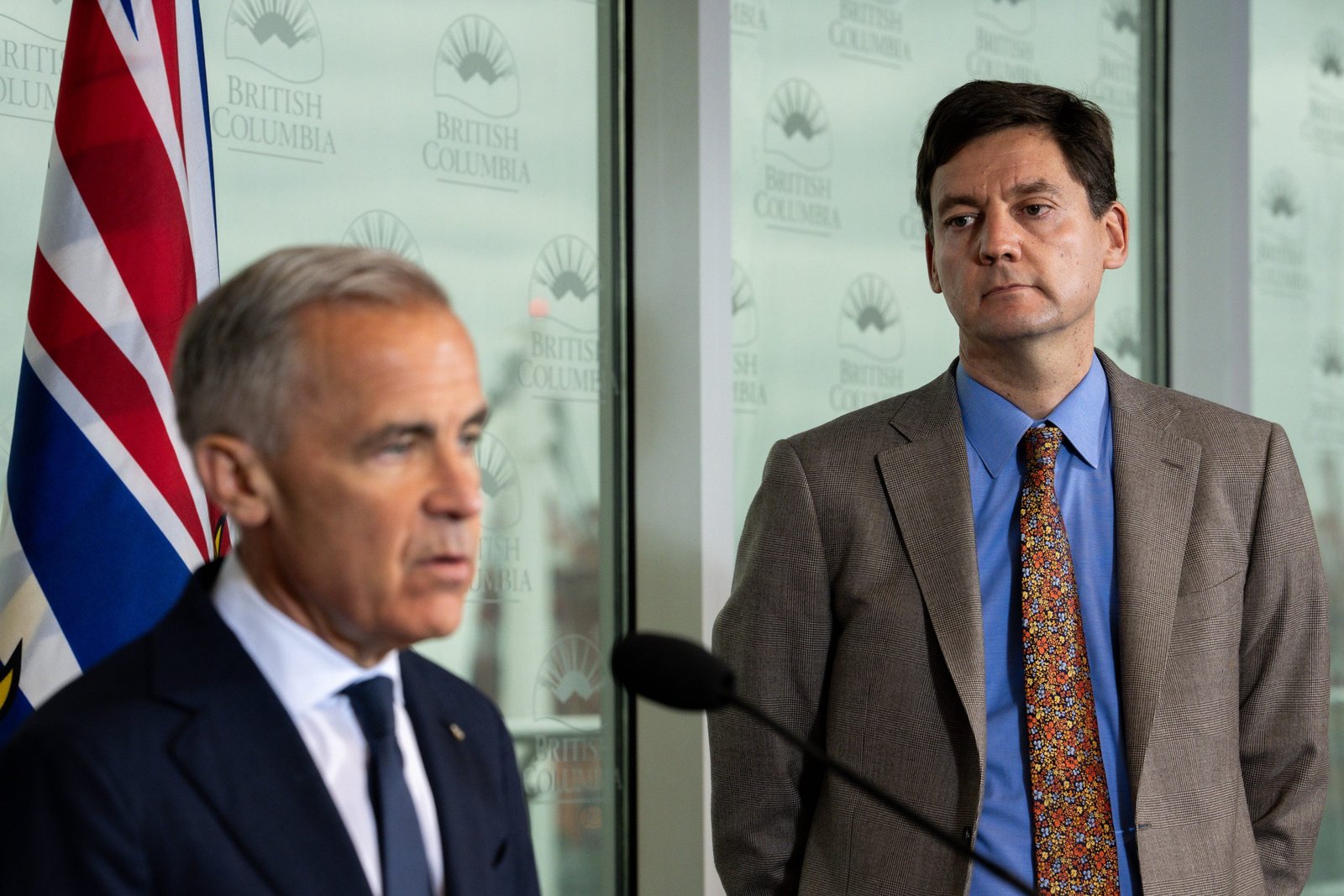
Ottawa-B.C. deal reaffirms federal tanker ban on north coast, but also pledges to modernize Prince Rupert and Stewart, both in areas covered by the ban.
British Columbia has secured a sweeping package of federal funding under a new Canada-B.C. agreement signed Thursday, hours before Alberta is set to unveil details of its proposed West Coast pipeline.
The agreement delivers $10 billion for the Roberts Bank Terminal expansion, $3.5 billion for the North Coast Transmission Line, $500 million for the Red Chris mine, and $3 billion for the Massey Tunnel Replacement.
The $3.5-billion commitment to the North Coast Transmission Line is significant, covering nearly half the project’s total cost. The line is considered essential to electrifying industrial operations in the region, including the proposed Ksi Lisims LNG project and several mining developments.
How much of the cost B.C. ratepayers should bear has long been a contentious question, given that the new transmission line is set to primarily benefit industrial players and unlock resource projects in the region.
The Roberts Bank investment also stands out: the Vancouver Fraser Port Authority had previously pegged the project’s cost at $3.5 billion — nearly a third of the new federal commitment.
Asked whether the jump was designed to prepare the terminal to serve as the terminus of a new oil pipeline, Prime Minister Mark Carney deferred, saying more detail on Alberta’s proposal would come later Thursday at his availability with Premier Danielle Smith.
He said the $10 billion isn’t a final investment decision but reflects the broader scope of the project, such as container and bulk capacity, environmental protections, and possible additional infrastructure.
This is all set to be refined as the project makes its way to the Major Projects Office, according to Carney.
“I use the 10 billion figure just to give an overall sighting of the order of magnitude, that’s not obviously a final figure,” he said.
The deal also locks in commitments to boost government support for LNG development and to modernize the ports of Prince Rupert and Stewart.
Is Alberta abandoning the northern route?
Prince Rupert and Stewart sit at the northernmost edge of the federal oil tanker ban’s coverage area. Under its separate deal with Alberta, Ottawa has promised an “adjustment” to the ban — contingent on the province’s pipeline proposal meeting a set of criteria, including Indigenous buy-in.
“Today’s Canada-B.C. agreement will maintain the federal North Coast tanker ban,” Carney said, adding that would be “in accordance with the proposed route of a new transprovincial pipeline under the bilateral agreement with Canada and Alberta.”
The phrasing left some ambiguity as to whether the ban remains fixed regardless of the pipeline’s eventual route, or whether it could be adjusted to accommodate it — a distinction Carney did not clarify further at the Vancouver press conference.
Asked whether this means Alberta is no longer contemplating a northern route, Carney once more deferred the question to later Thursday.
“I want to reflect on the fact that the federal government was under no obligation to sit down with us to talk about the pipeline,” said B.C. Premier David Eby. “This is an area of federal responsibility… we learned that the hard way.”
“We will not be going to court to fight a pipeline project. Instead, we will ensure to fulfill our constitutional obligations in good faith.”
The B.C. agreement also includes a second set of commitments to be delivered by December.
These cover softwood lumber, steel manufacturing, a compensation arrangement tied to the updated industrial carbon pricing benchmark, renegotiated revenue sharing on the Trans Mountain expansion, coastal protection, financial commitments tied to a potential new Alberta pipeline, and renewed childcare commitments.
It’s unclear how the creation of a committee will help advance LNG projects towards final investment decisions, given both governments have already pledged to prioritize the projects via regulatory streamlining and competitive fiscal policies.
LNG Canada CEO Chris Cooper appeared before a House committee in April as part of a study on energy exports.
Asked by MP Shannon Stubbs if there was anything holding the company back from making a final investment decision for Phase 2, Cooper said going through the final steps of approval takes time.
“While we might point to processes in Canada, investors also have processes,” he said, adding that the joint venture participants – Shell, PETRONAS, PetroChina, Mitsubishi Corporation and KOGAS – all need to do work internally.