dailynewsnblog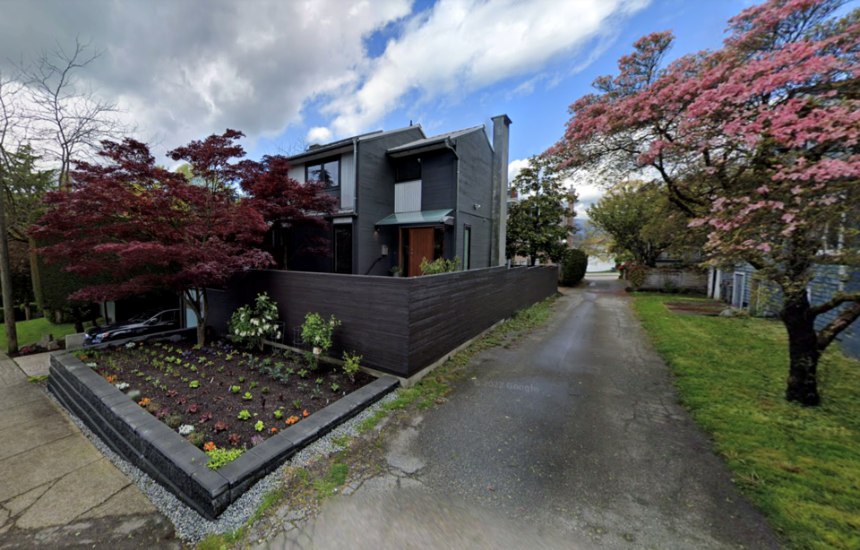

B.C. Securities Commission seeking to ban Jackson Friesen from province’s markets after U.S. court ordered him to repay millions in a stock fraud case
A Delta resident owing more than US$13.4 million to U.S. authorities for committing stock fraud is facing a hearing in Vancouver to ban him from this province’s capital markets.
B.C. Securities Commission (BCSC) director of enforcement Doug Muir applied Feb. 5 to an independent commission hearing panel to ban Jackson T. Friesen from trading in or purchasing any securities or derivatives, as well as from becoming or acting as a director, officer, promoter or consultant of any issuer or registrant in B.C.
Friesen has until April 30 to respond to Muir’s application. His lawyer Owais Ahmed of Vancouver firm McCarthy Tétrault did not respond to Business in Vancouver for an opportunity to comment. A hearing date has yet to be scheduled.
Friesen is already banned from penny stock-related business activity in the U.S. after being found liable for his part in a massive U.S. stock fraud scheme that unfolded between 2010 and 2019, and was largely orchestrated out of the Vancouver offices of co-accomplice Fred Sharp, 73, a West Vancouver resident and former lawyer who acted as an offshore shell facilitator with Panamanian law firm Mossack Fonseca.
Friesen is among 21 B.C. residents who have been charged in civil and/or criminal proceedings for their role in what amounted to over $1 billion worth of illicit stock transactions, according to the U.S. Securities and Exchange Commission (SEC) and U.S. Department of Justice.
Friesen was charged in a civil complaint from the SEC in August 2021 at the age of 33.
By October 2023, a Massachusetts federal court jury determined Friesen committed several “pump and dump” schemes involving 14 public companies and a judge ordered him to repay investors US$11.8 million and the commission a US$1.56-million civil penalty.
The judge deemed Friesen’s “repeated” behaviour to be “egregious” and said he believed it was likely Friesen would re-offend.
Friesen appealed the judgment but the first circuit U.S. Court of Appeals upheld the decision on Feb.19.
Muir is now seeking to eliminate Friesen from activities in B.C. given the “reputational harm” he had done to U.S. markets.
“Given the increasing integration of capital markets across North America and the fact that Canadian investors may purchase securities offered in the United States, damage to the reputation of US securities markets may jeopardize Canadian investor confidence in the integrity of capital markets generally,” Muir stated in his application.
Having shown a “flagrant disregard for securities laws” Muir deems Friesen to “pose a significant ongoing risk to investors and the capital markets of British Columbia.”
According to U.S. court documents, the BCSC froze C$3.8 million and US$2.8 million from Friesen’s B.C. trading and banking accounts, leaving the SEC to seek an injunction in B.C. to halt Friesen from disposing of any assets that were unknown to authorities following the August 2021 charges.
In B.C. Supreme Court, Friesen sought to access the frozen accounts to pay for living costs and legal fees for his appeal.
The SEC argued Friesen should only access those accounts if all other assets had been exhausted. The SEC specifically sought an accounting for Friesen’s former property located at 2769 1st Ave. W., in Vancouver’s Kitsilano neighbourhood.
A $1.65-million mortgage was registered on the property’s title on Nov. 12, 2021— just months after Friesen was charged—with Tri City Capital Corp. as mortgagee and Friesen as mortgagor.
On Sep. 23, 2022, Friesen sold the property for $3.3 million with the balance of the mortgage at the time of sale being unknown, according to a recent court ruling on the asset-freezing order.
Friesen later provided the B.C. court with a list of assets under seal and Justice Amy Francis ruled she was “satisfied that he [Friesen] has no assets available to pay expenses other than those frozen by the injunction.”
Friesen was found to have worked directly with B.C. co-accomplices Paul Sexton of Anmore and Mike Veldhuis of Vancouver.
Testifying against Friesen were two individuals who made plea deals in their parallel criminal cases: B.C.-trained medical doctor-turned prolific stock promoter Avtar Dhillon, 66, and British citizen Roger Knox, 55, who have both served jail time for participating in the pump-and-dump schemes.
Knox testified how he discussed business and partied with Friesen in 2016 in Geneva, Switzerland, while also meeting Sharp. Dhillon testified how the two committed fraud against Arch Therapeutics, a publicly traded health sciences company Dhillon chaired.
The jury determined Friesen and his group defrauded investors of at least two companies controlled by Dhillon while utilizing the Swiss asset management firm founded by Knox in concert with Sharp’s network of offshore shell companies to skirt securities laws.
[email protected]