dailynewsnblog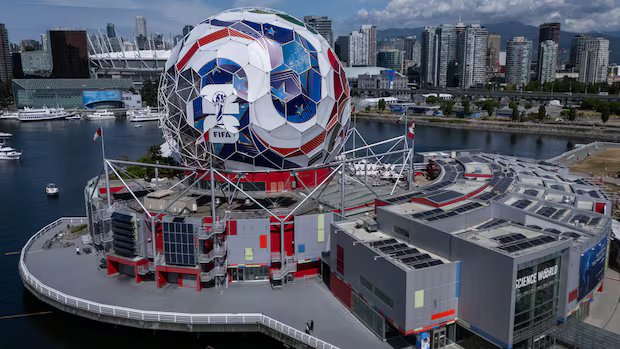
The B.C. government projects Vancouver’s seven FIFA World Cup matches will benefit the province’s economy years into the future, but experts and previous research on the impact of large sports events suggest there’s little evidence that’s the case.
“It’s kind of a closed case in academia. Like, there’s no one really arguing that these benefits are there,” said Moshe Lander, a sports economist and senior lecturer in economics at Montreal’s Concordia University.
The seven FIFA games taking place in Vancouver will cost between $685 million and $729 million, while revenues and contributions will be between $595 million and $615 million, the B.C. government projected in a cost and revenue update released last week. The latter figure includes $216 million in contributions from the federal government.
In addition to revenue from a 2.5 per cent tax on Vancouver hotels from 2023 to 2030 aimed at recovering the cost of large events like the World Cup, the B.C. government projected that between 2026 and 2031, Vancouver’s seven FIFA World Cup games would result in:
- One million additional out-of-province visitors.
- $1 billion in additional GDP for B.C.’s economy.
- More than $200 million in “direct, indirect and other related provincial tax revenues.”
Predicting tourist spending
The modelling that produced the estimates was done by analysts at B.C. Stats, the government’s independent statistical agency.
Through data from B.C. Stats and Statistics Canada and expertise from Destination B.C., the government is able to understand how much tourists tend to spend and where they spend it, a B.C. Stats analyst told CBC News in a background interview.

B.C. Stats input government data, including visitor spending, business activity, capital investment, and government spending related to the FIFA World Cup. Their model estimated economic impacts for 2026 based on these inputs and used projected visitor spending during the World Cup to estimate impacts in the five years after the tournament, the government said.
The model predicted how much income would be created for people and businesses, and how much tax revenue the government could reasonably expect.
Host countries often lose money on World Cup: study
If Vancouver and Canada make money hosting the World Cup, it would make them the exception rather than the rule, according to the authors of a 2022 peer-reviewed study on the economics of the Olympics and the World Cup.
“Are the Olympics and the Football World Cup profitable for the International Olympic Committee (IOC) and the Fédération Internationale de Football Association (FIFA), who own the rights to these events? Yes, very much so,” the authors wrote. “Are they profitable for the organizing committees that need to put them on? Sometimes, but not very often. For the host city and government? Hardly ever.”

That study found that of the 14 World Cups between 1966 and 2018, 11 ran deficits – meaning overall event costs exceeded revenues – and one (Russia 2018) posted a profit. For two (England 1966 and Mexico 1986) there was insufficient data.
It is difficult for hosts to make money on the World Cup because the main revenue sources – broadcast rights, ticketing and sponsorship – flow to FIFA. Host countries and cities pay for venues, infrastructure and security – which at a projected $242 million that could still go up, is the largest World Cup expense for Vancouver. Without host countries assuming these costs, events like the World Cup would not be profitable, the study’s authors argue.
The Olympic legacy
The Olympic experience shows banking on visitors – or future visitors – to improve the balance sheet is risky.
The number of hotel guests in Vancouver for the 2010 Winter Olympics – an event that was not shared with 15 other cities, as is the case for the World Cup – did not increase significantly during or immediately after the Games, according to a 2013 Olympic Games Impact Study by the University of B.C.
Between 2009 and 2010, the number of overnight tourists in Vancouver increased by 3.8 per cent, which was more than Edmonton or Toronto, but less than Calgary, the study found. The following year, 2011, the number of overnight visitors in Vancouver actually decreased.

This suggests any possible increase in overnight visitors from the 2010 Games disappeared the year after the event, the authors wrote.
The same study found the 2010 Games had no impact on the average length of time visitors stayed in the city, or how much they spent.
Visitor spending in Vancouver increased 9.4 per cent between 2009 and 2010, which was more than Calgary (nine per cent) and Edmonton (-0.9 per cent), but less than Toronto (11.5 per cent).
“This finding suggests that being an event region had little to no effect on visitor spending during the event year,” the authors wrote. “Due to lack of available data, it is unclear whether any potential impact (if at all) of the Games on visitor spending would have been maintained in Vancouver post-Games,” the authors wrote.

A 2022 report from Mansfield Consulting, prepared for the Metro Vancouver Destination Management Council, said it is unlikely the 2010 Winter Olympics resulted in a sustained tourism increase in subsequent years.
“While instances undoubtedly exist of some visitors being inspired to visit B.C. due to the images broadcast during the 2010 Winter Games, and while Games-related infrastructure projects such as the Richmond Olympic Oval and Whistler Olympic Park have served to attract visitors to specific communities, there is no compelling evidence of a province-wide, post-Games tourism increase.”
The Ministry of Tourism, Art, Culture and Sport said in an emailed statement that comparisons with the Olympics are not relevant because the 2010 Games took place in a different season where there was lower tourism and visitation in the event area.
“The FIFA World Cup 2026 has a different scale, delivery model, and tourism profile, which is reflected in the current modelling approach. We are already seeing increased travel through Vancouver International Airport,” the statement said.
The World Cup is expected to attract a higher share of international visitors associated with higher per-visitor spending, the ministry added.
The modelling also incorporates a Destination B.C. estimate that approximately 80 per cent of first-time visitors to B.C. return, which would increase future tourism numbers.
The displacement effect
Lander, the Concordia sports economist, said one thing the government’s economic modelling gets wrong about these events is that it fails to account for displacement – the tourists who would have come to Vancouver during those weeks in the absence of the soccer tournament.
“No new hotels were built in Vancouver for the World Cup, nor should they have been. So what we have, then, is a bunch of soccer fans coming into Vancouver that are going to be displacing me, where I would have come in a normal July. I’m not coming now,” said Lander, who lives in Calgary.

“So this year I’m going to miss Vancouver, and that’s fine, but you need to now factor in that, well, my spending’s gone missing. So the impact of the soccer tourist is going to be overstated in these numbers.”
The B.C. government confirmed its modelling is based on an “all else equal” assumption – meaning it assumes economic conditions remain stable and does not estimate how much spending may be shifted away from existing tourism or local activities. It focuses on new spending associated with out-of-province and international overnight visitors.
Another important question, Lander said, is what the tourism numbers in Vancouver would have been without the World Cup.
“You can control for weather, you can control for a variety of different factors and say that in a normal summer, like we’re going to experience in Vancouver during these seven days, this is what it would look like,” he explained.

“Therefore, any incremental changes we could possibly attribute to soccer. That’s the benefit.”
The ministry statement said the FIFA World Cup is expected to build on already strong summer tourism numbers by attracting a higher share of international visitors associated with higher per-visitor spending.
Lander said he is one of the few sports economists in Canada with expertise in these issues.
“Nobody from the B.C. government, nobody from Vancouver City Hall ever reached out to me and, as far as I can tell from my colleagues, to any of them either,” he said.
“All of us would have said exactly the same thing because we’re all unified in what the research says. There’s no economic benefit here.”