dailynewsnblog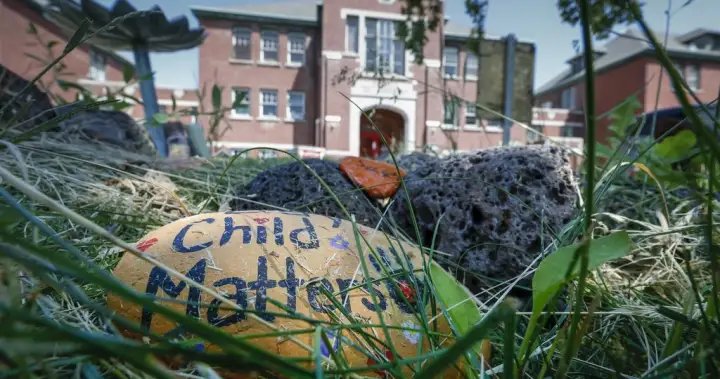
WARNING: This story deals with sensitive subject matter. Discretion is advised.

It has been five years since a Kamloops First Nation shared preliminary findings of an investigation into potential burial sites on the grounds of the former Kamloops Indian Residential School.
The Tk’emlúps te Secwépemc First Nation shared findings that indicated the presence of more than 200 potential burials on the grounds.
“Today marks a period of profound reflection, reawakened grieving and the pursuit of justice and reconciliation,” Grand Chief Stewart Phillip, Union of British Columbia Indian Chiefs (UBCIC) President, said in a statement.
“In the five years since the announcement of potential burials at the former Kamloops Indian Residential School, the public conscience of Canada has fractured and First Nations across the country have carried out the heavy and unyielding work of truth-telling. UBCIC commends the rigorous First Nations-led investigations into former Residential School sites and the unwavering efforts to identify children taken by the Residential School System and to ensure they remain the focus of our collective memory.”

The Kamloops Indian Residential School was the largest in the Indian Affairs residential school system and operated from 1890 until 1969, then operated as a day school until 1978.

Get daily National news
Get daily Canada news delivered to your inbox so you’ll never miss the day’s top stories.
In 2021, the British Columbia government pledged support for First Nations across the province and investigative work at former residential school sites, allocating $475,000 for each site.
A small protest was held on the grounds of the B.C. legislature on Wednesday morning, with the group asking the Tk’emlúps te Secwépemc First Nation to share information on how the B.C. government’s money was spent.
Meanwhile, in 2023, the federal government announced $12.5 million in federal funding towards the construction of a new healing centre at Tk’emlúps te Secwépemc, projected to open this fall.
In February, the First Nation said there may never be a consensus on what to do with the former Kamloops Indian Residential School site.
A statement from the Tk’emlups te Secwepemc First Nation said possible future outcomes for the Kamloops Indian Residential School property include excavation or preserving its orchard as a sacred site, “a place of memory and healing.”
The nation said its investigation is ongoing. Findings so far point to several areas of focus, with “signatures that resemble burials” identified in some, and other areas ruled out as burial sites.

On Wednesday, the UBCIC said it was “disappointed, disgusted and deeply concerned” to learn about the demonstration planned at the B.C. legislature.
“UBCIC condemns the pattern of public demonstrations and publications questioning and downplaying the Residential School system and seeking to undermine active First Nations-led investigations under the guise of freedom of speech and academic freedom,” the organization said in a statement.
“We stand firmly and steadfastly with survivors and recognize their experience as truth.”
The UBCIC wants all levels of government to support First Nations-led searches and healing supports, ensuring unhindered access to all remaining archival records, creating public education campaigns and legal protections against Residential School denialism.
Mental health and cultural support resources can be found below:
First Nations and Inuit Hope for Wellness Help Line and Online Counselling Service offers mental health counselling and crisis intervention to Indigenous people across Canada.
Toll-Free: 1-855-242-3310
Indian Residential School Survivors Society
Toll-free: 1-800-721-0066
KUU-US Crisis Line
Toll-Free: 1-800-588-8717
(First Nations and Indigenous specific)
310– Mental Health: 310-6789 (no area code)
Suicide Crisis Line: 1-800-784-2433
© 2026 Global News, a division of Corus Entertainment Inc.