dailynewsnblog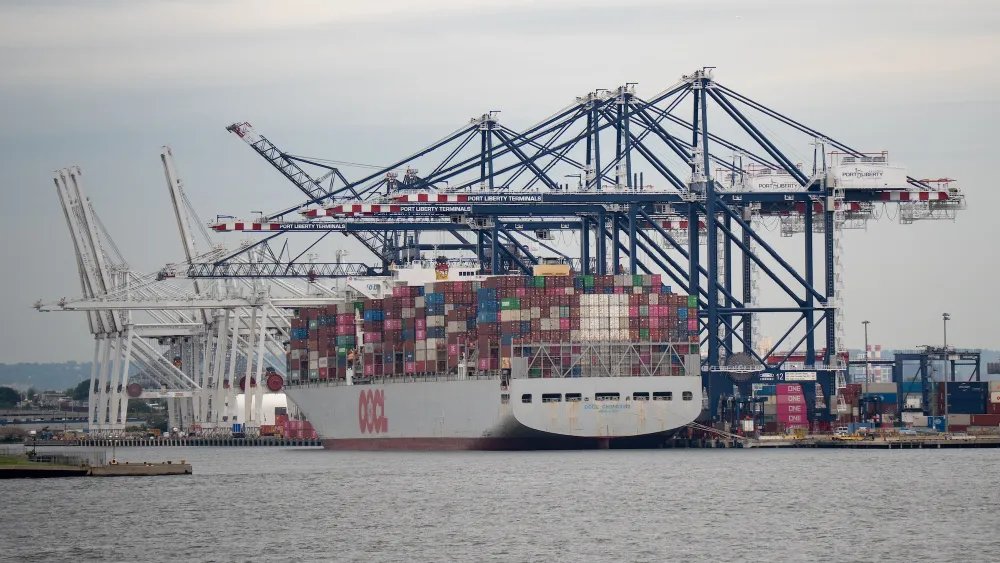
Asia-to-U.S. East Coast ocean freight rates have accelerated to another annual peak this week, buoying global rates and illustrating the upward pressure from a resilient container market.
On the trans-Pacific trade route, spot rates increased sharply for the second week in a row, with prices to move a 40-foot container from Shanghai to New York rising 10 percent to $8,706 on average. Rates from Shanghai to Los Angeles increased 6 percent to $6,244 per 40-foot container.
The Shanghai Containerized Freight Index (SCFI) numbers posted Friday paint a similar picture, with the Shanghai-to-U.S. East Coast index coming in at $9,568 per 40-foot box, up 19 percent over the past three weeks to its highest level since July 19, 2024.
China-to-West Coast numbers have grown parallel in the stretch, with the index rising 21 percent to $6,714 on average.
Across all trade lanes, the Drewry World Container Index (WCI) increased 1 percent to $4,339 per 40-foot container, the maritime research company reported Thursday. On the same weekly basis, the SCFI saw a 2.4 percent increase to 3,355 points (the index average across all trade lanes is tracked by points since individual routes are measured by both 20- and 40-foot units).
Since May, the container volumes imported into the U.S. on the trans-Pacific trade lane had led many observers to suggest the country was experiencing an earlier-than-normal peak shipping season. Last month, Port of Long Beach CEO Noel Hacegaba labeled the traditional August-to-October shipping season as “outdated and obsolete” due to the recent pulling forward of goods ahead of new tariff deadlines and increasing fuel costs.
But the recent increase has even had Maersk CEO Vincent Clerc saying that demand has refused to slow down, noting that current weekly volumes out of Asia are surpassing the 6.2 percent growth experienced in the second quarter.
“This is not a pull-forward,” Clerc said in the company’s Thursday earnings call. “It is real underlying demand that has led us to increase our expectation of growth in the container market.”
Maersk increased its full-year earnings guidance for the second time in six weeks on its increased volumes and pricing power in the quarter.
“This resilience is taking most observers by surprise,” said Judah Levine, head of research at Freightos, in a Tuesday update. “Resilient” has been a word thrown around in shipping circles in recent weeks to reflect the situation, with Clerc using the word to describe overall container market demand while Hackett Associates founder Ben Hackett used it to define current consumer spending habits.
The Global Port Tracker from Hackett Associates and the National Retail Federation (NRF) had projected a sharp July peak in U.S. container arrivals earlier this summer, which was expected to be followed by drops in August and September.
But Levine pointed out that the 5.7 percent inbound cargo decline previously pegged for September had been revised upward significantly in the most recent edition released this month, which now calls for a 2.8 percent increase in volumes.
“This shift may reflect some shippers—who had been frontloading ahead of the July tariff deadline—extending their ordering now that a sharp duty hike did not materialize,” said Levine. “Others who may have been cautious with their peak season ordering due to so much economic uncertainty, may be increasing shipments as consumers continue to show resilience despite elevated rates of inflation.”
Vague Panama Canal surcharges help prop up rates
The Asia-to-U.S. East Coast pump also comes as more ocean carriers are starting to introduce new surcharges for importers looking to bring cargo through the Panama Canal. The canal is undergoing a series of draft restrictions amid declining water levels at Gatun Lake, the rainfall-fed reservoir that feeds the waterway’s lock system.
In a post Thursday, Drewry’s senior manager of container research Simon Heaney, noted that ocean carriers like CMA CGM and Mediterranean Shipping Company (MSC) have provided little context or justification for the surcharges they impose.
Heaney speculated that the extra fees cover lost vessel capacity, noting that the canal has not had to cut daily transits allowed. When the Panama Canal was hit by a drought in 2023 and 2024, transits were cut from its normal allotted capacity of 36 vessels to as low as 22 vessels per day.
“The Panama Canal does not have to reduce the number of ships it accepts to reduce the amount of cargo it can accommodate,” Heaney said, noting that the canal’s anticipated final scheduled restriction to 47.5-feet depth in September would represent a 5 percent reduction in permitted draft from maximum levels.
“This isn’t just a Panama Canal issue,” said Heaney. “The lack of transparency surrounding the myriad of surcharges levied by container lines is one of the reasons for the considerable mistrust and animosity that exists between carriers and their customers.”