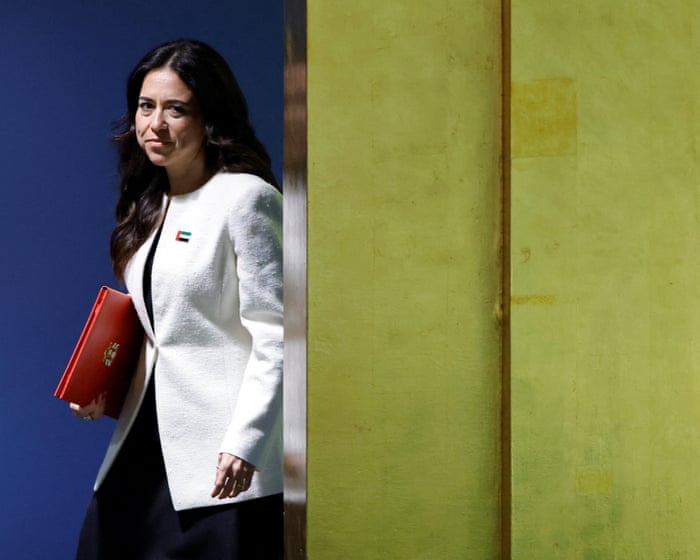
Lana Nusseibeh, who served as the United Arab Emirates’ ambassador to the United Nations, touched down in London on Monday to pitch herself as a viable contender for the organization’s top post. Her visit arrives as the United States and Russia each promote their own candidates, turning the selection process into a high‑stakes diplomatic showcase. The British government, however, has publicly expressed reservations about her candidacy, citing concerns over her past diplomatic record.
During a series of closed‑door briefings with the Foreign, Commonwealth & Development Office, Nusseibeh stressed that she has formally severed ties with the UAE and is now focused on a multilateral vision that prioritises humanitarian action over national interests. She also addressed criticism surrounding the UAE’s role in the Sudan conflict, asserting that she was not involved in policy decisions that led to the current crisis.
A UK foreign ministry spokesperson acknowledged the meetings as “constructive dialogue” but reiterated that any endorsement would depend on a clear demonstration of independence from previous state affiliations. Meanwhile, a senior UN spokesperson described Nusseibeh’s outreach as “part of the normal outreach process” for aspirants, and several NGOs called for a thorough review of her Sudan‑related engagements before any voting blocs consider her seriously.
In-Depth Analysis & Key Details
The UAE’s diplomatic footprint in Sudan intensified after 2019, when the Gulf state provided financial and logistical support to factions vying for power, a move that drew criticism from human‑rights monitors. Nusseibeh’s tenure at the UN coincided with those developments, embedding her in a contentious geopolitical narrative that now resurfaces as she seeks a leadership role.
The current candidacy race is being shaped by a tug‑of‑war between the United States, which favours a reform‑oriented candidate, and Russia, which backs a figure aligned with its strategic interests in Africa. Britain’s hesitancy reflects a broader Western unease about appointing a leader whose previous diplomatic actions may appear to compromise the UN’s impartiality, especially in light of ongoing humanitarian emergencies in Sudan.
In diplomatic practice, candidates often distance themselves from prior national posts to reassure the international community of their neutrality. Nusseibeh’s public renunciation of her UAE affiliation follows this convention, yet the lack of an independent investigative report on her Sudan involvement leaves the credibility of that distancing open to scrutiny.
"She must convince the world that she can leave the shadow of her former government behind and steer the UN with impartiality—a test that will define her candidacy."
Why This Matters & What Lies Ahead
The selection of the next UN secretary‑general will influence how the body responds to crises like the Sudan war, where coordination of aid and diplomatic pressure are already fragile. A leader perceived as independent could unlock new avenues for peace talks, whereas lingering doubts about past affiliations risk paralyzing consensus among member states.
The General Assembly is slated to vote on the appointment later next year, with regional groups expected to announce their endorsements in the coming months. Observers will be watching the UK’s final stance, the outcome of informal consultations among the P5, and any formal inquiries into Nusseibeh’s Sudan record as key indicators of how the race will unfold.
Source: Reported by The Guardian · Analyzed & Synthesized by DNB Newsroom


