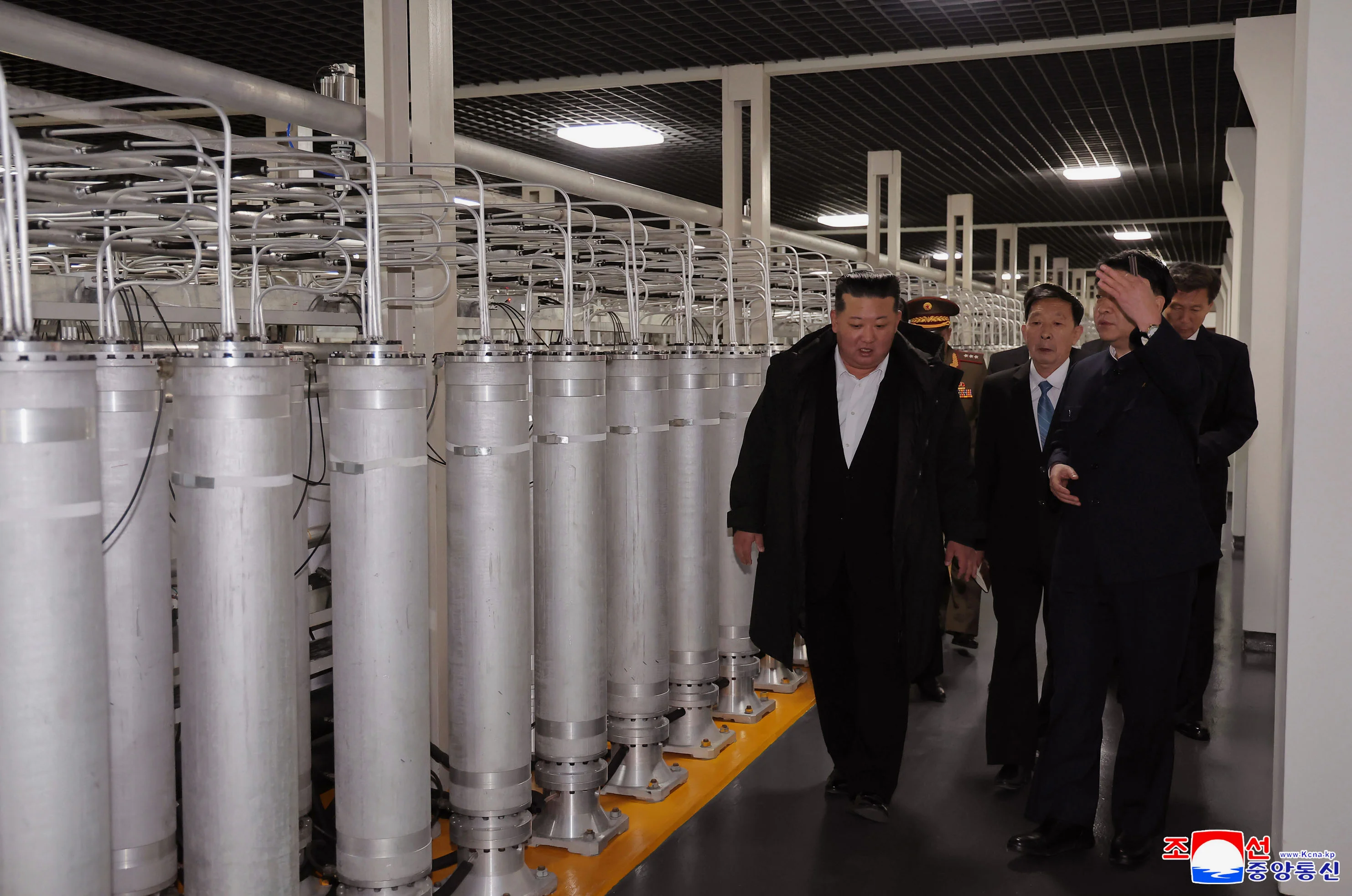
North Korean Supreme Leader Kim Jong Un has issued a direct order to accelerate the production of additional nuclear weapons, marking a significant shift in the country's strategic trajectory. According to state media reports, Kim conducted a series of inspections at facilities responsible for manufacturing critical nuclear ingredients. During these visits, he emphasized the necessity of bolstering the nation's nuclear deterrent capabilities to counter what he described as aggressive military posturing by the United States and South Korea. This directive underscores a rejection of the diplomatic pathways recently proposed by Washington, suggesting that Pyongyang is prioritizing military strength as its primary security guarantee.
The inspections took place at key industrial sites involved in the nuclear fuel cycle, providing a glimpse into the operational status of North Korea's weapons program. By personally overseeing these facilities, Kim signaled a high level of institutional commitment to the nuclear agenda. The timing of these visits coincides with a period of heightened geopolitical friction, where previous attempts at dialogue have yielded limited tangible results. The focus on 'nuclear ingredients' suggests that the regime is not only concerned with warhead assembly but also with the sustainability and scalability of its fissile material supply chain.
In official statements released following the inspections, Kim framed the expansion of the nuclear arsenal as a defensive necessity rather than an offensive provocation. He attributed the need for increased capabilities to the continued presence of U.S. military assets in the region and the joint military exercises conducted by Washington and Seoul. This narrative serves to justify the resource allocation toward the nuclear program to the domestic populace. The immediate response from international observers has been one of concern, with analysts noting that this hardline stance complicates any near-term prospects for denuclearization talks.
In-Depth Analysis & Key Details
The current escalation in North Korea's nuclear posture must be understood within the context of decades of failed denuclearization negotiations. Since the early 2000s, multiple diplomatic frameworks, including the Six-Party Talks and more recent bilateral summits, have struggled to produce verifiable reductions in Pyongyang's weapons capabilities. The recurring pattern of diplomatic stalling followed by military capability enhancements suggests that the North Korean leadership views nuclear weapons as an irreplaceable asset for regime survival. The recent dismissal of President Trump's overture indicates that Pyongyang perceives the U.S. security guarantee to its ally South Korea as a permanent threat vector that cannot be mitigated through dialogue alone.
Industry analysts observe that the emphasis on 'nuclear ingredients' points to a strategic pivot toward self-sufficiency in the nuclear fuel cycle. Historically, North Korea has faced challenges in securing consistent supplies of enriched uranium and plutonium, often relying on black market networks or illicit procurement. By strengthening domestic production capabilities, the regime aims to reduce its vulnerability to external economic pressure and sanctions. This technical development also raises concerns about the proliferation of nuclear technology, as improved production efficiency could lead to a rapid increase in the number of deliverable warheads. The economic implications for the region are significant, as heightened military spending by neighboring countries to counter this threat creates a regional arms race dynamic.
From a regulatory and geopolitical perspective, this development places additional pressure on the United States to reconcile its alliance commitments with its desire for diplomatic engagement. The U.S. government faces the challenge of maintaining a credible deterrent posture without escalating the conflict to a point of irreversible crisis. International bodies, including the United Nations Security Council, may be called upon to reaffirm existing sanctions regimes, although enforcement mechanisms have historically been inconsistent. The broader implication is a fragmented security architecture in East Asia, where trust deficits between major powers continue to undermine collective stability efforts.
"By prioritizing the expansion of its nuclear arsenal over diplomatic engagement, Pyongyang is effectively closing the door on near-term de-escalation, forcing the international community to confront a more entrenched nuclear threat in East Asia."
Why This Matters & What Lies Ahead
The decision by North Korea to expand its nuclear weapons program has direct implications for global security markets and regional stability. For investors, the escalation may lead to increased volatility in defense contracting sectors and energy markets, as heightened geopolitical risk prompts reassessment of supply chain vulnerabilities in the Asia-Pacific region. For citizens in neighboring countries, particularly in South Korea and Japan, the prospect of a larger North Korean nuclear arsenal raises civil defense concerns and may influence domestic political debates regarding national defense spending and missile defense systems. The psychological impact of a more capable nuclear adversary cannot be understated, as it shifts the balance of power dynamics in the region.
Looking ahead, several key milestones will determine the trajectory of this crisis. Diplomatic observers will monitor whether the United States adjusts its approach to North Korea, potentially offering new incentives or modifying its alliance strategies with Seoul. Additionally, the upcoming sessions of the United Nations Security Council may see renewed calls for sanctions enforcement, which could impact North Korea's ability to fund its nuclear program through illicit trade. Domestic political developments in South Korea and the United States will also play a crucial role, as changes in leadership or policy priorities could either exacerbate or mitigate the current tensions. Stakeholders should closely watch for any signs of back-channel communications or humanitarian aid initiatives that might serve as precursors to renewed diplomatic engagement.
Source: Reported by NPR · Analyzed & Synthesized by DNB Newsroom