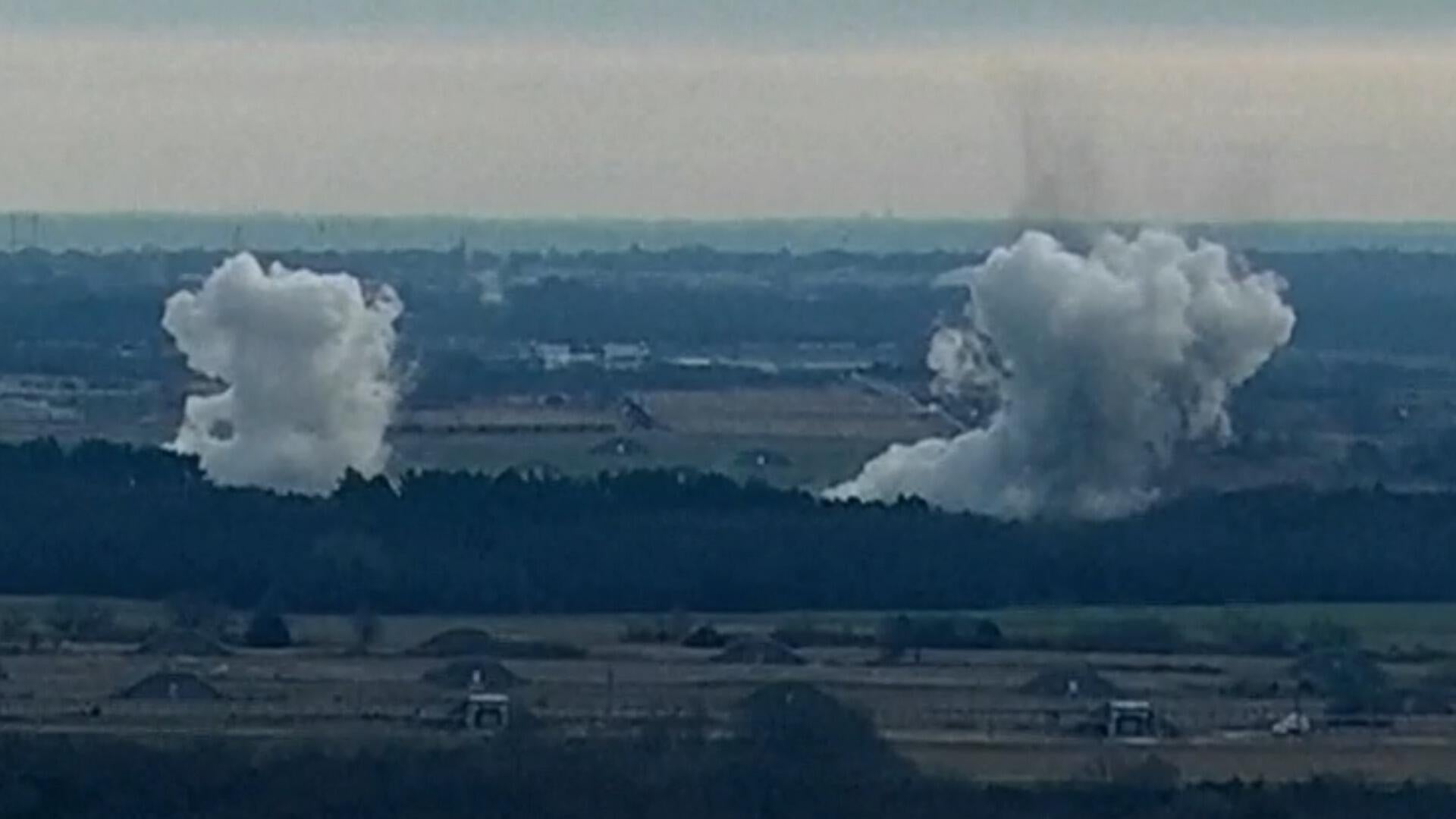
On Wednesday, Army engineers carried out a demolition exercise near the small town of Des Moines County, Iowa, using nearly five tons of lead‑containing explosive material to simulate battlefield conditions. The operation, overseen by the U.S. Army’s Explosive Ordnance Disposal unit, was coordinated with state and federal environmental authorities to mitigate civilian impact.
EPA field teams deployed portable analyzers and high‑volume air samplers at multiple points surrounding the blast zone, beginning measurements minutes after the explosion and continuing for a full day. Their data indicated that airborne lead levels remained indistinguishable from pre‑detonation background readings, prompting the agency to issue a public statement affirming the absence of detectable contamination.
While the EPA’s findings have been welcomed by federal officials, a handful of local residents expressed lingering apprehension, citing past incidents where underground residues persisted despite clean‑air reports. Community leaders have requested a broader environmental audit, and the Army has pledged to share all monitoring results with the public.
In-Depth Analysis & Key Details
The use of lead‑based explosives dates back to World War II, when lead served as a stabilizer and density enhancer. Modern military doctrine has gradually shifted toward less toxic formulations, yet legacy stockpiles still contain significant lead content, compelling the Army to conduct periodic disposal tests.
Regulatory oversight of such detonations falls under the Clean Air Act, which mandates real‑time monitoring when hazardous substances are released. EPA’s rapid‑response framework, refined after the 2010 Deepwater Horizon spill, enabled swift deployment of detection equipment, reducing uncertainty for nearby populations.
Industry observers note that the Iowa test reflects a broader tension between national defense readiness and environmental stewardship. While the military argues that controlled detonations are essential for training and safety, environmental NGOs argue for accelerated transition to lead‑free munitions, citing the cumulative health costs of lead exposure in civilian settings.
"The absence of measurable airborne lead does not automatically erase community concerns; comprehensive soil and water assessments are essential to fully gauge the environmental legacy of such detonations."
Why This Matters & What Lies Ahead
For residents within a ten‑mile radius, clean‑air readings translate to immediate reassurance that inhalation risks are minimal. However, lead can settle into soil and infiltrate groundwater, potentially affecting agriculture, livestock, and drinking water supplies—issues that resonate far beyond the initial blast.
Looking ahead, the EPA plans to release a detailed report next month, and the Army has scheduled a follow‑up meeting with Iowa’s Department of Natural Resources to discuss additional testing protocols. Congressional committees overseeing defense spending are expected to review the findings during the upcoming fiscal year, where budget allocations for lead‑free munition development may be scrutinized.
Source: Reported by CBS News · Analyzed & Synthesized by DNB Newsroom