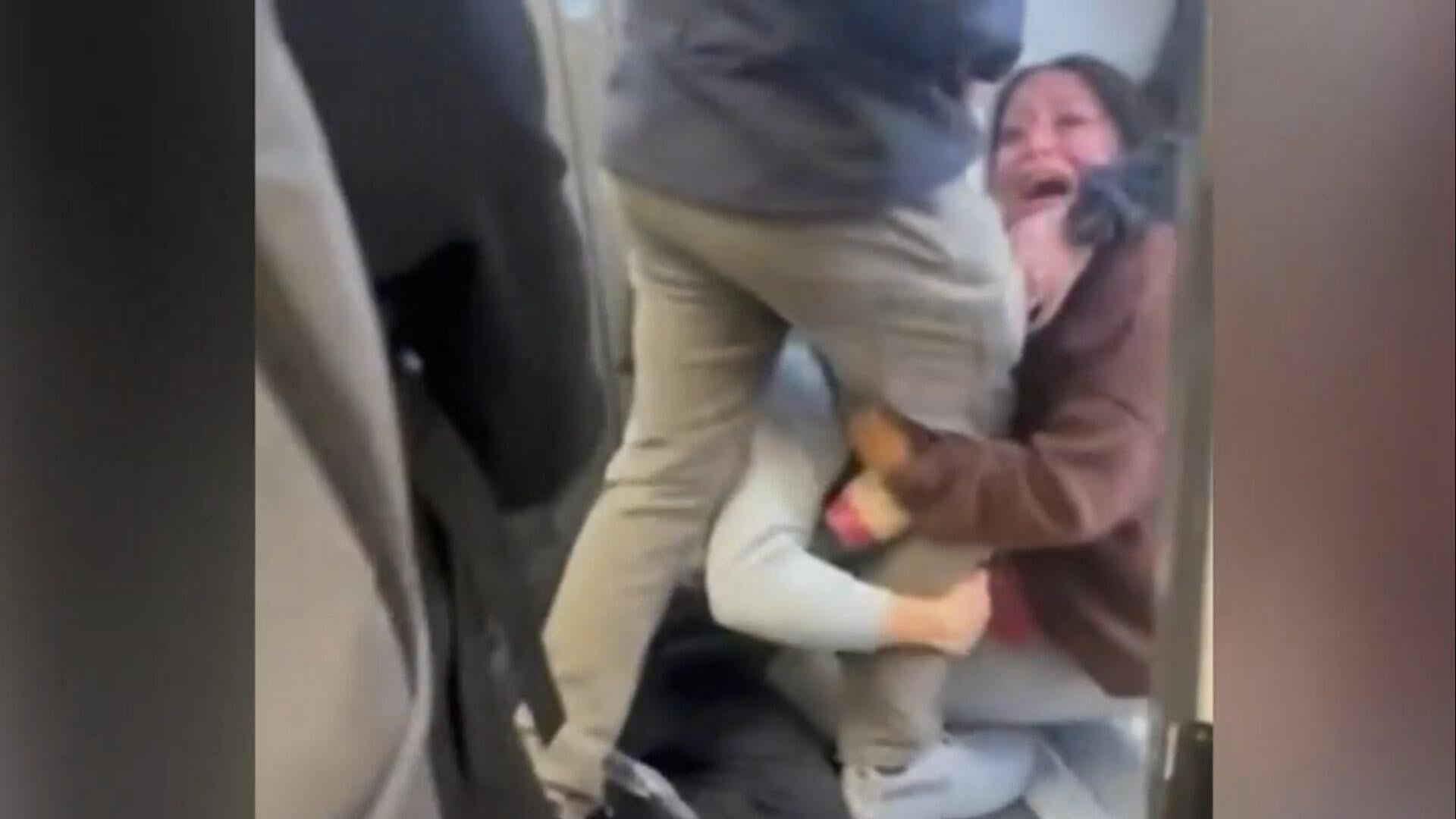
On the morning of March 15, ICE agents boarded the jet bridge of an Alaska Airlines flight departing from Seattle‑Tacoma International Airport bound for Anchorage, forcibly detaining a father and his young daughter. The agents, wearing standard issue gear, seized the family and began escorting them toward the aircraft while passengers watched on the bridge’s platform.
The operation unfolded in a highly visible area of the terminal, where the jet bridge connects the gate to the aircraft. According to the video, the agents did not use any restraints but applied physical pressure to move the father and daughter toward the boarding area. The incident was recorded by a passenger’s smartphone and quickly spread across social media platforms, triggering widespread condemnation.
In response, the Department of Homeland Security released a statement affirming the agents’ authority to detain individuals in airport settings. Alaska Airlines issued a brief comment that the airline had no involvement in the arrest and urged travelers to remain calm. Civil‑rights advocates and several members of Congress called for an immediate investigation and for clearer guidelines governing ICE activity on airport property.
In-Depth Analysis & Key Details
The event echoes a series of high‑profile ICE interventions at U.S. airports over the past decade, where the agency’s presence has often clashed with airline protocols and passenger rights. Historically, ICE has relied on the Department of Transportation’s Airport Security Agreement to conduct operations in terminal areas, a framework that has been criticized for lacking transparency and oversight.
Opposing viewpoints highlight a tension between national security imperatives and civil‑rights protections. Immigration enforcement officials argue that swift action is necessary to prevent individuals who may pose a threat from entering the country, while civil‑rights groups contend that such operations infringe on due process and create a hostile travel environment. The economic impact on airlines is also a concern, as repeated incidents can erode consumer confidence and invite costly legal challenges.
Aviation safety advocates note that the presence of law‑enforcement personnel on jet bridges can pose safety risks, especially when passengers are in close proximity. Regulatory filings indicate that the Transportation Security Administration has issued guidelines limiting the use of force on boarding platforms, yet enforcement remains inconsistent. Industry analysts observe that airlines are increasingly lobbying for clearer boundaries to protect passengers and maintain operational integrity.
"The incident underscores a growing tension between immigration enforcement and passenger rights, forcing us to rethink how security protocols intersect with civil liberties."
Why This Matters & What Lies Ahead
For everyday travelers, the arrest raises fears that routine airport experiences may become fraught with sudden detentions, potentially deterring air travel and disrupting personal and business schedules. On a broader scale, the incident could influence federal policy on the scope of ICE’s authority at airports, affecting how the agency balances national security with individual rights.
Lawmakers are slated to hold a series of hearings in the coming weeks to scrutinize ICE’s operational procedures, with a key Senate committee scheduled to review the agency’s use of force guidelines on March 28. Meanwhile, a federal court case filed by the American Civil Liberties Union seeks to challenge the legality of the arrest, with a preliminary hearing set for April 12. These developments will shape the future of airport security protocols and the legal framework governing immigration enforcement.
Source: Reported by CBS News · Analyzed & Synthesized by DNB Newsroom