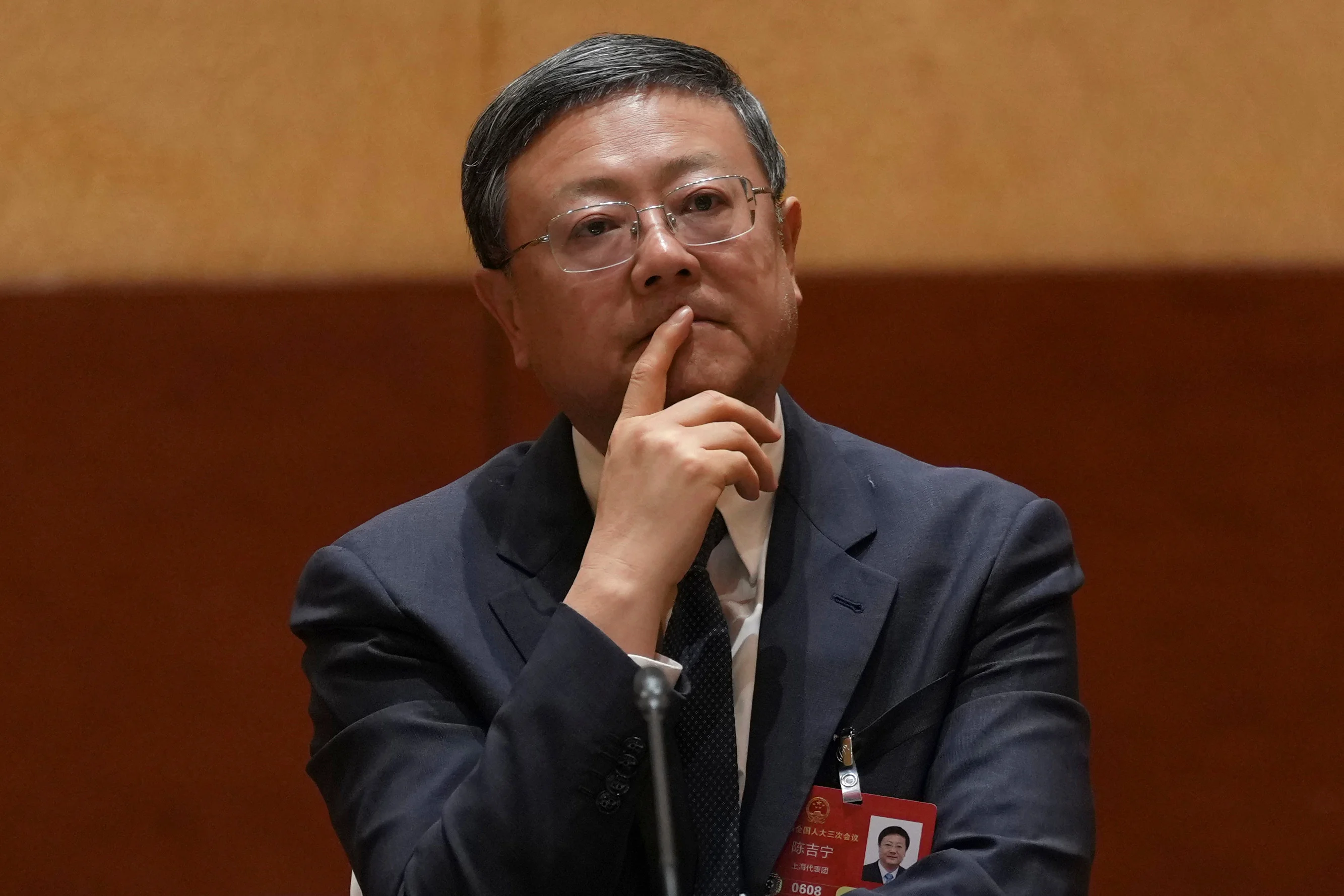
The Chinese Communist Party has confirmed that Chen Jining, the Party Secretary of Shanghai and a member of the Politburo, is under investigation for suspected serious violations of discipline and law. This announcement, disseminated through the Central Commission for Discipline Inspection (CCDI), marks one of the most prominent arrests in the current administration’s anti-corruption efforts, targeting an individual who holds significant influence over both political and economic affairs in one of China’s most important cities. The move confirms that the campaign’s reach extends to the very top of the Party hierarchy, challenging any perception of immunity for senior leaders.
Chen Jining’s role as the Party chief of Shanghai places him at the intersection of major policy decisions and economic management. Shanghai serves as a gateway for foreign investment and a testbed for financial reforms, making his position strategically vital. The investigation implies that allegations of misconduct may be tied to his oversight of the region’s economic activities or his interactions with business interests. The timing of the probe, following recent high-profile cases involving other senior officials, suggests a systematic effort to purge dissent or consolidate loyalty within the leadership cadre.
Official statements from the CCDI are typically concise, focusing on the procedural aspects of the investigation without detailing specific charges. However, the classification of the case as involving 'serious violations' indicates a potential transition from internal Party disciplinary measures to criminal prosecution. Stakeholders, including financial observers and political analysts, view this development as a reaffirmation of President Xi Jinping’s commitment to maintaining strict control over the Party apparatus. The absence of immediate public reaction from other Politburo members suggests a coordinated approach to managing the narrative surrounding this high-profile case.
In-Depth Analysis & Key Details
The anti-corruption campaign, which began in earnest in 2012, has evolved from a public relations tool into a fundamental mechanism for political consolidation. Initially targeting mid-level officials and state-owned enterprise managers, the campaign has gradually expanded to include former premier and military leaders. The inclusion of a sitting Politburo member like Chen Jining signals a new phase where the campaign is used to reshape the power structure and eliminate potential rivals or disloyal factions. This historical trajectory indicates that the anti-corruption drive is not solely about ethical governance but also about centralizing authority under President Xi.
From an economic perspective, the investigation introduces uncertainty into Shanghai’s financial sector. Industry analysts observe that high-level probes can lead to a chilling effect on business operations, as corporate leaders may become wary of engaging with officials who could be implicated in future cases. This uncertainty may affect foreign investment flows and the stability of the local banking and insurance sectors. Furthermore, the case highlights the tension between the Party’s ideological commitment to integrity and the pragmatic realities of managing a complex, market-oriented economy where regulatory capture and corruption risks are inherent.
Political scientists note that the targeting of Chen Jining may have implications for the upcoming leadership transitions and policy priorities. As a key figure in the coastal region, his removal or demotion could signal a shift in regional economic strategies or a broader crackdown on financial speculation. The legal and disciplinary processes involved in such cases are opaque, with limited public disclosure of evidence or trial proceedings. This lack of transparency makes it difficult for external observers to assess the specific nature of the alleged violations, relying instead on the symbolic weight of the investigation itself.
"The investigation into Chen Jining demonstrates that the anti-corruption campaign has transcended its initial scope to become a tool for reshaping the political landscape, leaving no senior official beyond the reach of central authority."
Why This Matters & What Lies Ahead
For everyday citizens and global markets, this development underscores the volatility and unpredictability of China’s political environment. Investors must account for the risk of sudden policy shifts or leadership changes that can impact supply chains, trade relations, and market access. The probe also serves as a reminder to domestic businesses that compliance with Party directives is paramount, potentially altering business practices and risk assessments across various sectors. The psychological impact on the business community may lead to more cautious decision-making and increased scrutiny of political affiliations.
In the coming months, attention will turn to the formal indictment or disciplinary outcomes for Chen Jining. Observers will monitor whether this case leads to a broader investigation of other officials in Shanghai or related financial institutions. Additionally, the reaction from the broader Politburo and the State Council will provide insights into internal Party dynamics and the stability of the current leadership team. Upcoming economic data from Shanghai and national policy announcements will be closely watched for any indirect effects of this political development on economic performance.
Source: Reported by NPR · Analyzed & Synthesized by DNB Newsroom