dailynewsnblog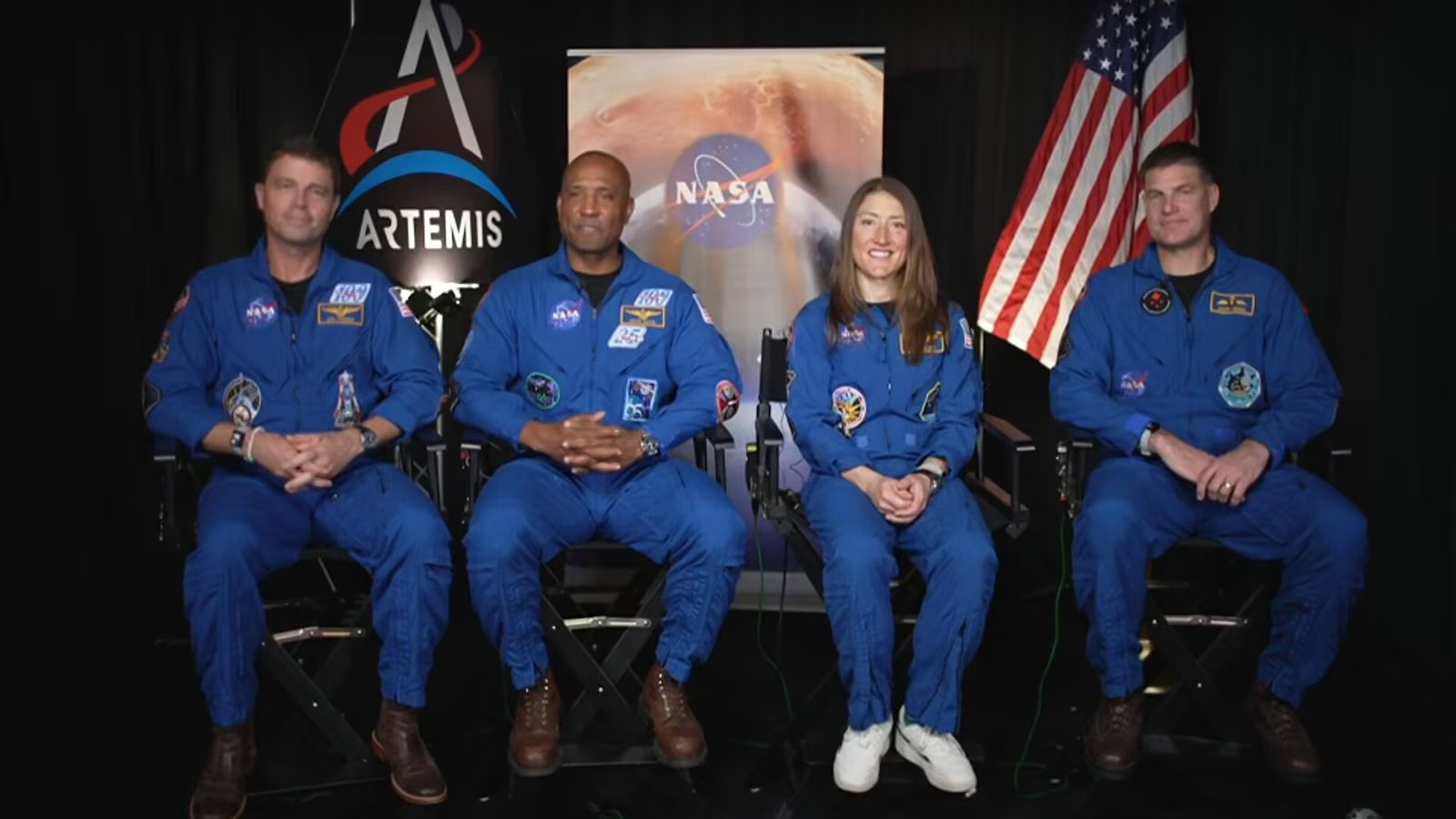
The Artemis II crew described in detail what the intense reentry and textbook splashdown were like in an interview with ABC’s “World News Tonight” anchor David Muir, nearly a week after returning home from their historic 10-day journey to the moon and back.
“What people might not know is that reentry is at least 10 times wilder of an experience than any rocket launch,” Christina Koch, one of the flight’s mission specialists, told Muir during an interview Thursday alongside her three fellow Artemis II crew members from NASA’s Johnson Space Center in Houston, home of the Mission Control Center.
“It is the most phenomenal part, the grand finale of any space flight. Coming back to a planet is no joke. It’s not like landing a plane,” she said.

NASA’s Artemis II mission astronauts commander Reid Wiseman, pilot Victor Glover, mission specialist Christina Koch, and Canadian Space Agency’s Jeremy Hansen sit for an interview with ABC News’ David Muir, on April 16, 2026.
ABC News
The friction and compression of the Earth’s atmosphere as the Orion fell created a plasma bubble that engulfed the spacecraft, not allowing radio signals in or out for a 6-minute communications blackout during the reentry. The capsule also faced heat up to 5,000 degrees Fahrenheit.
“When that plasma comes it’s like nothing you can believe,” Koch said, describing looking out the window and seeing its flash. “The fireball that we were in got so bright that it was like an arc welder. You almost couldn’t even look at it.”
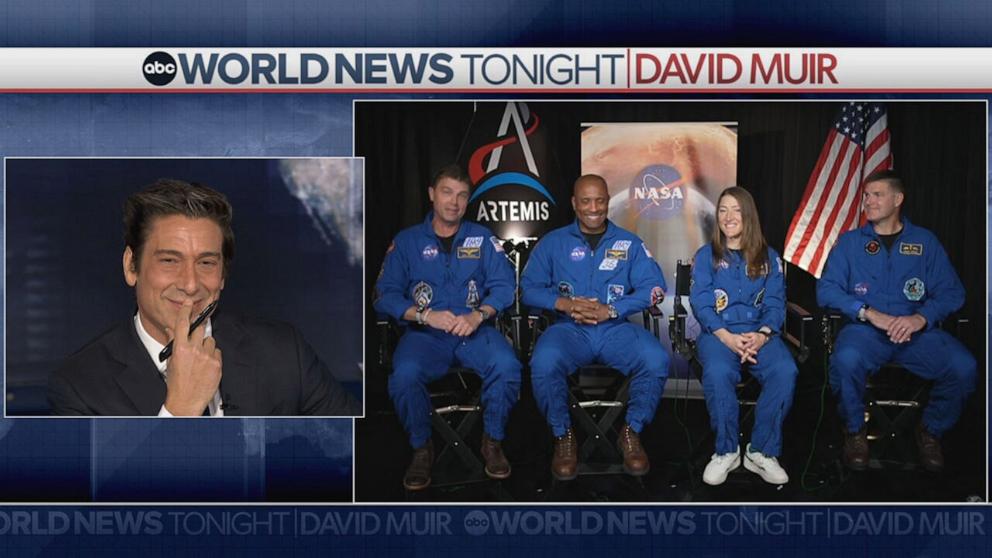
NASA’s Artemis II mission astronauts commander Reid Wiseman, pilot Victor Glover, mission specialist Christina Koch, and Canadian Space Agency’s Jeremy Hansen are interviewed by ABC News’ David Muir, on April 16, 2026.
ABC News
She said that as they fell through the atmosphere there was a “rumbling” that was not something they could have ever practiced on Earth.
Reid Wiseman, who served as the Artemis II commander, sought to reassure the crew, telling them, “Everything’s nominal,” or operating normally, she recalled.
“I thought to myself, he has no idea if this is nominal, but I’m glad he just said that, because I feel better now,” she said.

NASA’s Artemis II mission astronauts commander Reid Wiseman, pilot Victor Glover, mission specialist Christina Koch, and Canadian Space Agency’s Jeremy Hansen sit for an interview with ABC News’ David Muir, on April 16, 2026.
ABC News
Wiseman commended the pilot for the mission, Victor Glover, for his composure during the reentry.
“I want to tell you, this man is the real deal,” Wiseman said. “We’re under four Gs for about 13 minutes, and the entire time he had a cadence of altitudes and speeds, and he never missed a beat. It was the most impressive operational experience I have been through watching him go through entry.”
For his part, Glover said the heat was “literally and figuratively intense,” but described how vital it was to keep that cadence.
“In that blackout, not only do we lose the ability to communicate, we lose the ability for Mission Control to command to the vehicle,” he said. “And so if something were to go wrong, one of the reasons that cadence was so important is we know when things should happen, and if they don’t happen automatically, we have to get involved and make sure that the forward bay cover comes off the drogue and pilot and mains come out. So we just had to be on it.”
Glover called Friday’s dramatic splashdown a “spiritual moment.”
“I don’t remember exactly, I think I just said, ‘Welcome back to Earth.’ It was such a good moment,” he said.
Canadian astronaut Jeremy Hansen, another mission specialist, expressed gratitude for the Orion capsule upon seeing it after the successful mission.
“I just had, like, this immense feeling of gratitude for that ship, because it went through a lot and it kept four humans alive,” he said.
Crew reflects on emotional moment
The crew also reflected on an emotional moment during the journey captured on NASA’s livestream, when Hansen said they wanted to propose naming one of the craters on the moon after Wiseman’s late wife, Carroll.
“It’s the pinnacle of my entire life to be able to do something like that on this crew, to honor a woman who was so amazing, and the mother of my two daughters,” Wiseman told Muir.
“It’s etched in my mind forever,” the commander continued. “I know for my two daughters, who had to watch their dad hurl himself around the moon with three of his best friends, that was a gift that can never be repaid.”