dailynewsnblog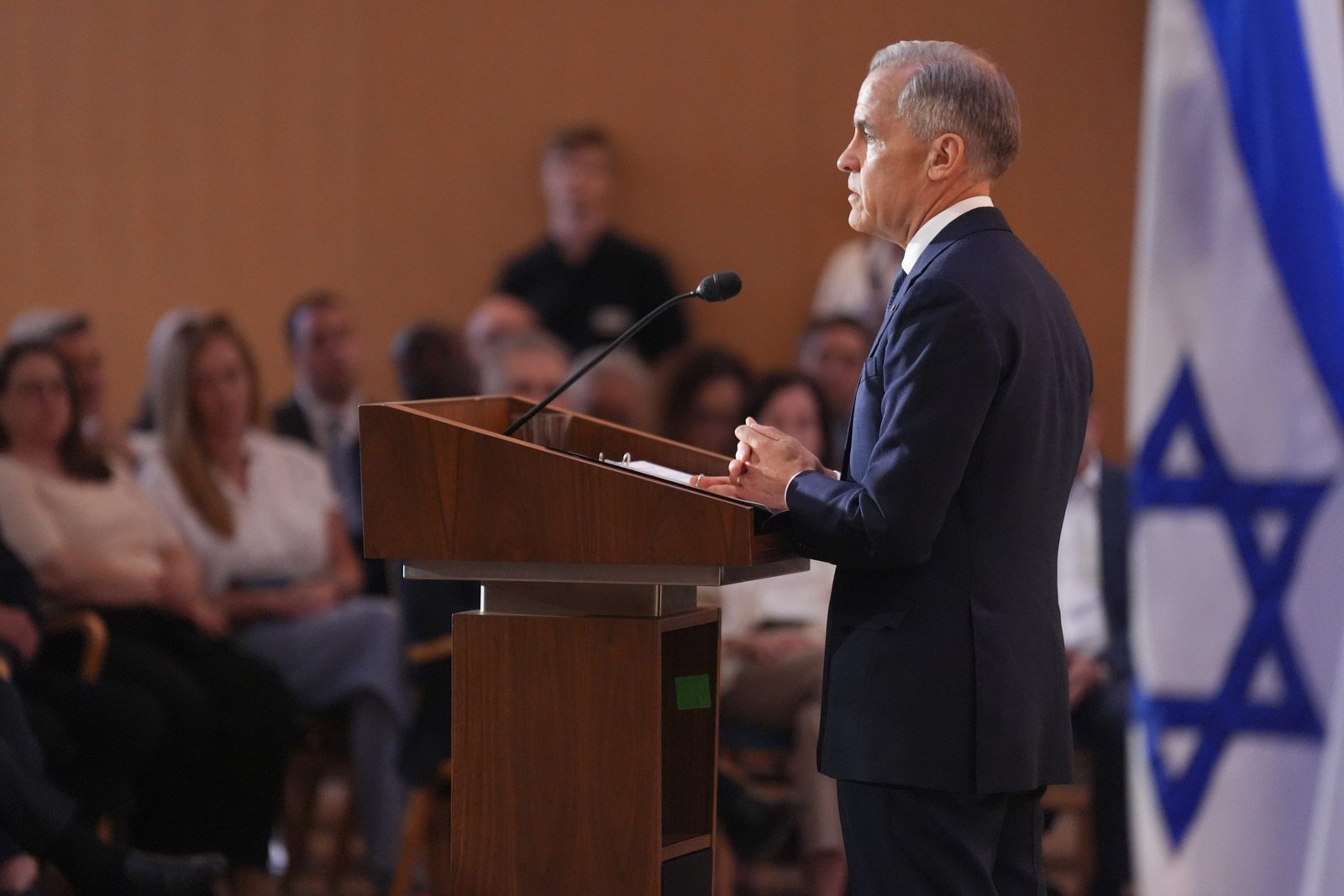
History teaches us that antisemitism does not burn itself out; it mutates by exploiting the language of the day to cloak an old hatred in new respectability, and only moral clarity backed by real consequences is enough to stand up to it.
This week at Holy Blossom Synagogue in Toronto, Prime Minister Carney did what Canadian leaders have gotten very good at: he stood at a podium and spoke about antisemitism in a way that sounded serious, felt comforting to the people in the room, and carefully avoided the one thing that actually defines it in our time, ignoring or being ignorant of the history of antisemitism.
Antisemitism is not “just another” prejudice. It is one of the most durable, shape‑shifting hatreds in human history, and its power lies in how easily it morphs into whatever story a given era wants to show why Jews are a problem and deserve to be targeted.
In medieval Europe, when religion was the lens through which people understood the world, antisemitism was cast as theological. Jews were painted as Christ-killers cursed by God, justifying everything from forced conversions to expulsions and massacres. Alongside that came blood libels, alleging that Jews kidnapped Christian children to use their blood in religious rituals. Completely invented and repeatedly disproven it was still widely believed, inciting countless attacks across Europe, culminating in centuries of pogroms that in some cases wiped out whole communities.
When church doctrine wasn’t enough to keep Jews in their place, economics filled the gap. Barred from many professions and from owning land, Jews were pushed into roles which Christians were often forbidden by their own laws to hold, such as moneylending. Those same societies then turned around and branded Jews as greedy usurers, parasites, and manipulators. The system forced Jews into economic niches, and antisemitism blamed them for occupying them.
In Eastern Europe and Russia, this hatred exploded in pogroms, which were often organized state‑sanctioned campaigns of violence against Jewish communities. Homes, synagogues, and businesses were looted and burned, with Jews beaten, raped, and murdered while authorities looked away or actively participated. These were not spontaneous outbursts; they were eruptions of a simmering belief that Jews were perpetual outsiders and legitimate targets.
By the 19th and early 20th centuries, as nationalism took hold, antisemitism reinvented itself again, making Jews a threat to the purity of the nation. Conspiracy theories like The Protocols of the Elders of Zion, which painted a picture of Jews secretly controlling the world’s finances, media, and governments, and provided the twisted logic that made the Holocaust seem not just possible, but, to its architects, necessary.
After the gas chambers were exposed and the camps liberated, open calls for eliminating Jews became less acceptable in mainstream discourse in the West, but the hatred did not vanish; instead, as it always does, it adapted. With explicit racism increasingly stigmatized, and with Jews having gained a state of their own in 1948, antisemitism shifted its focus.
Today, the central villain isn’t the Christ-killer, the blood-drinker, or the race-contaminator; it’s the “Zionist”, a Jew who believes in the right of the Jewish people to self‑determination in their ancestral homeland. This new antisemitism, anti-Zionism, declares the world’s only Jewish state uniquely evil and illegitimate, making any Jew who refuses to renounce their connection to that state, “complicit,” or “genocidal,” and therefore fair game. In the postwar era, antisemites discovered that while they could not always get away with chanting “Death to the Jews,” they could chant “From the river to the sea,” and claim it to be about human rights, not wiping Israel off the map.
To be clear, this history lesson is important in understanding the antisemitism Canadian Jews are living with in 2026. This hatred exploded into the open after October 7, when Hamas slaughtered, raped, burned, murdered and kidnapped Israelis, and we witnessed crowds in Western cities responding not with horror, but with celebration, including here in Canada.
This is the antisemitism Mark Carney could not bring himself to name, and frankly, that was a choice. Because the moment you say, out loud, that radical anti-Zionism is fueling antisemitism in Canada, you are no longer just pointing at anonymous extremists online, but instead to parts of the labour movement, campus activist coalitions, and NGOs, some of whom are currently receiving government grants.
Across Canada, Jewish schools, community centres, and synagogues are under constant guard, while on campuses across the country, Jewish students face harassment and Jewish-owned businesses are targeted and boycotted not for anything they have done, but for who they are, a move reminiscent of 1930s Germany. Residential neighbourhoods with mezuzot on the doors are marched through and surrounded as crowds scream for “intifada”, a word defined in living memory by suicide bombings and shootings of civilians, all while insisting it’s just “criticism of Israeli policy.”
This is the predictable result of a narrative that says Zionism is racism, Israel is a crime, and any Jew who supports it is evil, and the Canadian government isn’t an innocent bystander in this.
For years, federal and provincial governments have been funding organizations that push this very narrative, giving grants to groups that glorify terrorism as “resistance” and demonize Zionist Jews. Prime Minister Carney knows this, or he should. Yet in a major speech on combating antisemitism, there was not a word about reviewing or cutting funding to these groups, or the simple principle that the government shouldn’t pay people to spread hate, no matter how cleverly they disguise it.
A speech that met the moment would have said so plainly. It would have stated clearly that you can criticize Israeli policy all you like, but if you call for the eradication of that state and even further, if you hound Jews in Canada for their connection to it, you have crossed from politics into bigotry. It would have announced that organizations engaging in that behaviour will not receive public money and acknowledged that law enforcement has the tools they need to enforce existing laws on harassment, intimidation, and hate-motivated crime, not just when it is politically convenient. Instead, we got another carefully worded, ultimately cost-free performance, strong enough to reassure those in the room that their pain is heard but weak enough to leave untouched the networks and narratives that are causing that pain.
History teaches us that antisemitism does not burn itself out; it mutates by exploiting the language of the day to cloak an old hatred in new respectability, and only moral clarity backed by real consequences is enough to stand up to it. But the Prime Minister clearly lacks the will to say that the hatred wearing the mask of anti-Zionism is antisemitism, and to act accordingly. Mark Carney had a chance this week to break the pattern, but instead, he kept to it.
Ariella Kimmel is the president of Winston Wilmont. Ariella has worked for a number of conservative governments, including in the Stephen Harper government, as a chief of staff in Alberta and most recently for Monte McNaughton while he served as minister of labour and immigration.
The views, opinions and positions expressed by all iPolitics columnists and contributors are the author’s alone. They do not inherently or expressly reflect the views, opinions and/or positions of iPolitics.