dailynewsnblog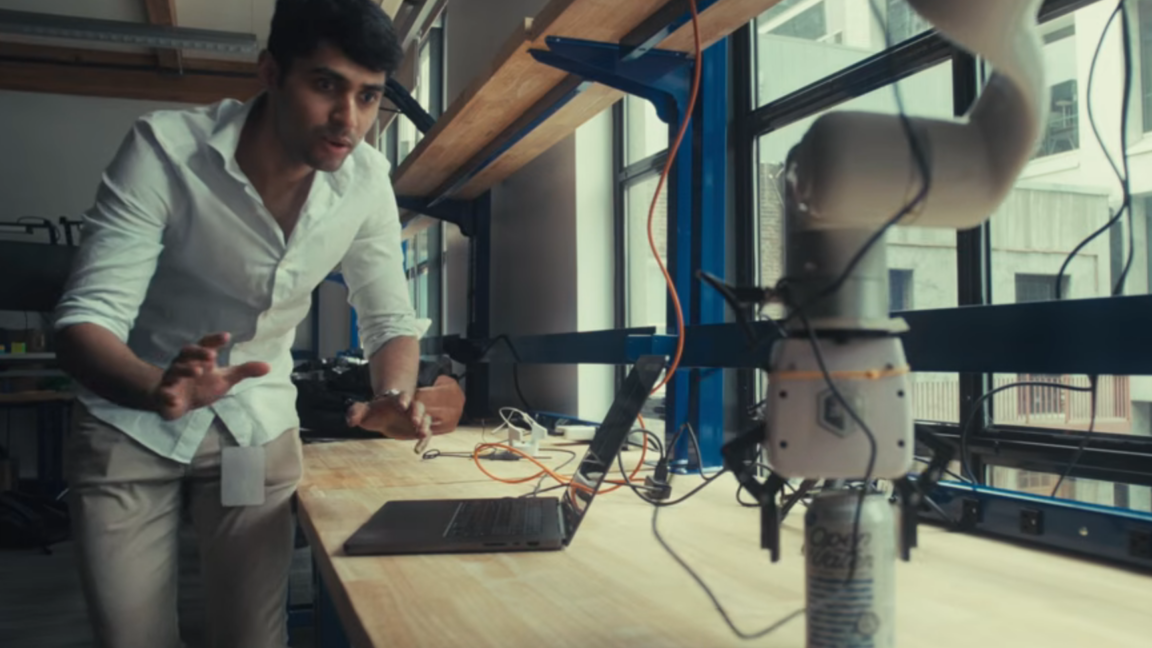
Anthropic gave the example of a model like Claude adjusting a laser, checking the results via a separate camera, then repeating the process to automatically calibrate the whole system. MHS could also allow an AI model to focus a microscope, analyze the results, decide what part needs more observation, then automatically move the microscope to the relevant section to continue the experiment.
In a video, Anthropic also showed Claude reasoning how to get a robotic arm to pick up an aluminum can even though it had not been specifically trained on the required steps. And rather than reasoning through each step each time, Anthropic says MHS-enabled models can sequence steps across instruments by writing API scripts and adjusting them as conditions require.
Anthropic introduces MHS in a promo video
Anthropic says MHS also includes a standardized tagging system to describe hardware’s real-world constraints for models that may have been trained more in the virtual world. That includes encoded information about the hardware’s physical characteristics (e.g., the weight and range of a robot arm) as well as its adjustable parameters, measurement options, and enforced safety limits. These tags can then be integrated into a reference file that can quickly provide an AI model with crucial information about a device it has no previous training experience with.
For now, Anthropic says it is working with “a first group of scientific research labs and advanced manufacturers” during an MHS preview period, including Amazon Web Services (Strands Robots), Hugging Face (LeRobot), Raspberry Pi, Automata, and Universal Robots. These partners will help Anthropic “build safety evaluations and develop best practices for AI systems operating physical equipment,” the company writes. After that, the plan is for MHS to eventually become an open source and “agent agnostic” standard for integrating AI and physical systems.
In early testing with scientific partners over the last year, Anthropic says it “saw MHS reduce the time it took to integrate devices, mak[ing] it possible to iterate faster in a variety of experimental settings.”
“If you can test hypotheses faster, you could create general technologies faster,” Kemeny said in a promo video alongside the announcement. “This is how a century of progress can condense into a decade.”