dailynewsnblog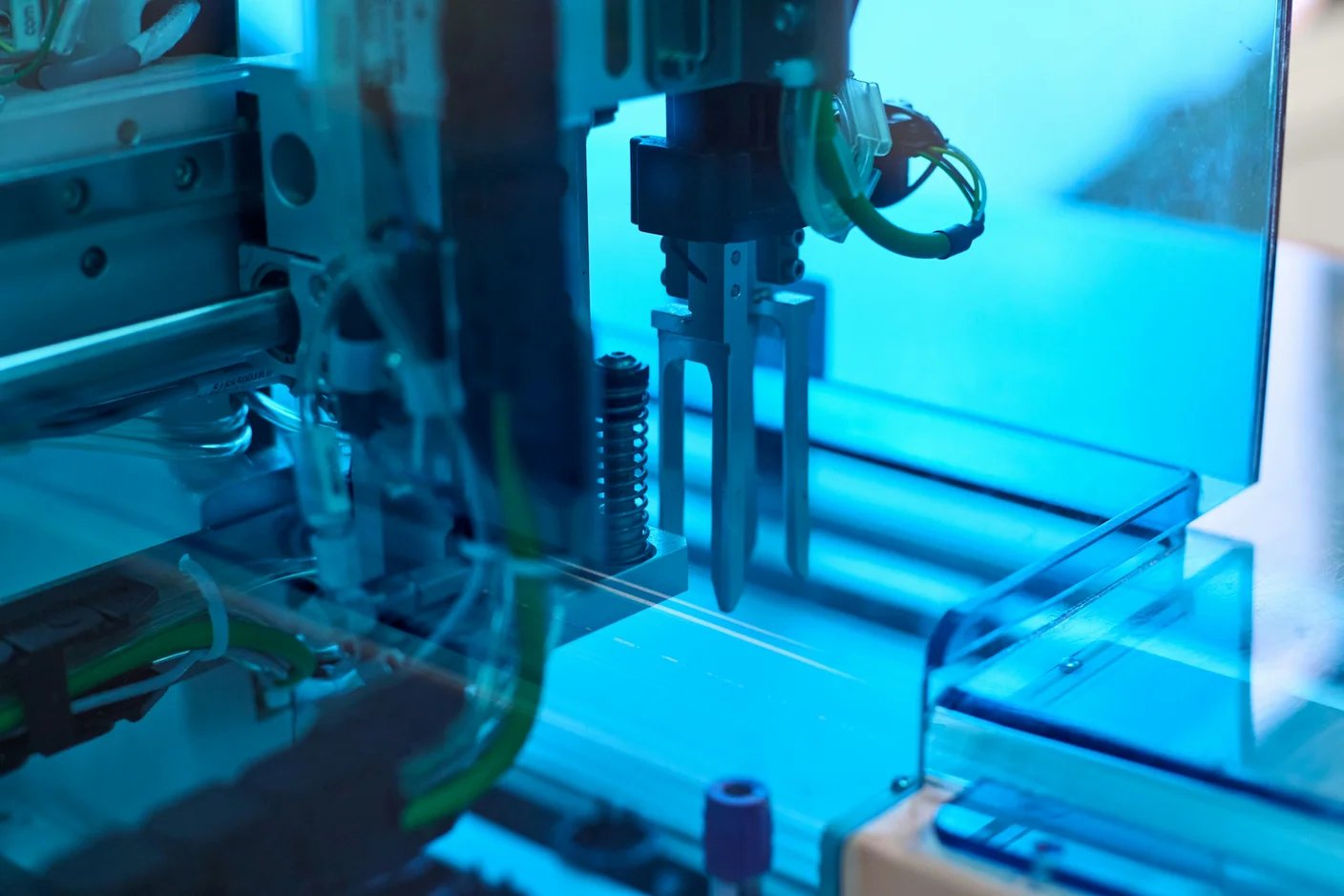
Scientific research often depends on complex laboratory equipment that only specialists know how to use. But Anthropic is now rolling out a system that allows AI agents to control lab devices and autonomously carry out experiments.
Laboratory automation technology has been around for decades but getting different bits of equipment to talk to each other has traditionally been a major headache. Most instruments use their own proprietary interfaces, so connecting a microscope to a robotic arm or a liquid handler typically requires bespoke software that takes specialists weeks or even months to build.
Anthropic says its new Model Hardware Standard can reduce this process to minutes by giving devices a common language. It relies on a standardized “driver” that lets any programmable device describe itself to an AI agent, allowing the AI to handle the integration. The company announced it’s opening the system up as a research preview to an initial group of labs and manufacturers.
“Our hope is that the standard can be of use to researchers, engineers, and other practitioners in speeding up the process of discovery and experimentation in any domain that uses devices with a programmable interface,” Anthropic said in a press release.
The standard is similar to Anthropic’s Model Context Protocol, which makes it easier for AI to interact with third-party software, but the new system is aimed at hardware instead. The driver at its heart is essentially a piece of software that sits between a computer and a piece of hardware, translating instructions from one into signals the other can act on.
Most laboratory instruments already run some form of driver, but each has traditionally spoken its own dialect, which is why connecting them has required custom code that can translate between devices. Anthropic’s new driver standardizes that dialect using deliberately simple commands such as “read” or “write,” which can refer to anything from checking a temperature to setting the length of an operation.
Because every device speaks in these same basic terms, machines can find each other on a network and exchange data without a custom program to translate between them. The driver also makes it easier for the company’s Claude agents to learn how to use a device they’ve never seen before.
The standard lets users encode key details, like the weight of a robotic arm, using natural language. They can either write out their hardware setup themselves or have an agent interview them about it. The system then turns that information into a reference file covering what a device can measure, what can be adjusted, and what safety limits apply.
Anthropic says this lets its agents orchestrate complex experimental processes across multiple instruments in often highly complicated and interactive ways. “We’ve found that Claude interacts with experiments and hardware in an exploratory manner, much as a scientist would,” the company writes. “We observed Claude make an adjustment to a laser, observe the results through a camera to assess how its adjustment moved the laser beam, and repeat the process, seeking to understand the sequence of events.”
Speaking to the Financial Times, Anthropic scientist Alek Kemeny described watching Claude locate a specific, unfamiliar structure in a live brain tissue sample during a neuroscience experiment by manipulating a microscope’s mirrors and lasers on its own. “The neuroscientist sitting there said: ‘Yep, that’s right,’” said Kemeny.
The new standard could be key to the company’s ambition to move beyond its key markets of software development and knowledge work and allow its AI to start having an impact in the physical world. But allowing AI, which is still not immune to hallucinations, to control real-world hardware carries considerable risks.
“It is an impressive proof of concept, but how do we ensure safety in the physical world? Because small errors can matter here,” Kaoutar El Maghraoui, principal research scientist at IBM, said on the company’s Mixture of Experts podcast.
That’s probably why Anthropic is only releasing the standard to a small number of partners initially, and it has committed to working with them to build safety evaluations for AI systems that are operating physical hardware. If the early launch goes well though, AI agents could soon make an impact in far greater swathes of the economy.