dailynewsnblog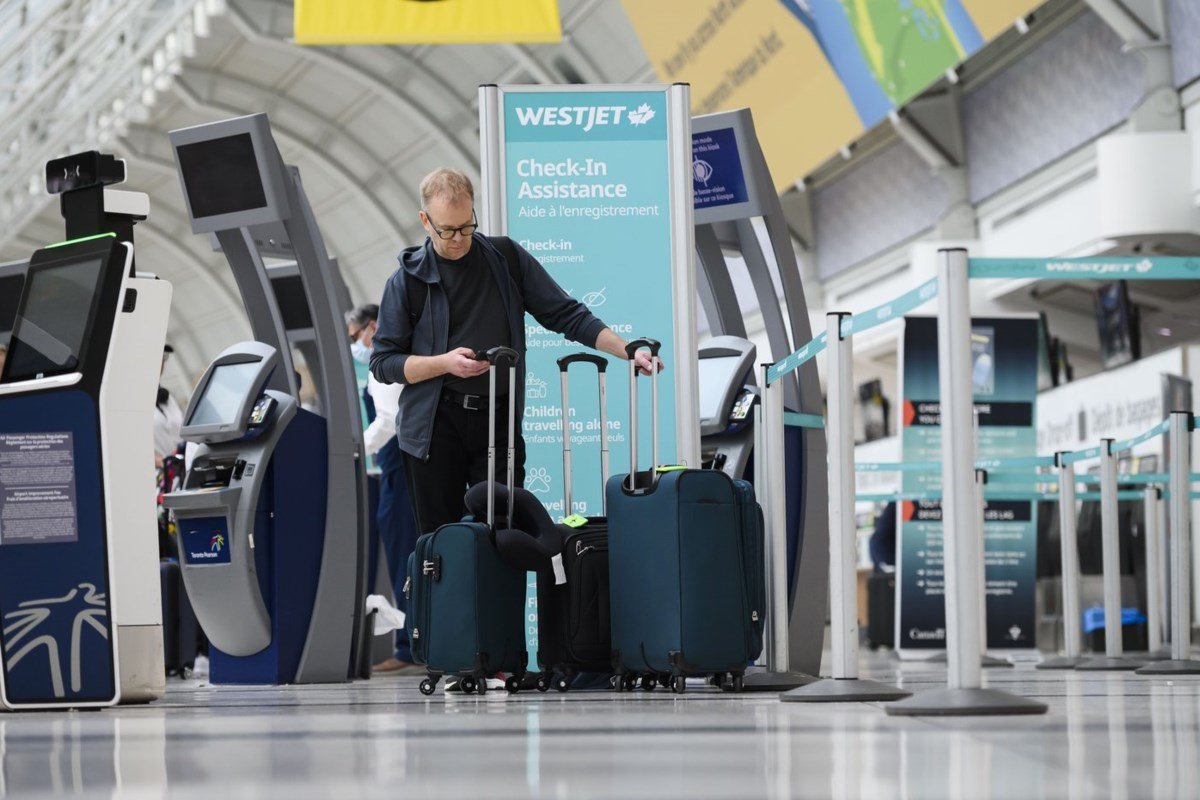

MONTREAL — WestJet has followed Air Canada in hiking baggage fees amid soaring jet fuel prices, marking the airline’s third increase in two and a half years — and a line item that is unlikely to drop any time soon, experts warn.
MONTREAL — WestJet has followed Air Canada in hiking baggage fees amid soaring jet fuel prices, marking the airline’s third increase in two and a half years — and a line item that is unlikely to drop any time soon, experts warn.
Starting Thursday, customers began to pay an extra $5 each for the first and second bag checked in advance. The fee grows to an extra $10 each for the first and second bag checked at the airport, the Calgary-based airline said in an email.
That means travellers buying its “ultra-basic” tickets will now pay between $55 and $65 for the first piece of luggage and $70 to $83 for the second on trips in Canada and to the U.S., Mexico and the Caribbean — if they check in beforehand. Doing so at the airport will run them between $70 and $112.
The price tag goes up further for flights to Europe and Asia.
The cumulative hikes mark a striking increase from the $20 fee passengers paid to check a bag on many WestJet flights as recently as October 2023.
Customers with overweight or oversized luggage will also pay $50 more than before.
“These updates are due to industry revenue trends as well as impacts from current global conditions,” said WestJet spokesperson Jen Booth.
The decision mimics Air Canada’s move last week to boost baggage fees, which will rise to $45 from $35 for the first checked bag in its basic economy class on domestic, U.S. and sun destination flights.
The pricier policies are among a slate of measures including fuel surcharges, higher fares and scaled-back flight schedules that airlines across the globe have implemented in a bid to offset the surging cost of fuel triggered by the war launched by the U.S. and Israel against Iran nearly two months ago.
Amid a shaky ceasefire, Air Canada last week announced it would suspend a half-dozen routes, citing fuel costs that render them unprofitable.
On Monday, WestJet laid out flight capacity cuts from April through June — that month’s reduction will reach six per cent.
Transat said Wednesday it would axe about 1,000 flights because of energy shocks triggered by the ongoing closure of the Strait of Hormuz, which typically carries about a fifth of the world’s oil.
Jet fuel prices shot up at an even faster pace than crude oil amid the threat of massive shortages as the closure drags on and refineries in the Persian Gulf deal with damage from Iranian attacks. On Thursday, the price of jet fuel from the U.S. Gulf Coast sat at roughly double prewar levels.
“You can bet that the CEOs and the CFOs at every airline around the planet right now are sending orders down the line: conserve every single litre of fuel that we can and find us every other option,” said independent aviation analyst Rick Erickson.
Presuming those eye-watering energy prices eventually come back down to earth, experts say airlines will take some time before lowering fares, surcharges and, especially, baggage fees, as they seek to make up for the financial hit.
“How does an airline compensate itself for the losses that are occurring for the first quarter and the second quarter and maybe even the third quarter this year? Fares are not going to track the price of oil, because there is this residual loss that has to be accounted for,” said Jay Sorensen, president of consulting firm IdeaWorksCompany.
For now, the ballooning price of kerosene-based fuel — the oil derivative that powers planes — means older, less energy-efficient aircraft and routes with thinner earnings need to be axed, he said. That carriers have opted to park many planes in storage — Lufthansa cancelled 20,000 summer flights this week — points to how dire the situation is.
“When an airline grounds an airplane or cuts back flights, that’s an indicator of true financial pain, because this is a business that thrives on increasing activity over a fixed-cost base,” Sorensen said.
“It’s going to be a horrible year for the airline industry.”
WestJet and Air Canada declined to say whether they would decrease baggage fees or other recent price hikes after energy costs settle down.
“The situation is dynamic. We’ll continue to review cost impacts across the business and will assess fees and fare structures that best align with guests and cost management,” WestJet’s Booth said.
Air Canada spokesperson Peter Fitzpatrick said “competitive and other reasons” prevent it from predicting prices further down the runway, with market and regulatory considerations among the many factors that go into setting gross fares.
The additional money passengers pay for checked bags, pre-selected seats and onboard snacks makes up a growing share of airline revenue, even as a debate swirls around whether the charges amount to “junk fees” or if the lower base price offers greater choice for travellers.
Globally, so-called ancillary revenue grew more than five per cent per customer to a record $148 billion in 2024, while base fares dropped, according to an IdeaWorksCompany report last fall.
Ancillary income derives mainly from three streams: à la carte services such as meals, onboard Wi-Fi and extra bags — or any bags; frequent flyer programs; and commission-based offerings such as hotel bookings, car rentals and travel insurance.
Branded fares, a fourth stream that includes WestJet’s “PremiumFlex” fare class and others, cost passengers more but bundle items such as free checked bags, food and drinks as well extra legroom and refundable cancellations.
“A portion of that fare is allocated to paying for the services included in that bundle,” he said.
However, those in basic economy have to pay more than ever, and probably will for much of the year.
This report by The Canadian Press was first published April 23, 2026.
Companies in this story: (TSX:AC, TSX:TRZ)
Christopher Reynolds, The Canadian Press