Analysts weigh impact of surging gasoline prices on inflation, consumers


Economists and strategists are taking stock of what surging oil prices mean for consumer spending, inflation, and ultimately, the Federal Reserve’s path this year.

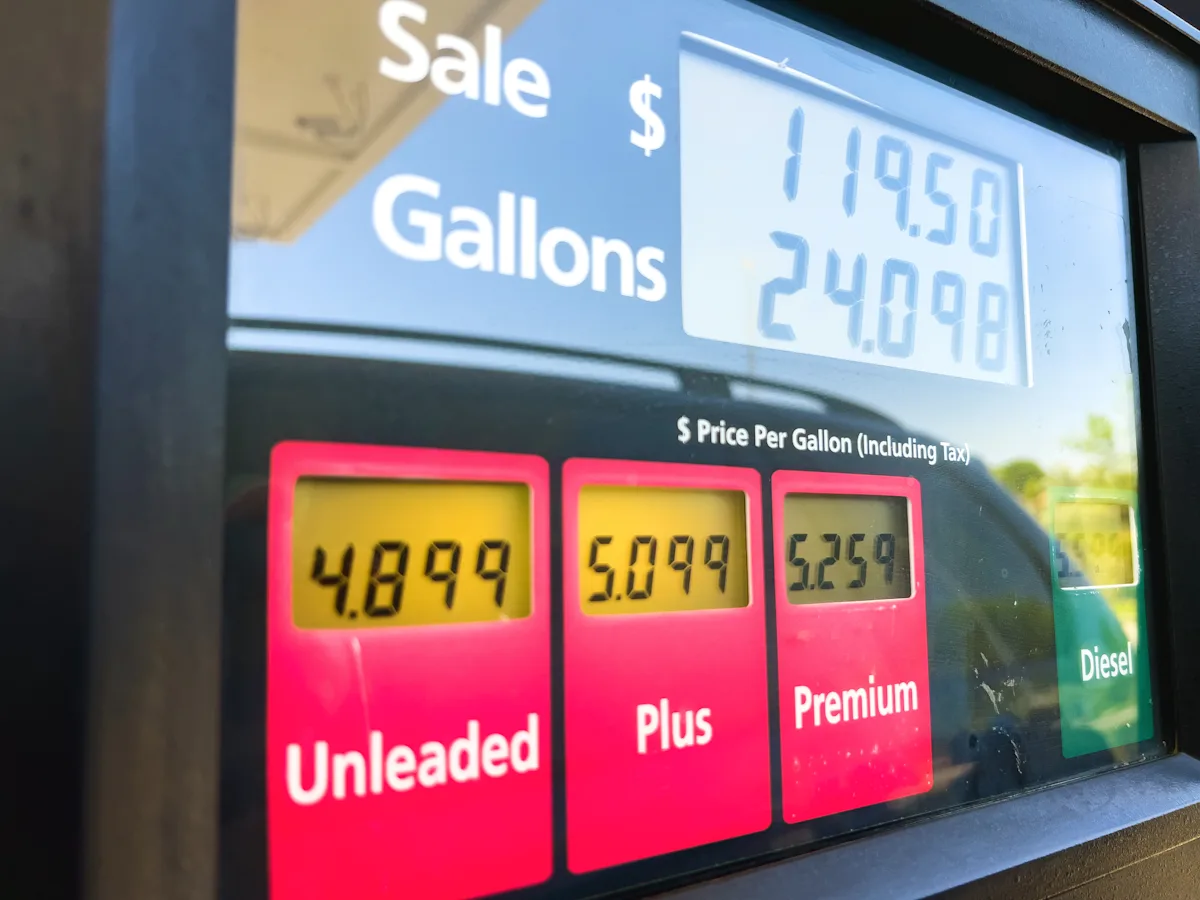
Gas prices have gone up by nearly $1 in just a month, topping $3.92 per gallon, according to AAA data. At this pace, analysts foresee $4 gasoline arriving within days.

Meanwhile, Americans are spending roughly $370 million more today on gasoline than they were a month ago, according to GasBuddy data.

“For most consumers, you can’t avoid gasoline price increases. It functions like a tax, very similar to a tariff,” said Luke Tilley, Wilmington Trust chief economist and the Philadelphia Federal Reserve’s former economic adviser.

Read more: How oil price shocks ripple through your wallet, from gas to groceries

“Because we have normal wage growth and essentially no job growth, this is going to end up weakening the consumer. They’ll pull back on services. They’ll pull back on everything other than gasoline.”

Deutsche Bank senior US economist Brett Ryan weighed in on what many call the “energy tax,” calculating that for every $10 rise in oil prices, gas jumps roughly 25 cents. With the price at the pump up nearly a dollar per gallon, Ryan estimates a surge of $115 billion in consumer spending on energy.

Although wallets will feel the pinch, the tax breaks from the Trump administration’s One Big Beautiful Bill are expected to provide some relief.

“Where it starts to overtake the benefits from the tax bill is around $140 to $150 [per barrel],” said Ryan.

On Friday, West Texas Intermediate (CL=F), the US benchmark, was trading near $97 per barrel, while Brent (BZ=F) hovered near $106 per barrel.

The key question is how rising fuel costs will affect inflation.

With diesel prices hovering at a four-year high, concerns have grown about the impact on transportation, especially since roughly 70% of goods in the US are transported by truck.

“There’s just lots of ways that oil and derivatives of oil get into the production and transportation of many, many things,” said Fed Chair Jerome Powell on Wednesday when asked about rising fuel costs. The Fed opted to keep interest rates flat in its March meeting.

Read more: How the Fed rate decision affects your bank accounts, loans, credit cards, and investments

“In the near term, higher energy prices will push up overall inflation, but it is too soon to know the scope and duration of the potential effects on the economy,” said Powell.

Fed officials have raised their inflation outlook for 2026 but do not anticipate significant further weakening in the labor market.

That shift has led the market to scale back expectations for rate cuts this year. Polymarket bettors assign a 27% chance of one rate cut, and a 34% chance of no cut, in 2026. That’s assuming the Fed doesn’t have to contend with a deteriorating job backdrop. (Disclosure: Yahoo Finance has a partnership with Polymarket.)

“That’s basically the market telling you this isn’t a recession risk, this is an inflation risk right now,” said Ryan.

But Tilly said the Fed may be forced to cut more than expected this year as labor weakness strains the consumer.

“The critical thing here is that when you have an energy price shock that’s coming from the supply side, if you don’t have strong enough demand for consumers, then it doesn’t play through to core inflation,” he said.

He added that weaker consumer spending could translate to slower inflation on services, similar to what happened when tariffs came into play in 2025.

So far, the S&P 500 (GSPC) has dropped roughly 5% since the Middle East war began.

Some strategists say it’s only a matter of time before rising input costs begin to show up in forward guidance as companies prepare to report earnings next month.

“A delayed reaction doesn’t mean there won’t be one,” Lee Munson, Portfolio Wealth Advisors’ chief investment officer, told Yahoo Finance.

“This is going to bake its way into earnings,” he said. “Input prices are going to go up.”

The price of diesel is advertised at a gas station Thursday, March 19, 2026, in Hyattsville, Md. (AP Photo/Stephanie Scarbrough)
The price of diesel is advertised at a gas station Thursday, March 19, 2026, in Hyattsville, Md. (AP Photo/Stephanie Scarbrough) · ASSOCIATED PRESS

Ines Ferre is a senior business reporter for Yahoo Finance. Follow her on X at @ines_ferre.

Click here for in-depth analysis of the latest stock market news and events moving stock prices

Read the latest financial and business news from Yahoo Finance


Source link

  • Related Posts

    Home health aides epitomize a key problem in the current job market

    One of the country’s fastest-growing jobs — home health and personal care aides — is also among its lowest-paying. About 4 million people were employed in the field in 2024.…

    Five things to watch for in the Canadian business world in the coming week

    TORONTO — Five things to watch for in the Canadian business world in the coming week: Dollarama earnings Dollarama Inc. is set to report its fourth quarter and fiscal year…

    Leave a Reply

    Your email address will not be published. Required fields are marked *

    You Missed

    Transportation Secretary Duffy says ICE agents are trained and can assist TSA at airports

    Transportation Secretary Duffy says ICE agents are trained and can assist TSA at airports

    FCA deal gives Palantir yet more access to inner workings of power in Britain | Palantir

    FCA deal gives Palantir yet more access to inner workings of power in Britain | Palantir

    Parts of Nova Scotia, Quebec get early spring blast of snow

    Parts of Nova Scotia, Quebec get early spring blast of snow

    There can (still) be only one: Highlander is 40

    There can (still) be only one: Highlander is 40

    Home health aides epitomize a key problem in the current job market

    Home health aides epitomize a key problem in the current job market

    Rural northeast Pickering could become home for 72,000 people. Critics say the city is moving too fast

    Rural northeast Pickering could become home for 72,000 people. Critics say the city is moving too fast