dailynewsnblog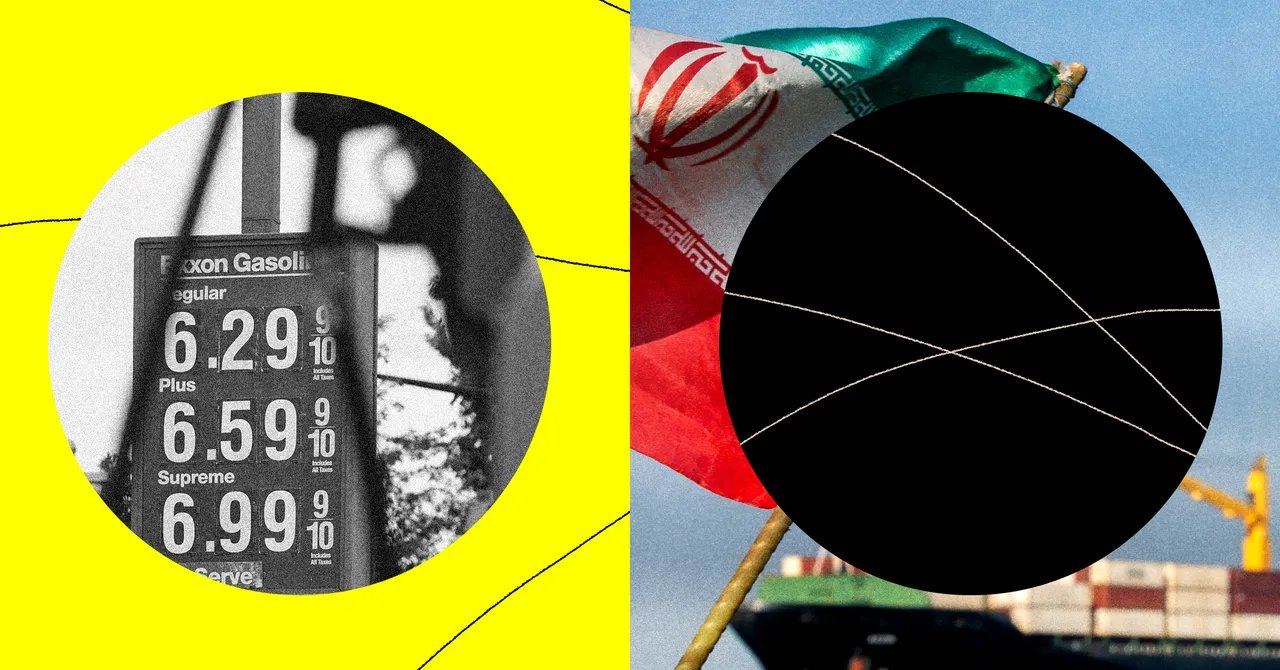
On Wednesday evening, President Donald Trump officially signed a Memorandum of Understanding with Iran, a deal that sets off a 60-day ceasefire and longer-term nuclear talks between the two nations. It also, critically, reopens the Strait of Hormuz, that narrow waterway between Iran and Oman that usually serves as one of the globe’s vital energy shipping routes, with 20 million barrels of oil moving through daily.
By Thursday morning, 10 vessels that had been stranded for all 110 days of the US-Iran war began moving out of the area, according to Windward, a maritime intelligence firm. The Strait of Hormuz seems open for business.
But experts say that US consumers shouldn’t expect gas prices—which have jumped more than 35 percent nationally since late February—to recover soon. Shippers are still nervous about the tenuous peace in the Strait, which remains seeded with an indeterminate number of underwater mines. It doesn’t help that Trump continues to threaten violence in the area. “We will bomb them” if Iran doesn’t permanently shut down its nuclear program, the president told reporters Wednesday. “It’s amazing what bombs can do.” Meanwhile, the machinery of oil production is only just grinding back to a start.
“For the consumer, the big thing to realize is that there’s no sign that prices are heading back to February levels just yet,” says Jason Miller, a professor of supply chain management at Michigan State University’s Eli Broad College of Business. “The global oil supply-demand balance, big picture, has been incredibly disrupted.” Right now, he says, people who buy gas, food, fertilizer, and anything else dependent on oil-based products shouldn’t count on a rapid recovery.
Though crude oil prices have fallen since the memorandum’s announcement, consumers would be wise to budget for the higher wartime prices for the longer haul.
“This is an incredibly fragile situation,” Miller says. “None of these things would have happened if you had not had the war.”
The Shipping News
Jakob Larsen, the chief safety and security officer at BIMCO, the world’s largest international shipping organization, said in a written statement Thursday that the industry still views the Strait as a safety risk for vessels. Its central part is “mined and un-navigable,” he wrote, which means ships’ safest routes right now are likely in narrower channels closer to Iran or Oman. The memorandum did not include important details that will determine how the next weeks and months will look, shipping-wise: which routes are safest, how and when ships might move in opposite directions, whether militaries will get involved with standard operations, or whether Iran might impose tolls.
“We advise shipowners to continue doing thorough risk assessments and appeal to all parties to put the safety of seafarers first,” Larsen wrote. “Credible assurances from both sides of the conflict must be given before traffic can resume fully to pre-conflict levels.”
Part of the issue is that no one knows exactly how long it will take to make the Strait safe enough for shippers and their insurers. Routes “have got to be de-mined,” says Michelle Wiese Bockmann, a senior maritime intelligence analyst at Windward, and “nobody knows how long that will take—six weeks or six months.” Earlier this week, Trump said the effort to clear mines is already underway. The effort could include several countries, minesweeping ships, underwater drones that use sonar emitters to locate seafloor anomalies, military divers, and even US Navy-trained mine-detecting dolphins (though CNN reported last month that dolphins are unlikely to be currently operating in the area).