dailynewsnblog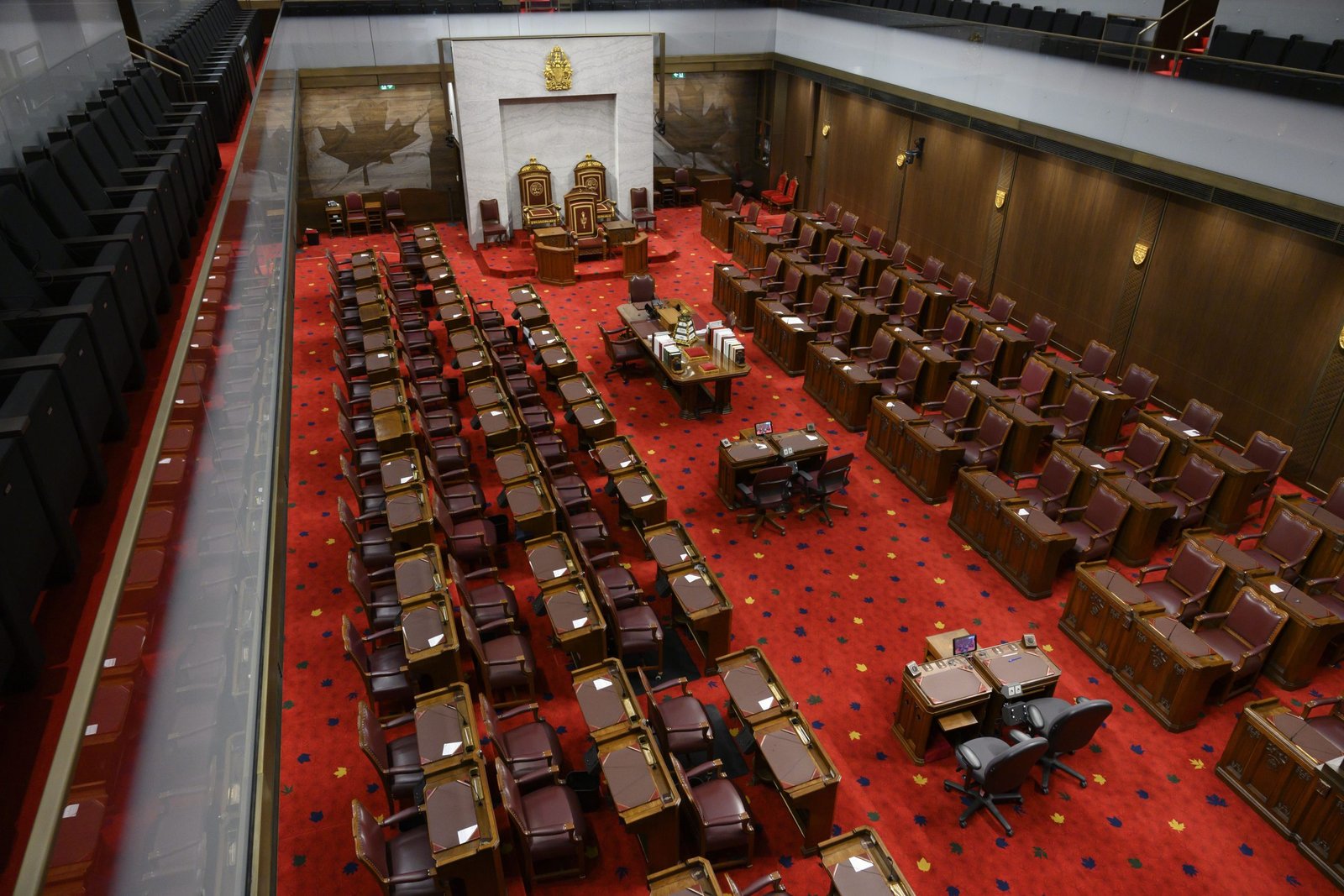
I would hope that the fact that we are independent and yet sober should be reassuring to both sides.
The passage of upcoming legislation on the fuel excise tax offers a good opportunity to understand how the new Senate works.
A recent headline in iPolitics read “No Senate group commits to fast-tracking the government’s fuel excise tax bill.”
Hmmm! Here’s my take.
READ MORE: No Senate group commits to fast-tracking the government’s fuel excise tax bill
The Senate has five groups.
Over 85 per cent of senators are independent – most appointed by Prime Minister Justin Trudeau, four recently appointed by Prime Minister Mark Carney), plus a handful of former Conservatives and Liberals appointed be Stephen Harper and Jean Chretien, who now sit as independents.
In the past decade, Senators have regularly amended government bills, as many as 27 per cent of the bills in one year, as opposed to the previous average of perhaps 1 per cent since Confederation. It is worth noting that the majority of amendments are accepted by the House when bills are returned for their approval. And further, where the House did not agree with the Senate, the Senate always accedes to the House determination, when it comes back on the second round.
Essentially, we review bills, and then accede to the decision of the elected House on this round.
I would argue this is what was originally intended – a complementary chamber.
The Senate has become an independent body. May be we are an unpredictable body, but a sober one… sober second thought and all that.
It is worth noting who the five groups are:
- The GRO, the Government Representative Office (5 members) — currently, Senator Pierre Moreau, the Government Representative in the Senate, plus four deputies, whose role it is to shepherd the elected government’s legislation through the Chamber.
- The Conservative Party, styled as the Opposition (12). Nine Harper appointees and 3 Trudeau appointees – Yes you read that right. Benefiting from historic rules, they get various unlimited speaking time and a bigger budget. To be clear, they never bought into Trudeau’s reforms and generally vote in step with their House counterparts as a block (the original Harper appointees at least).
- The Independent Senate Group (38)
- The Progressive Senate Group (17)
- The Canadian Senate Group (16)
- Unaffiliated (5)
There are currently 12 vacancies
When Senators arrive in the Senate they are appointed to sit as independents, (this goes for the Trudeau and Carney appointees), and are also “unaffiliated”, meaning they have not (yet) joined any of the above groups, a decision made by individuals generally on where they feel they best fit.
The role of the Senate Groups
The iPolitics article rightly portrays the latter groups three as “facilitative” in nature.
The groups caucus each week and largely discuss the Senate agenda and a host of procedural and administrative issues. They discuss the timing of each bill – what to expect in the days and weeks ahead, but not how its members will vote on the bill.
Each group is assigned committee seats and time in Question Period based on the numbers, so it is through our groups that we get spots on committee and during QP.
Back to the order of business: when a bill arrives in the Senate, the GRO does two important things. He meets with the leaders of the other four groups and sets out the government’s preferred timeframe, and together they work out a general calendar for the various steps – Chamber time, committee time, votes. These meetings are more productive if the leaders have had some discussion with their members in advance, so they can speak on behalf of their group. Most groups are generally willing to accommodate the government’s priorities, while keeping our obligation to serious review in mind.
The second thing the GRO does is to arrange a briefing for all Senators and staff from department experts, which is separate from the legislative process which includes three readings, speeches, and hearings by the relevant committee….sometimes more than one committee.
The article was accurate in saying the Senate could have sat an extra week in June to review two bills – but I might suggest given their scope, each bill deserved more than a single week of review and committee work. They will get speedy but thorough consideration early in the fall session.
While current rules do not allow the Senate and its committees to sit virtually, I believe it is time to re-think that, so we can sit extended weeks conveniently without travel cost, when important bills are at stake.
To rubber stamp or not
Ever since Justin Trudeau started appointing senators to sit as independents, there has been discussion about whether his reform was a good idea.
A Nanos poll commissioned by the recently retired Senator Donna Dasko found that 79 per cent of Canadians prefer the independent appointment process. A Senate that is free from the valid and important partisan approach of the elected House of Commons. Five per cent wanted to return to the partisan approach.
And this is the pressure we face from the two sides:
Side One: You are independent and your role is to review bills independently. Do not rush or rubber stamp government bills. (I would suggest, the 79 per cent view)
Side Two: You are an appointed body. Do not delay bills that are important to the elected government. If the government is in a hurry, fall into line. (The 5 per cent view?)
This view is enhanced by the “Salisbury Convention”, a precedent from the UK Parliament, which says the Senate should not unduly interfere with legislation that was in the government party’s electoral platform. There can be debate here on how closely the legislation reflects the platform and how in-depth the review should be. Rubber-stamping is never a good idea.
But this is our daily challenge, and frankly a good one!
I would hope that the fact that we are independent and yet sober should be reassuring to both sides. So quintessentially Canadian….
That’s a long explanation about why the leaders of the five groups cannot commit to rapid passage of any bill before it has arrived in the Senate (or the House).
Andrew Cardozo is an independent senator appointed in 2022, and is a member of the Progressive Senate Group. He has been an adjunct professor at Carleton University.
The views, opinions and positions expressed by all iPolitics columnists and contributors are the author’s alone. They do not inherently or expressly reflect the views, opinions and/or positions of iPolitics.