dailynewsnblog
The United States air traffic control system is a hot topic in 2026, with plenty of discussion ongoing. Modern aircraft navigate using satellite precision, but the ground-based brains of the national airspace still rely on eight-inch floppy disks, handwritten paper strips, and analog communication equipment dating back to the 1980s. This guide will detail how a $12.5 billion federal investment is finally retiring these antiquated tools, replacing them with state-of-the-art digital architecture manufactured in the heart of Kansas.
The FAA has struggled to modernize its vast network, often hampered by bureaucratic inertia and shifting political priorities. However, the current initiative represents a dramatic shift toward privatized infrastructure support, with a foreign defense contractor now manufacturing critical aviation safety equipment on American soil to meet an aggressive deadline. Shifting from a purely domestic defense model to a fast-tracked partnership with Indra Group, the FAA aims to compress nearly a decade of modernization into a focused two-and-a-half-year sprint that will redefine the safety of American skies by 2028.
Not Keeping Up With The Times

The historical persistence of 1980s technology within the FAA’s infrastructure really highlights the “if it isn’t broken, don’t fix it” philosophy that dominated aviation safety for the last four decades. Consumer technology leaped from the Commodore 64 to the smartphone, but the backbone of the world’s busiest airspace remained frozen in time, utilizing magnetic tape and vacuum-tube era communication lines. This technical stagnation was not due to a lack of innovation in the private sector but rather the immense difficulty of upgrading a live system that must operate 24 hours a day without a single second of downtime.
The reliance on these legacy systems was seen as a stable, if inefficient, way to maintain safety through simplicity. However, as air traffic volume surged and the complexity of flight paths increased, the limitations of 1980s hardware began to manifest as literal physical constraints. Maintaining equipment that is no longer in production forced the FAA to scour secondary markets and even museum-grade auctions to find replacement parts for systems that were designed before the internet was a household utility. This reliance on outdated components meant that even a minor hardware failure could ripple through the entire national system, causing delays that cost the economy billions of dollars annually.
The most profound impact of this legacy tech has been the digital divide between the cockpit and the control tower. Modern jetliners, such as the Airbus A350 or the Boeing 787, are flying supercomputers capable of processing thousands of data points per second. Yet, when these aircraft enter US airspace, they are often met with ground systems that struggle to process digital flight plans, forcing controllers to manually input data that was originally saved on physical media. This disconnect has created a systemic vulnerability where the human element is forced to bridge the gap between 21st-century avionics and 20th-century ground stations, a task that has become increasingly unsustainable in the face of modern traffic density.
Paper And Pen

In many high-traffic control centers, the management of thousands of lives still relies on physical paper strips that are printed and moved by hand across a tracking board. This tactile system is supplemented by antiquated data storage, including 8-inch (20.3 cm) floppy disks that were considered obsolete in the consumer market by the early 1990s. These physical artifacts serve as the primary interfaces for tracking flight paths, altitudes, and handoffs between sectors, creating a workflow that is inherently manual and prone to human error.
The danger of relying on paper and plastic media lies in the lack of real-time synchronization between different control facilities. When a controller writes a correction or a new altitude on a paper strip, that information does not automatically update in the system of the receiving controller in the next sector. This creates a heavy reliance on voice communication over analog radios, which can be prone to static or overlapping transmissions during peak hours. In a crowded airspace like the Northeast Corridor, a single misplaced strip or a misunderstood verbal instruction can lead to a loss of separation between aircraft, as the system is only as fast as the human hands moving the paper.
|
System Component |
Legacy Infrastructure (Pre-2026) |
Brand New ATC Initiative (Post-2028) |
Safety Impact |
|
Data Storage |
8-inch (20.3 cm) Floppy Disks |
High-speed SSD + cloud redundancy |
Near-instant data recovery |
|
Flight Tracking |
Handwritten paper strips |
Integrated digital touchscreens |
Real-time cross-sector sync |
|
Communication |
Analog VHF radios |
Digital VoIP-capable radios |
Crystal-clear audio / no static |
|
Radar Processing |
1980s-era |
Solid-state digital processors |
Higher resolution + target count |
Recent investigations into a series of close calls at major American airports have frequently pointed toward communication breakdowns and data entry lag as root causes. In several instances, pilots and controllers were operating on slightly different sets of information because the ground-based hardware could not update fast enough to reflect sudden changes in flight plans or weather diversions. The transition to the new system is designed to eliminate these manual steps entirely, replacing the physical shuffle of paper and disks with a unified digital environment. This modernization ensures that every controller in the national network sees the exact same data at the exact same millisecond, removing the blind spots that have plagued the system for decades.
How Does The US Air Force Control Air Traffic?
The US Air Force can control traffic by itself or it can contract various aspects of air force base operations to contractors.
Investing In Proven Tech

The financial catalyst for this overhaul came in the form of a $12.5 billion initial funding package awarded by Congress, a sum intended to jumpstart the replacement of failing infrastructure. This massive investment was prompted by a growing consensus that the FAA’s previous modernization efforts, which spanned decades and cost billions, had failed to deliver a cohesive digital solution. Under the ‘Brand New Air Traffic Control System’ initiative, the federal government is pivoting away from slow, internally managed projects toward a model that builds on the agility of specialized private firms to deliver results on a compressed timeline.
This shift in strategy is being spearheaded by Transportation Secretary Sean Duffy, who is currently seeking an additional $10 billion to $20 billion to ensure the software and physical infrastructure upgrades are completed by the 2028 deadline. Unlike previous funding cycles that were often tied up in bureaucratic red tape, this capital is being deployed with a specific focus on ready-to-go technologies. The initiative treats the national airspace not just as a government service, but as a critical piece of economic infrastructure that requires the same level of investment and modern management as the national power grid or high-speed fiber networks.
The use of international expertise, specifically from the Spanish firm Indra Group, marks a significant departure from the traditional reliance on a small circle of domestic defense giants. Opening the bidding process to global leaders in aerospace technology, the FAA has been able to access specialized digital solutions that are already operational in other high-density airspaces around the world. This allows the US to effectively leapfrog intermediate technologies and move directly to a proven digital standard. The international partnership, supported by the Department of Government Efficiency, ensures that the multibillion-dollar taxpayer investment is spent on field-tested hardware rather than unproven prototypes, drastically reducing the risk of further delays.
Innovation From The Midwest (And Europe)

On April 20, 2026, Indra Group officially opened its 118,000-square-foot (10,962.5 sq m) manufacturing ‘Center of Excellence’ in Olathe, Kansas. This $50 million facility represents the physical heart of the FAA’s modernization push, moving the production of critical aviation electronics from overseas to the American Midwest. Establishing a domestic footprint, the firm can circumvent international shipping delays and work in direct coordination with US regulatory bodies to ensure every component meets the stringent safety requirements of the national airspace.
The facility is specifically tasked with producing the power for the nation’s aging radar network and communication systems. Rather than building entirely new radar towers from the ground up, a process that would take decades and cost billions more, engineers in Olathe are manufacturing the internal digital processors and solid-state electronics that can be swapped into existing structures. This allows the FAA to retain the massive steel antennas and pedestals while replacing the obsolete vacuum tubes and analog wiring with high-speed digital circuitry capable of far greater precision.
|
Metric |
Detail |
|
Total Investment |
$50 Million |
|
Facility Size |
118,000 Square Feet (10,962.5 sq m) |
|
Job Creation |
200 specialized engineering and tech roles |
|
Primary Output |
Digital ground-to-air radios and radar electronics |
This hub serves as a critical link in the upgrade initiative, as it allows for a rapid prototyping and testing cycle that was previously impossible. With 200 new specialized jobs created, the Olathe plant is a technical laboratory where the next generation of American flight safety is being forged. The presence of a foreign defense contractor manufacturing such sensitive equipment on US soil highlights the global nature of modern aerospace, where the priority is finding the most reliable and fastest route to a digital standard, regardless of the company’s country of origin.
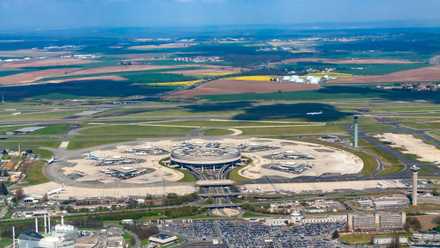
How Air Traffic Control Strikes Will Impact European Aviation
Another French ATC strike will disrupt over a quarter of a million passengers in the coming days.
Can It Be Done In Time?

One of the most ambitious aspects of the FAA’s modernization is the total replacement of the nation’s air-to-ground communication network, a task that was originally projected to take nearly a decade. Under the new framework, this eight-year timeline has been aggressively compressed into a mere two-and-a-half-year sprint. This acceleration is being supported by the Department of Government Efficiency, which has worked to remove the procurement bottlenecks that typically stall large-scale federal infrastructure projects. The goal is simple yet daunting: to move the entire US aviation communication grid from 1980s analog signals to a modern, encrypted digital Voice over Internet Protocol (VoIP) standard by mid-2028.
The hardware at the center of this transition is the digital ground-to-air radio, a device that eliminates the crackle and pop of legacy VHF frequencies that have plagued pilots and controllers for generations. Indra Group is currently under a $244.3 million contract to manufacture and deliver 25,000 of these units. Unlike their analog predecessors, these digital radios can handle multiple data streams simultaneously, allowing for clearer voice quality and the background transmission of flight data. This ensures that even in the most congested airspaces, such as Southern California or the New York TRACON, instructions are received with high-fidelity clarity, reducing the risk of misheard clearances.
The shift to a two-year rollout is not without its technical risks, as it requires a massive logistics operation to swap out gear at hundreds of active towers without interrupting daily flight operations. Being able to swap in this new technology quickly is essential because the legacy analog radios are increasingly failing, and the specialized technicians required to repair them are reaching retirement age. By flooding the system with 25,000 new digital units in record time, the FAA is almost performing open-heart surgery on the national airspace while the patient is still running a marathon.
More Than Just The Towers

The final and perhaps most technically demanding phase of the overhaul involves the modernization of the nation’s primary and secondary surveillance radars. Under a $342 million contract, the FAA is working to upgrade 612 radar stations across the country by the end of 2028. These stations are the literal eyes of the air traffic control system, yet many currently rely on processing units that struggle to keep pace with the high-speed data requirements of modern flight tracking. The fix involves stripping away the aging internal electronics and installing Indra’s high-performance digital processors, which can interpret radar returns with far greater accuracy and speed.
This upgrade is crucial for the implementation of the ‘Brand New Air Traffic Control System’ because it allows for a significant reduction in separation minimums between aircraft. With the current legacy equipment, controllers must maintain larger safety buffers because of radar lag. The new digital processors reduce this latency to near-zero, providing a real-time view of the sky that allows for more efficient routing.
When the 2028 deadline arrives, the transition from floppy disks and paper to a unified digital cloud will hopefully be complete, marking the end of a dangerous era of technological neglect. With the Olathe facility churning out the necessary hardware and the federal government providing the financial backing, the truly modern air traffic control is no longer a distant goal but a rapidly approaching reality that will ensure American skies remain the safest in the world.