dailynewsnblog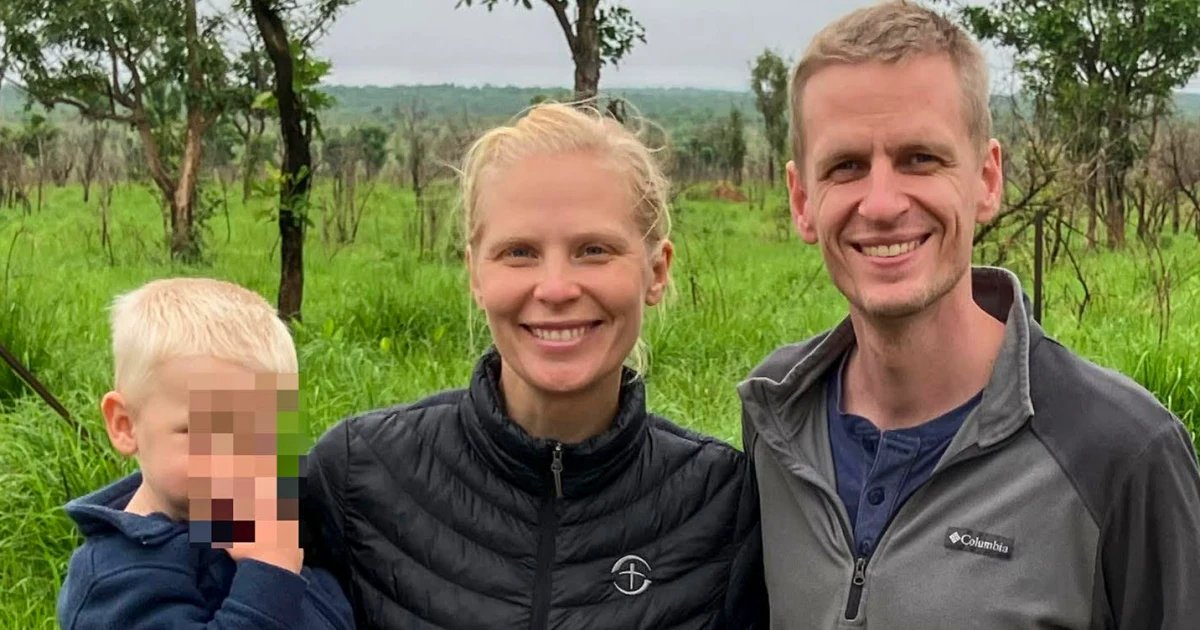
By the time the American surgeon who contracted Ebola in the Democratic Republic of Congo was flown to Germany for treatment on Tuesday, he was barely able to stand on his own, according to two leaders of the Christian missionary group where he worked.
Subscribe to read this story ad-free
Get unlimited access to ad-free articles and exclusive content.

Dr. Scott Myhre, the East and Central Africa area director for the group, called Serge, described the scene as Dr. Peter Stafford departed.
“There were people in full — we call it PPE — the personal protective equipment, and they’re completely covered, and he’s hanging on them barely strong enough to walk,” Myhre said. “He looked really tired and really sick.”
Stafford worked at the Nyankunde Hospital, which is located in Congo’s Ituri province, where the Ebola outbreak is centered. Days before the Africa Centers for Disease Control and Prevention confirmed the outbreak, Stafford operated on a 33-year-old patient with severe abdominal pain, Myhre said. At the time, doctors thought the patient had a gallbladder infection.
“[Stafford] did an abdominal procedure and found that the gallbladder was normal, and closed him up, but this patient subsequently died the next day,” Myhre said.
Days later, they realized the patient, who was buried before he could be tested, likely died of Ebola. Stafford developed symptoms over the weekend and tested positive for Ebola on Sunday, according to the U.S. Centers for Disease Control and Prevention.
“He’s a very meticulous professional, and for every surgical case he does, he would be completely gowned in sterile garb and gloves and hats and glasses,” Myhre said of Stafford. “But that’s not quite enough to prevent an Ebola exposure.”
Stafford’s wife, Rebekah Stafford, is also a doctor and treated the same patient. She and the couple’s four young children for now remain in the Democratic Republic of Congo, where they are being monitored, according to Myhre. Another physician, Dr. Patrick LaRochelle, is thought to have been exposed through a second patient and is being monitored, as well. None has shown signs of illness.
“We don’t see a lot of pediatric Ebola cases, and we sure hope that’s not the case here,” Myhre said.
Stafford quarantined himself as soon as he developed symptoms, Myhre added, which included chills, fever, muscle aches, fatigue and nausea.
For the flight to Germany, Myhre said, Stafford was placed in a tube-shaped plastic bed, “about the size of a casket,” to protect the airplane’s crew from getting infected.
The incubation period for the virus is up to 21 days, according to the World Health Organization, whose leaders have expressed serious concern over the “scale and speed of the epidemic.”
The virus was likely spreading for weeks before the outbreak was identified. The death toll has risen quickly: At least 131 people in central Africa are thought to have died and 531 are suspected to have been infected.
The type of Ebola fueling this outbreak is a less common form known as Bundibugyo, which has no approved vaccine or treatment. During previous Bundibugyo outbreaks, the fatality rate ranged from 30% to 50%, according to the WHO.