dailynewsnblog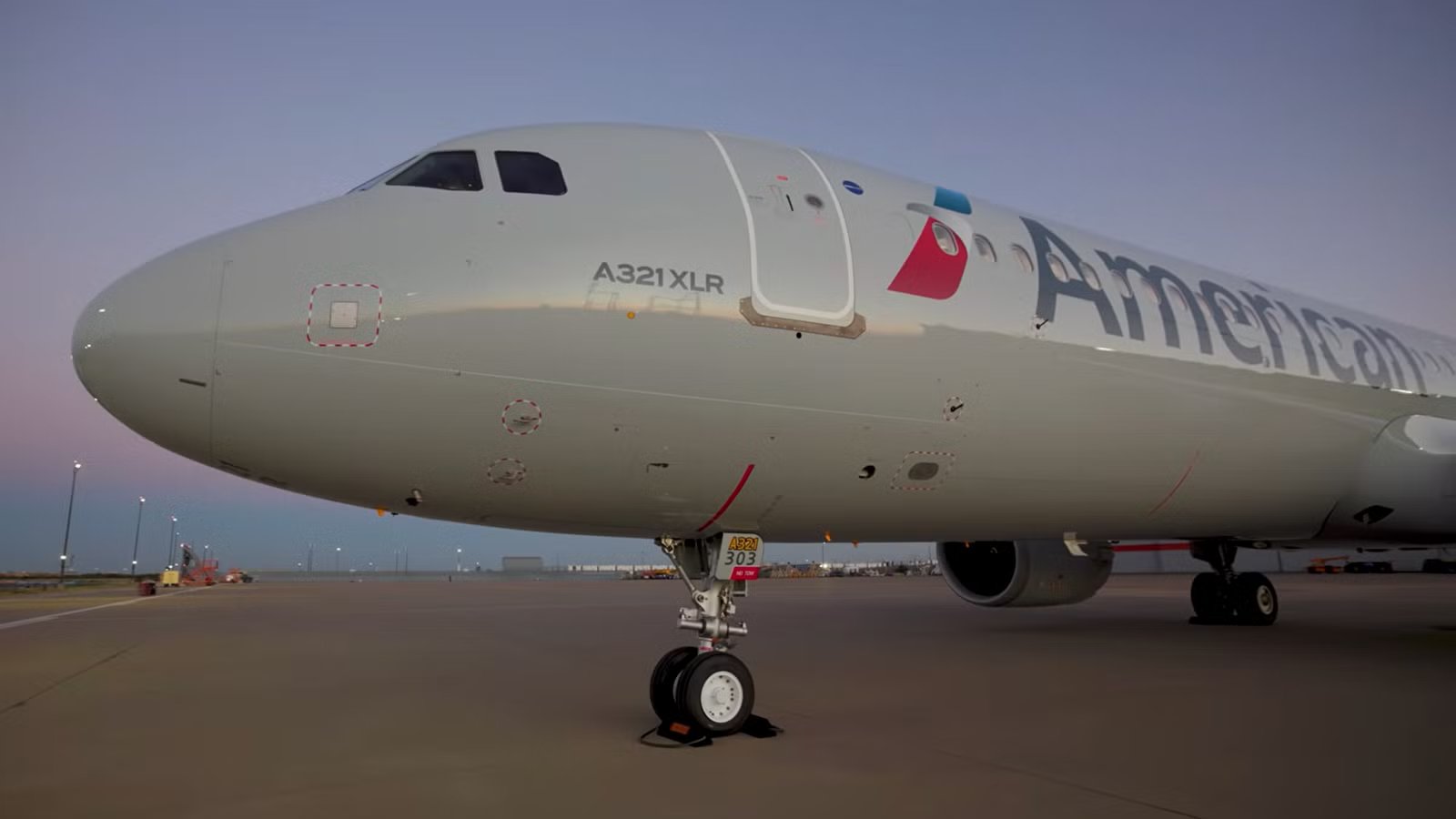
 American Airlines has taken delivery of another Airbus A321XLR, with tail number N307NY, which arrived on September 26, 2026, continuing the carrier’s rapid expansion of its long-range narrowbody fleet. The delivery follows N308NY, which arrived at
  Dallas/Fort Worth International Airport (DFW) three days earlier on September 23, according to flight tracking data. With both aircraft now included, and N315XR already delivered and operating since August, American’s A321XLR fleet has reached 10 aircraft, according to Planespotters.net.
The latest arrivals are part of American’s broader plan to build up its XLR fleet for premium transcontinental and international flying. The aircraft combines a 155-seat configuration with a lie-flat business-class product, giving American a smaller long-haul aircraft that can serve markets that may not require a widebody. Additional A321XLRs are scheduled to arrive in the coming months, ensuring the fleet will continue to grow from its current 10 aircraft to 40.
N307NY And N308NY Join American’s XLR Fleet

N307NY is an Airbus A321XLR built at Airbus’ Hamburg Finkenwerder Airport (XFW) facility in Germany and is configured with 20 Business Class, 12 Premium Economy and 123 Main Cabin seats. Planespotters.net lists the aircraft as delivered to American in September 2026, with fleet number 307 and two CFM International engines.
Three days before N307NY’s arrival, N308NY completed its delivery from the XFW facility. The aircraft has the same 20W12Y123 configuration as N307NY and is also now listed in American’s fleet.
The two September arrivals are particularly notable because another XLR had already joined the fleet several weeks earlier. Planespotters.net reports that N315XR was delivered on August 28 and entered service on September 10. Flightradar24 subsequently shows the aircraft operating American services, including several flights connecting New York John F. Kennedy International Airport (JFK) and  Boston Logan International Airport (BOS) to two of California’s largest airports,
  Los Angeles International Airport (LAX) and
  San Francisco International Airport (SFO).
A321XLR Gives American A Long-Haul Narrowbody

American’s A321XLR is designed around a premium-heavy cabin. The Flagship Suite seats provide a lie-flat product with privacy doors, while the aircraft also offers Premium Economy and Main Cabin Extra seating. American says it initially designed the aircraft for transcontinental flying before expanding into international operations.
The type’s first scheduled American service was between New York JFK and LAX. The carrier subsequently introduced the XLR on JFK-SFO, BOS-LAX, and JFK- Edinburgh Airport (EDI), giving the aircraft a mixture of premium domestic and transatlantic missions.
The aircraft is particularly useful because its capacity sits well below that of American’s long-haul widebodies. A 155-seat aircraft can provide nonstop international connectivity in markets where a larger aircraft would add too much capacity, and in markets traditionally served by the now-retired Boeing 757, while its premium cabin lets American maintain a long-haul product. This makes the XLR a useful tool for expanding the airline’s international network without requiring every new route to support a Boeing 787 or another widebody.
Ten Aircraft Now In The Fleet

American’s plans for the A321XLR extend well beyond its current network. The airline has announced several European routes for summer 2027, including JFK-  Amsterdam Schiphol Airport (AMS), JFK-Nice Côte d’Azur Airport (NCE),
  Philadelphia International Airport (PHL)-Porto Airport (OPO) and PHL-Vienna International Airport (VIE). All four are scheduled to use the A321XLR.
The expansion shows why American continues to take delivery of the type, even as its initial fleet remains relatively small. The XLR can provide a premium long-haul cabin while offering the capacity and operating characteristics of a single-aisle aircraft.
The milestone of 10 aircraft is another step toward a much larger XLR operation for American. As more aircraft are scheduled to arrive, the airline will have more opportunities to add European destinations, open long-haul thin routes across the Americas, increase frequencies, and deploy the type on more long-distance domestic services, making the A321XLR a visible part of its network that will occupy the niche of the Boeing 757 that used to be a backbone of many AA operations before the pandemic.
Catch what other flight trackers miss
Emergency squawks, holds, NOTAMs — live signals, no signup.
Open tracker
Catch what other flight trackers miss
Emergency squawks, holds, NOTAMs — live signals, no signup.
Open tracker