dailynewsnblog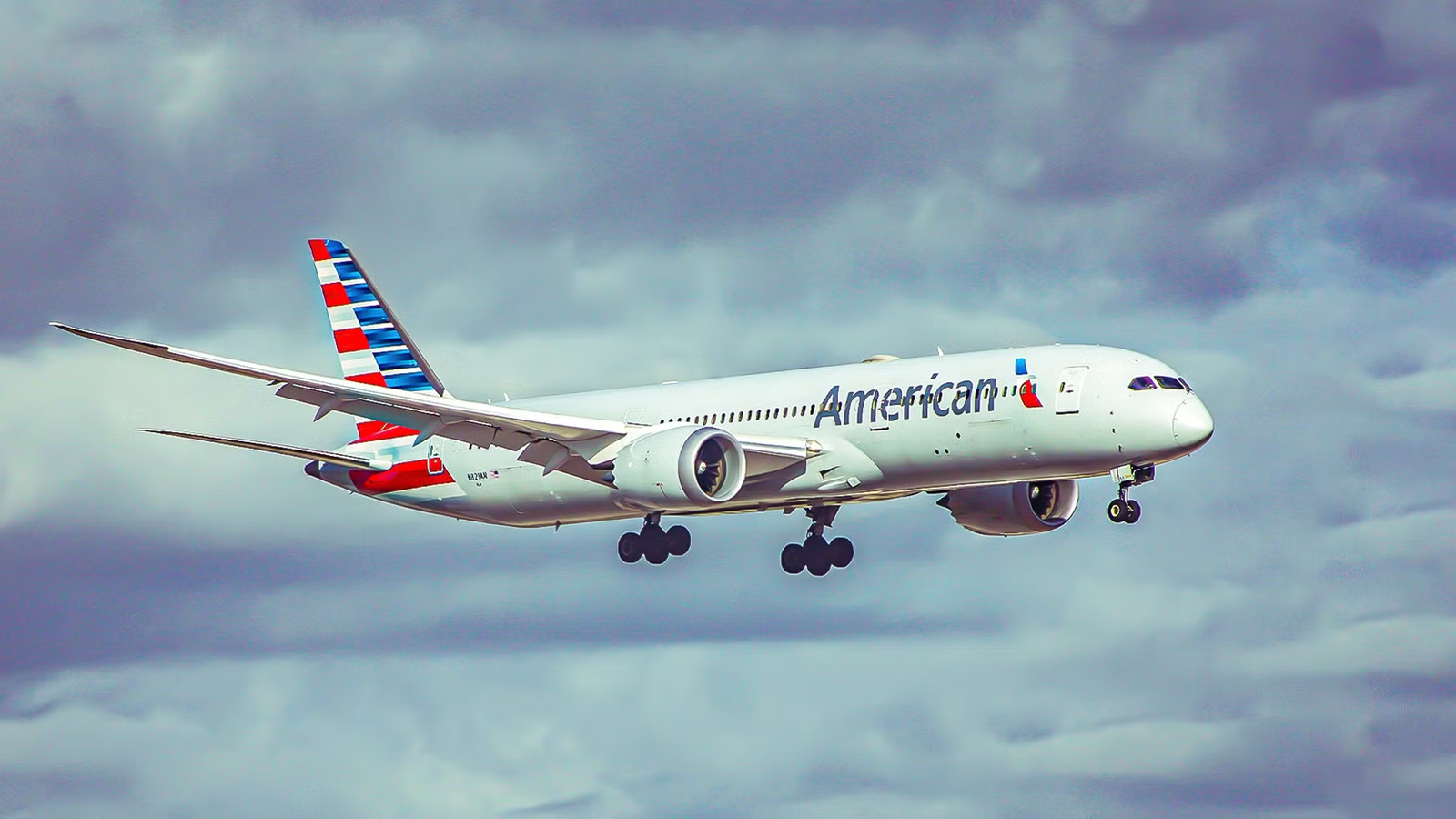
An  American Airlines Boeing 787-9 Dreamliner operating a transatlantic flight from Rome Fiumicino Airport (FCO) to
  Philadelphia International Airport (PHL) diverted to
  Dublin Airport (DUB) on Saturday afternoon after the majority of its cabin crew reported feeling unwell in flight. Flight AA719 was in the air for roughly three hours when the pilots diverted to Dublin, telling air traffic control of an unspecified medical emergency on board.
Subsequent reports have stated that six out of the nine flight attendants on duty onboard the 787 reported feeling unwell, becoming dizzy or ill. In a statement to Simple Flying, the airline cited a “reported odor onboard” and said the aircraft was met by paramedics, adding that one passenger was also evaluated.
American Airlines Flight Attendants Fall Ill On Transatlantic Flight

As first reported by aviation insider @XJonNYC on X, six of the nine flight attendants onboard felt dizzy or ill, prompting the aircraft to make an emergency diversion to Dublin. Flight AA719 departed Rome at approximately 12:40 local time on Saturday, July 25, ahead of a nine-hour journey to Philadelphia. Flight tracking data shows the 787 diverting towards Ireland roughly three hours into the sector.
Date | July 25, 2026 |
Airline | American Airlines |
Flight | AA719 |
Aircraft Type | Boeing 787-9 Dreamliner (reg: N840AN) |
From | Rome Fiumicino (FCO) |
To | Philadelphia (PHL) |
Fate | Diverted to Dublin (DUB) after a reported odor onboard. |
It landed safely on Dublin’s Runway 28L around six hours after leaving Rome and was met at the gate by emergency medical teams. American Airlines confirmed to Simple Flying that the affected flight attendants and one customer were assessed by paramedics before being released. The carrier added that there were a total of 12 crew members onboard (nine flight attendants and three pilots), and 281 passengers, all of whom were given overnight accommodation and rebooked on services the next day. The airline said,
“American Airlines flight 719, from Rome (FCO) to Philadelphia (PHL), diverted to Dublin (DUB) due to a reported odor onboard. Paramedics met the aircraft at the gate out of an abundance of caution and the flight attendants and one customer were evaluated and subsequently released.”
About The Boeing 787-9 Involved

The aircraft involved was a seven-year-old Boeing 787-9, registered as N840AN, which was delivered to American in 2019. While the airline has pointed to a reported odor, the 787 is one of the least likely aircraft to suffer a fume event. On almost every commercial jet flying today, cabin air is drawn from the engine compressors as bleed air, a mechanism that can on rare occasions cause engine oil or hydraulic fluid to enter the cabin.
However, the 787 Dreamliner is an exception to this, instead using electrically driven compressors to draw outside air through dedicated intakes. Fume events are a growing concern in the industry, with Federal Aviation Administration (FAA) data citing at least three fume events per day on US aircraft.
There are other possible causes, as odors can be caused by problems like electrical faults, faulty galley equipment, or chemicals spilled during cleaning. It is also possible that a fault with the aircraft’s air conditioning packs is to blame, although this generally would not produce an obvious odor.
American Faces Costly Diversion Bill

Diverting an aircraft will always incur additional costs for an airline, particularly if it involves a widebody aircraft operating a long-haul service. Besides the added fuel costs, airlines have to pay for airport fees, ground handling, accommodation and food for passengers, and extra crew costs, along with the knock-on effects on their aircraft and crew scheduling.
Additionally, because AA719 departed from an airport in the European Union (EU), EU261 passenger rights regulations will apply, despite American being a US carrier. Under these rules, passengers arriving at their final destination four or more hours late are entitled to €600 ($682) in compensation. With 281 passengers onboard, this payout exceeds $190,000, and this sum does not factor in the other additional costs outlined above.