dailynewsnblog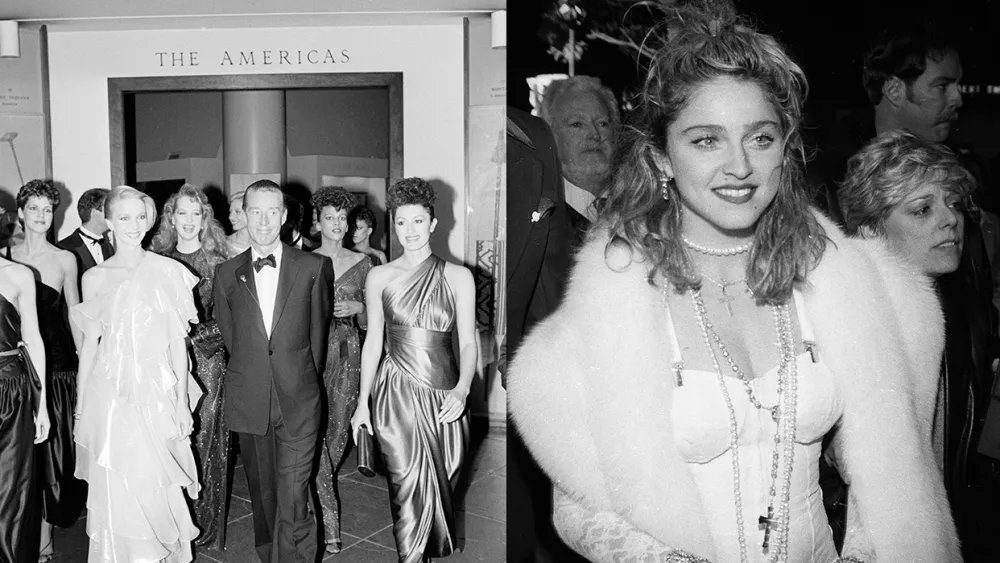
Disco’s brief but celebratory reign left a lasting imprint on fashion, carrying its excess into the 1980s and its eye for reinvention into the millennium.
Big hair, bold makeup and power dressing defined the new decade, with women moving through the city in sharp shoulders, nipped waists, stilettos and sneakers. What felt obscure was actually the beginning of the sharpening of American ready-to-wear into a more confident, modern language that had been pioneered by the past leaders of Seventh Avenue.

Carolina Herrera at the Palladium Niteclub, 1985, and Michael Kors, 1995.
Fairchild Archive/WWD
On the other side of the coin was sportswear in the hands of Perry Ellis, Willi Smith and others, who sustained America’s collective authority. Next came the long haulers, empire builders and risk-takers, a group of visionary Gen Xers who proved to naysayers that fashion has never been one note. By the mid-1990s, the convergence of pop, grunge, hip-hop, preppy and punk kept America in tune with its global audience, while contemporary, bridge and secondary lines emerged as solid categories.

Isaac Mizrahi, Marc Jacobs, Todd Oldham, Anna Sui and Byron Lars, circa 1990s.
Penske Media via Getty Images
As manufacturing moved offshore, IPOs rose, malls and discounters spread and designer flagships climbed Madison Avenue before expanding abroad. Fashion got bigger, faster and cheaper as networks expanded, with Amazon signaling what comes next. And if one figure came to embody the era’s appetite for reinvention, it was Madonna, changing her look as quickly as technology moved trends from runway to store.

Phat Farm spring 1998 and Gwen Stefani on stage at the Roseland Ballroom, 1996.
Fairchild Archive
Here, a timeline of events from 1976 to 2000 in the U.S. converging around fashion.
- 1976: Amalgamated Clothing and Textile Workers Union form to protect wages and rights of factory workers.
- 1977: Studio 54, a New York discotheque opens, in Manhattan changing the social scene.
- 1981: Ronald Reagan is elected president; Sandra Day O’Connor becomes the first woman on the Supreme Court.
- 1981: AIDS is first recognized by the U.S. Centers of Disease Control and makes a large impact on the creative industries.
- 1993: The CFDA launches 7th on Sixth centralizing New York Fashion Week at Bryant Park.
- 1999: The U.S. officially hands over the Panama Canal to Panama.
The Foundations of Footwear
While the early U.S. settlers generally wore handmade or imported shoes, America began developing a domestic footwear industry in the mid-19th century. Many of those brands — like Wolverine, Frye Boot and even New Balance — continue to operate today. But it was the late 1970s into the ’90s when American brands really boomed to become global powerhouses, led by the likes of Nike.

Rudi Gernreich’s summer 1976 collection styled with Converse sneakers and Converse leather hi-tops, 1986, New York. Fairchild Archive
Here, a timeline of the U.S. footwear industry and when leading brands and retailers were established.
- 1850: Johnston & Murphy founded.
- 1863: Frye Boot Co. founded.
- 1878: Bryan Brown Co founded, later becoming Brown Shoe Co. and, in 2015, Caleres.
- 1883: Hirth-Krause Co. founded with the “1,000 Mile Boot,” becoming Wolverine in 1921.
- 1906: New Balance founded as an arch support company, transitioning to athletic footwear in 1932. In 1972, its current owner Jim Davis bought the company.
- 1908: Converse founded.
- 1952: Nathan Swartz buys half of Abington Shoe Co., buying the other half three years later and launching the Timberland boot in 1973.
- 1956: Cousins Louis and Shaol Pozez establish the Payless Shoe stores.
- 1960s: Athletic footwear brands boom, with the founding of Nike, originally Blue Ribbon Sports, by Phil Knight and Bill Bowerman — and skate brand Vans.
- 1974: Foot Locker is founded as the athletic shoe division of F.W. Woolworth.
- 1983: Nine West Group founded.
- 1990: Steve Madden founded.
- 1992: Skechers founded.
- 1996: Under Armour founded.
- 1999: Nick Swinmurn, Tony Hsieh and Alfred Lin set up Shoesite.com, changing the name to Zappos later that year. Amazon acquires the site in 2009.
- 2002: Scott Seamans, Lyndon Hanson and George Boedecker Jr. launch a slip-on foam shoe called Crocs.
The Working Woman
As the ’70s rolled on into the ’80s, America saw a massive boom in the number of women entering the workforce. That sparked demand for a work wardrobe completely different from the styles worn by their predecessors. Enter brands like Liz Claiborne, Leslie Fay, Anne Klein and Jones New York that dominated department store floors well into the ’90s with their collections offered as separates. These brands in turn led to the growth of the others like Theory, DKNY and CK Calvin Klein, plus of the so-called “bridge” category with labels such as Ellen Tracy and Elie Tahari and contemporary like Diane von Furstenberg.
The Majors
While American fashion had leading designers in the early ‘60s, from the mid-’60s and into the ’70s would see an explosion of designer launches, including Oscar de la Renta and Bill Blass, as well as companies that would become household names globally: Ralph Lauren, Calvin Klein, Donna Karan and Tommy Hilfiger especially, along with the accessories brand Coach. Ralph Lauren would be among the first designers in the world to create a true “lifestyle” brand, offering everything from apparel through to home furnishings and more.

Ralph Lauren, fall 1987 and Norma Kamali fall 1997 runway shows. Fairchild Archive/WWD
Mall Momentum
While the first shopping mall in the U.S. was unveiled in the ’50s, it was really the ’70s and then into the ’80s and ’90s that saw mall culture, and its related retailers, truly explode. With Macy’s, Saks Fifth Avenue, Nordstrom, JCPenney, Bloomingdale’s and other department stores serving as anchors, fashion chain stores proliferated, including Gap, The Limited, Victoria’s Secret, J.Crew, Abercrombie & Fitch, Bath & Body Works and American Eagle Outfitters. These chains in turn sparked the growth of lifestyle apparel brands such as Tommy Bahama, the U.S. Polo Association, Vineyard Vines, Peter Millar and more.
The Next Wave
Into the ’80s and beyond, the mega-U.S. brands would be followed by a new generation that aimed in many cases to mimic their model and some would become global powerhouses. This wave included Michael Kors, Marc Jacobs, Carolina Herrera, Tracy Reese, Narciso Rodriguez, Byron Lars, Isaac Mizrahi, Vera Wang, Norma Kamali, Kate Spade and Tom Ford, although he would base himself in Europe rather than America. At the tail end of the century, they would be joined by another, Tory Burch, whose Reva ballet flat became ubiquitous worldwide.