dailynewsnblog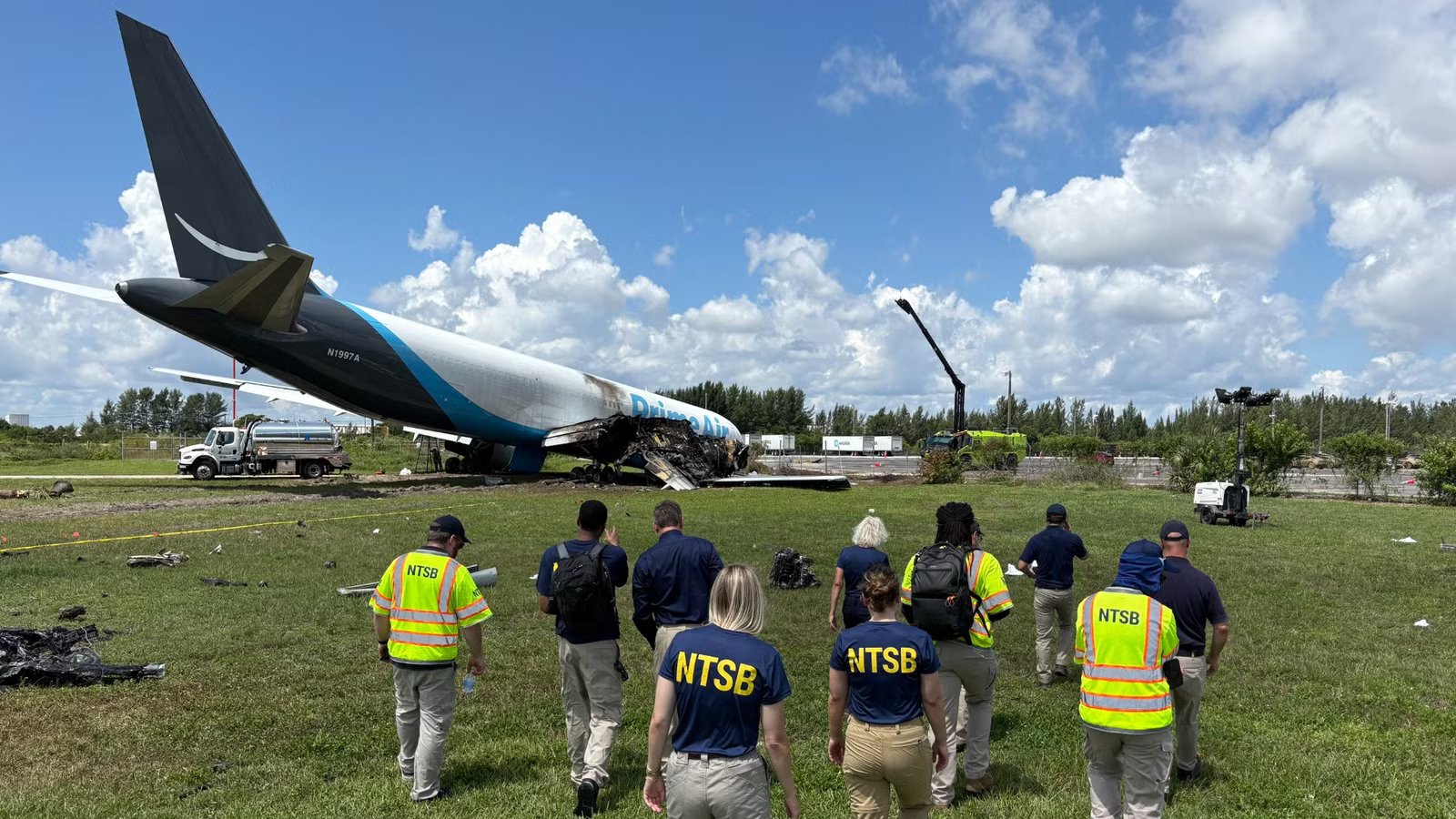
In the aftermath of the fatal runway excursion by 21 Air Flight 7598 at  Miami International Airport(MIA), Amazon Prime Air has suspended the air freight services with the company. The cargo hauler is one of several contracted carriers that fly under the Prime Air banner. The crash killed five motorists when the jet careened 1,300 feet (400 meters) off the end of the runway while three more were critically injured.
Extensive analysis of the Black Box data and air traffic control communications has highlighted numerous questionable choices made by the aircrew during their unstable approach. Although the National Transportation Safety Bureau has released some information about the accident on September 6, it has not yet officially declared the official cause as pilot error.
The Black Boxes Deliver Troubling Data

Neither the Federal Aviation Administration nor the NTSB will give a confirmed cause until the investigation is concluded, which could take months or even a year to complete. In the meantime, Investigator-In-Charge Chihoon Shin as well as Jennifer Homendy, NTSB Chairwoman, have given frequent progress updates of the immediate discoveries. Although they have not released the full audio from the cockpit voice recorder, the summary noted inconsistent verbal communication between the two pilots regarding the plane’s speed.
Another alarming fact from the publicly released information is the fact that the pilots ignored several electronic warning alerts such as “too low terrain” and “sink rate,” which would typically be considered an automatic go-around trigger. The broad consensus based on data points from the flight data recorder and ATC audio by many aviation and legal experts is that, unless extreme circumstances are revealed, it appears that the air crew simply demonstrated exceptionally poor decision-making skills.
Based on these facts, questions have been raised about the training and qualifications of both the captain and the first officer who were on the flight deck of the Boeing 767, tail number N1997A. At the same time, according to official medical and certification data released by NTSB Chair Homendy, both pilots on 21 Air Flight 7598 were legally qualified and certified.
While the crew had the required licenses on paper, doubts from expert observers have been growing over how 21 Air vetted, trained, and managed its pilots in light of last Sunday’s events. Amazon spokesperson Kelly Nantel said in a statement to Reuters:
“After the tragic incident last weekend, we’ve spent time supporting the investigation and reviewing some of the surrounding circumstances, and we’ve decided to pause our operations with 21 Air, the operator of Flight 7598.”
A Brief History Of Tail N1997A

Like many cargo jets, the 767 flown by 21 Air into Miami is an older plane that was originally built for passenger service and converted to cargo later in its life. Tail number N1997A was first delivered to Sobelair in Belgium in 1994. After flying for a number of other airlines around the world under leases, the plane was converted into a freighter in 2016 by Israel Aerospace Industries.
Atlas Air was the first to fly the jet as a freighter following its reconfiguration and restoration. According to Planespotters data, 21 Air took possession of the jet in January 2025. From publicly available records, the plane does not have any history of major mechanical issues or any previous mishaps. In the absence of extenuating circumstances such as violent weather or a hidden system malfunction, the investigation has yet to share any data that points towards a maintenance issue as the cause of the crash last Sunday in Miami.
The Background Summary Of Flight 7598’s Crew

The pilot in command on September 6 was Captain Joseph Carroll, age 55. As of the date of the crash, he possessed 7,145 total hours of flight experience. He holds qualifications to fly a diverse range of aircraft, from multi-engine jets to helicopters. However, records show he was rated to fly this specific type of heavy jet very recently. Carroll had only begun flying 767s in May of this year.
In the right seat was 37-year-old first officer Jaime Felipe Silva Molina. He had logged a lower total of 2,655 total hours of flight experience, but he had been rated to fly the 767 since April 2025. He has an established history of flying domestic and international routes for 21 Air as well as a background as a flight instructor, according to the Miami Herald.