dailynewsnblog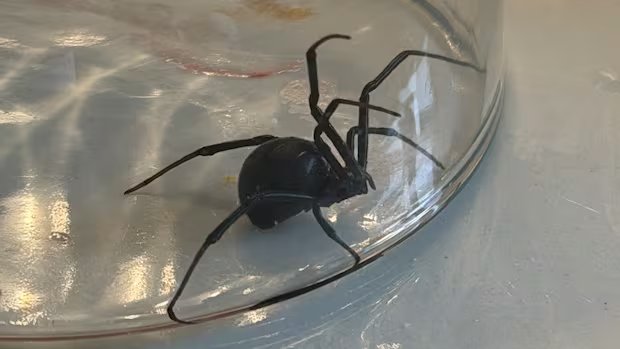

Listen to this article
Estimated 5 minutes
The audio version of this article is generated by AI-based technology. Mispronunciations can occur. We are working with our partners to continually review and improve the results.
Grapes will never look the same to Sean Cardiff.
The Calgarian had been eating out of a bag of red seedless grapes from a Calgary grocery store for two days before finding a highly venomous black widow spider in the bunch.
“I just noticed something when I pulled the grapes out of the container,” he said. “It was like a black spot, and I kind of shook it a little bit, and that little black spot suddenly had legs and started crawling towards my hand.”
After capturing the spider and making sure his kids and dog were safe, he called his parents.

These Calgarians will never look at grapes the same way again after finding a highly venomous black widow in their imported produce — an occurrence one entomologist says is becoming increasingly common in Canada.
Linda Hall, his mother, took the spider home — under a glass secured to a plate with plenty of tape — and put it in the freezer to humanely kill it.
“I didn’t really know much about black widows, and to be honest I figured my son was probably wrong — it was just some sort of black spider,” she said.
But a good look at the unmistakable red hourglass on the spider’s abdomen, coupled with some quick research online, confirmed the spider was in fact a black widow.

“I thought black widows were only dangerous to their mates. I didn’t know that they were dangerous to humans,” she said.
“I think anything comes from any place warm, I’m going to be checking the bag in the grocery store, as well as when I take it out of the fridge.”
Finding spiders in produce ‘becoming more common’
They’re far from the only Canadians who have been in this situation.
Olds College entomologist Ken Fry says finding spiders in imported produce is “becoming more common” due to reduced pesticide use in grape production.
“As growers and producers adopt more environmentally sensitive means of growing their food, that results in safer food for us, but then it also means that natural enemies like spiders and other predators will move into the crop,” he said.
“You should always wash your fruits and vegetables off as soon as you get them home.”

Fry, who looked at photos of the spider, confirmed it was a black widow. But because the grapes originated from Mexico, it’s impossible to say which specific species.
The Canadian Food Inspection Agency (CFIA) said in a statement that “finding live insects or spiders in fresh produce is uncommon.”
“While it may be unpleasant, it does not typically pose a food safety risk,” the federal agency said, adding that it does not track sightings of black widows since they’re not considered a regulated pest.
“Even though these are not regulated pests in Canada, we still recommend consumers report these insects to the CFIA to confirm species,” the agency said. “In some situations, the CFIA may conduct follow-up activities.”
How dangerous are they?
There are 35 widow spider species worldwide, but only one is naturally found in Alberta: the western black widow.
The western black widow’s venom is extremely potent: it contains a neurotoxin called alpha-latrotoxin, which directly targets the central nervous system of mammals and other vertebrates.
As scary as that sounds, black widow bites are extremely rare.
“They’re not aggressive,” Fry said. “They catch their prey in the web, which means they hide out and only emerge when their web is disturbed, so they’re not actively hunting things down.”
Black widow found by family near Calgary last year:
According to an article in the Journal of Medical Entomology, there were only five confirmed cases of black widow bites that required the use of antivenom in Canada from 2009 to 2015, all of which occurred in British Columbia.
There are no recorded cases of the venom of a black widow killing anybody in Canada or the United States, in recent decades.
Black widows, which Fry described as around the size of a chickpea, are naturally found in southern Alberta’s more arid habitats, thriving in places like Lethbridge and Medicine Hat.
He said black widow sightings reported in Calgary are often misidentifications of similar-looking spiders like the boreal combfoot. The spiders most commonly found in Alberta don’t have venom strong enough to harm humans.
But on the off-chance a black widow sighting is confirmed, Fry recommends putting it in a container and freezing it.
“Spiders, in general, try not to handle them, try not to surprise them,” he said.