dailynewsnblog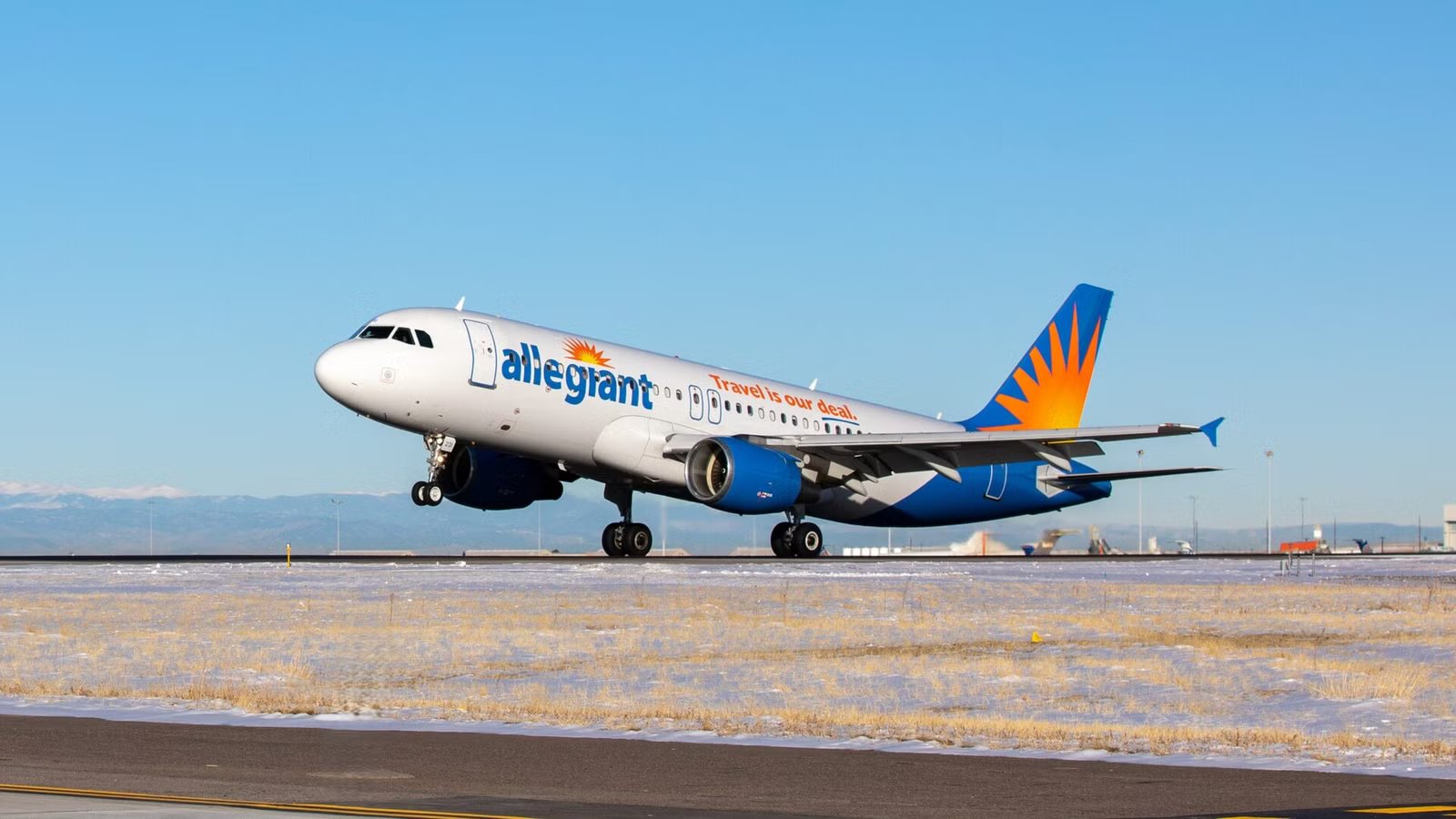
Allegiant Air operated roughly 2,600 fewer departures in the second quarter of 2026 than it did a year earlier. Its system capacity fell by 7%, and it carried slightly fewer passengers. Yet the airline generated a record $776.2 million in operating revenue — $107.5 million more than in the same period of 2025, an increase of 16%. That carrier’s release of its Q2 2026 financial results showed that its airline operations also remained profitable on an adjusted basis.
The apparent contradiction is explained by what happened to the flights that remained. Allegiant retained almost all its passenger volume, while concentrating it on a smaller schedule, leading to it filling a much greater proportion of its seats while also collecting substantially more revenue from each traveler. Its total revenue per available seat mile, or TRASM, consequently climbed 25% to an all-time company high of 14.42 cents. In effect, every unit of capacity became one-quarter more valuable.
Allegiant Cut Flights, Not Passengers

The Q2 results presentation showed that Allegiant’s total available seat miles fell from 5.80 billion to 5.41 billion, while departures declined from 37,314 to 34,733. Passenger numbers, however, slipped by only 1%, from 5.13 million to 5.07 million. The airline therefore removed nearly 7% of its flying but lost only around 54,000 passengers, allowing scheduled load factors on the flights that remained to rise by approximately four percentage points.
Allegiant’s Q2 Operational Performance | |||
|---|---|---|---|
Allegiant Metric | Q2 2025 | Q2 2026 | Change |
Operating revenue | $668.8 million | $776.2 million | +16% |
Available seat miles | 5.80 billion | 5.41 billion | -7% |
Departures | 37,314 | 34,733 | -7% |
Passengers | 5.13 million | 5.07 million | -1% |
Scheduled load factor | 82% | 86.0% | +4% |
Unit revenue | 11.57 cents | 14.42 cents | +25% |
This was clearly not a blunt reduction applied evenly across the network, but a pruning of the less profitable portions of the network schedule. While presenting the results, Allegiant CEO Greg Anderson indicated that the carrier “runs a low-utilization model,” explaining further what that means:
“We run a low utilization model, which means that we are maximizing flying during high-demand periods, while reducing capacity on days that do not meet our financial hurdles.”
This is evident by a closer look at the capacity numbers. Although scheduled capacity fell 6% overall, peak-day capacity actually increased by nearly 2%. So while Allegiant was flying less, it was protecting the holidays, weekends and other periods when leisure passengers were most willing to travel and pay.
Nor has Allegiant stopped expanding its network. It launched 39 markets during the first half of 2026, and those routes represented approximately 9% of its second- and third-quarter capacity. Chief Commercial Officer Drew Wells said “the additions have been outperforming through the summer.” The airline is therefore growing the breadth of its network while reducing weaker frequencies and off-peak departures — a particularly natural fit for its model of offering relatively infrequent nonstop flights between underserved cities and leisure destinations.
The Remaining Capacity Produced Far More Revenue

Fuller aircraft supplied the first part of the 25% unit-revenue improvement. Passenger numbers declined by only 1% against a 7% capacity reduction, meaning Allegiant actually carried roughly 6% more passengers for every available seat mile. Removing the least productive departures allowed travelers who might previously have been spread across several services to be concentrated onto fewer flights, improving both load factor and the economics of each departure.
The larger contribution came from the amount Allegiant generated from each customer. Based on the company’s reported segment figures, operating revenue per passenger increased from approximately $130 in Q2 2025 to $153 in Q2 2026, a rise of 17%. Passenger revenue alone increased by approximately $100 million, despite the lower passenger count. Wells said yield — scheduled-service revenue divided by revenue passenger miles — rose by more than 40%, reflecting significantly stronger pricing across the capacity that Allegiant retained.
What Drove Allegiant’s Unit-Revenue Increase? | |
|---|---|
Source Of Improvement | Q2 Change |
Passengers carried per unit of capacity | +6% |
Operating revenue per passenger | +17% |
Third-party-product revenue | +32% |
Credit-card remuneration | +24% |
Total unit revenue | +25% |
The improvement was not simply the result of charging more for bags. Allegiant said air-related ancillary revenue per passenger has remained flat. Instead, benefits came from stronger base fares, improved bundles, and Allegiant Extra, the airline’s premium extra-legroom seating product. The carrier also pointed to its growing credit-card business, with third-party-product revenue increasing 32% to $44.5 million. Management believes credit-card remuneration can eventually double from around 5% of company revenue to 10%.
Strategically, more revenue per passenger, compounded with more passengers per unit of capacity, means Allegiant generated more revenue overall. Not by endlessly adding aircraft and departures, but by removing its weakest flying and making the capacity it retained work much harder. Management now says the airline must now “earn the right to grow,” with its incoming Boeing 737 MAX deliveries providing an option to expand strategically rather than an obligation to add seats.
Sun Country Is Cutting Flights For A Different Reason

Allegiant’s newly acquired Sun Country Airlines subsidiary is also cutting off-peak flying, but not entirely by choice. The company disclosed that Sun Country has experienced elevated attrition among junior pilots at  Minneapolis-St. Paul International Airport (MSP), largely because of “increased hiring by the largest full-service airline in the Twin Cities.” The description clearly points to
  Delta Air Lines.
Anderson said “the competing airline” had recently increased its pilot hiring “by perhaps double or more”, creating a near-term staffing headwind. Sun Country is consequently reducing off-peak Minneapolis capacity during the second half of 2026, with elevated fuel prices and the planned expansion of its cargo operation adding further pressure. Cargo flying uses crew resources that might otherwise support scheduled passenger services during the ramp-up period.
Allegiant nevertheless expects the disruption to be temporary. It says that Sun Country’s training classes are full, new pilots are expected to enter service later in 2026, and the company is targeting renewed Minneapolis growth from March 2027. More significantly, that growth will likely come under the Allegiant brand, after the airline confirmed to Simple Flying last month that Sun Country is set to disappear as an independent airline once both carriers operate under a single FAA operating certificate.