dailynewsnblog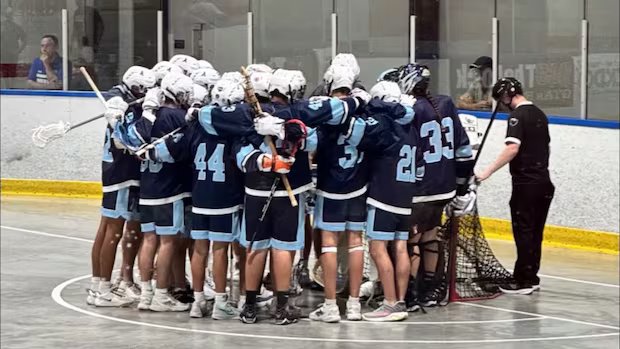
Seven members of the St. Catharines Athletics box lacrosse team have been told they are ineligible to play due to policies on residential boundaries, days before the start of the provincial championships.
The U17 players, four of whom are members of the Haudenosaunee Confederacy and three are non-Indigenous U.S. citizens, were told the day after securing a spot in the Final Six Championship that the Ontario Lacrosse Association (OLA) would not allow them to compete because they live in the United States.
Dotgahdöh (Ezra) Nephew, a member of Seneca Nation of Indians in New York state, about 40 kilometres south of Buffalo, said finding out was really tough because the U17 Championship has been something he’s been working toward for a long time.
“I kind of feel like that was stripped away from me this year,” he said.
“I felt like I kind of poured my heart out. This season is my last minor season.”

Dotgahdöh is one of the Haudenosaunee Nation players who don’t identify as Canadian or American, and he’s played with St. Catharines Athletics for about six years.
He attends The Hill Academy in Caledon, Ont., and said there were many late nights with his parents driving him back and forth from school to practices and games then back home.
While he’s still holding out hope for OLA to reverse its decision, he said “It kind of feels like it was all for nothing.”
Either way, he said he hopes his team “brings it home” this championship.
Residency requirement not communicated, say parents
His father, Klint Nephew, is assistant coach of the team. He’s been told he is not allowed to coach because of his U.S. address.
He said he doesn’t recall this issue arising at the start of the season.
“Why didn’t you tell us when we registered?” he said.
“Because at that point, we probably wouldn’t have played for the [Athletics] or the A Division.”
He said some lacrosse players want to play in Ontario because it’s a higher calibre of lacrosse, offering more competitive opportunities.
Klint said he thinks this year the OLA’s participation with the Ontario Summer Games in Kitchener, Ont., July 30–Aug. 2 contributed to the decision.
“If there was no [Ontario] Games, this would not be an issue,” he said.
“We would be going up to Whitby to play at the Lacrosse Festival and nobody would say anything about the American players.”
He said there are other players within the division who come from outside the province, like the U.S. and Quebec.
Moreover, he said the decision fails to recognize the Haudenosaunee players’ nationhood and longstanding connection to lacrosse.
“When you talk about inclusion, we’re nations,” he said.
He said he’s written to the OLA and received no response.
Neither the OLA nor Lacrosse Canada, its governing body, responded to a request for comment by time of publishing.
The OLA’s website outlines its residential boundaries policy, saying the policy supports competitive balance and keeps the game connected to local communities.
“Ontario Lacrosse member clubs are assigned residential boundaries that determine where players are eligible to register for competitive (Rep) lacrosse based on where they live,” the website states.
According to the boundaries, to play for the St. Catharines Athletics players would have to live in St. Catharines, Ont.
According to a statement sent to CBC Indigenous from the parents of the seven players, the residency requirement “was never communicated before or during the season, leaving no opportunity to make roster decisions before qualification.”
It said they had also been unable to find a publicly available rule on either the Ontario Lacrosse Association or Ontario Summer Games websites outlining this eligibility requirement before teams entered competition.
The Creator’s game
Keyan Leading Fox, from the Tuscarora Reservation in Sanborn, N.Y., about 15 kilometres east of Niagara Falls, has been playing defence with the team for two years.
“My teammates have been really let down,” he said.

He said this championship is going to be tough, with a third of their players missing.
Goalie Frank John, also from New York, is a member of Seneca Nation of Indians. He goes to school and works in the summer while spending eight hours a week travelling to practices.
He said he feels the OLA’s use of their culture feels performative now.
John said there are reels of Haudenosaunee teams doing the Stomp Dance on OLA’s social media and their culture is used to “advertise that it’s an Indigenous game.”

“They say it’s the Creator’s game and they’re thankful that we’re playing, but what are they doing for us?” he asked.
Klint Nephew said he’s hopeful the boys still may get a chance to play.
“Then it becomes the healing game again,” he said.
“It’s the medicine game that heals.”