dailynewsnblog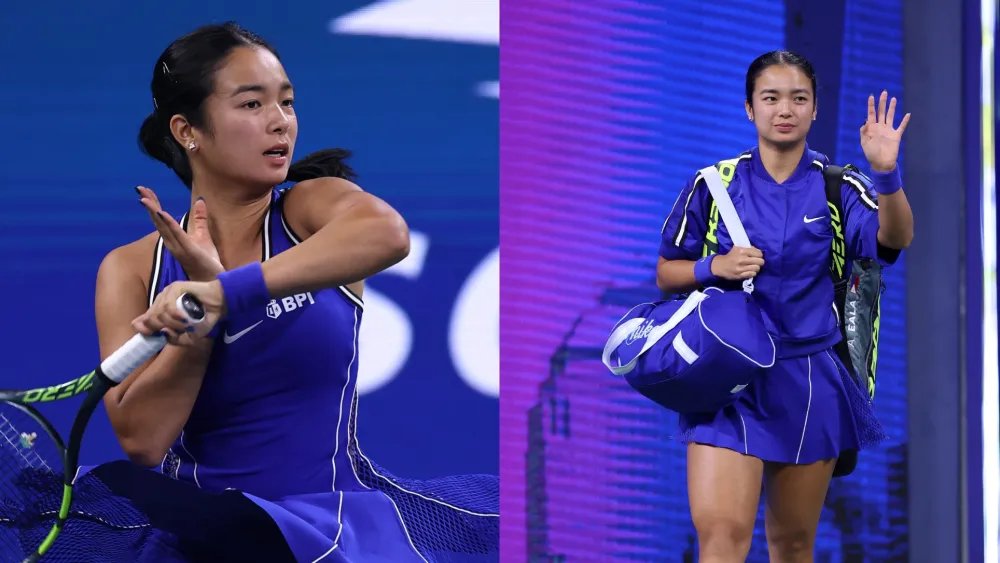
No matter how far Alex Eala goes at this year’s U.S. Open, the 21-year-old tennis phenom is winning over droves of fans.
Last month, Eala became the highest ranked Filipino and Southeast Asian — 18th in the world — in the Women’s Tennis Association’s tour history. Ready for a third-round showdown on Saturday against American Iva Jovic at Arthur Ashe Stadium in Flushing, N.Y., the stylish pro has become a must watch, even beyond her 2 million Instagram followers and the tennis crowd.

Alex Eala of Philippines competes in the Prudential Hong Kong Tennis Open at Victoria Park on Oct. 30, 2025, in Hong Kong.
Getty Images
Two-time U.S. Open winner Tracy Austin said the zeal around the player is “fantastic.”
“Many people who never followed tennis at all are now taking a liking to it, because she’s such a phenom,” Austin said.
Even rivals like Coco Gauff, Naomi Osaka and Jessica Pegula are publicly praising her rising influence on tennis, her athleticism, talent and star status.
Aside from her personality and poise, Eala’s personal story — getting a scholarship from the Rafa Nadel Academy in Mallorca, Spain, and leaving the Philippines at the age of 12 — is intriguing, Austin said.
“That’s a big step for a young lady, not speaking the language, and moving to go after her dreams. But she knew to have the possibility of playing on the pro tour she needed more experienced coaches and more experienced competition,” the former tennis champ said.
During a phone interview from the USTA Billie Jean King Tennis Center Friday, Austin said of Eala: “She standing about 20 feet away from me right now. She’s young, bright, articulate, and plays fearlessly out there. I’m sure it’s a lot pressure for her but she appears to be handling it beautifully.”

Alex Eala thanks the crowd after losing her semifinal match at the 2025 ASB Classic at ASB Tennis Centre on Jan. 10 in Auckland, New Zealand.
Getty Images
Citing Eala’s burgeoning audience, Austin recalled how Filipino cuisine was added to the food court’s menu at last month’s National Bank Open in Toronto, and after promptly selling out, additional options were added the following night.
Along with her on-court sponsors Nike and Babalot, Eala has sponsorship deals with Panasonic, Marriott Bonvoy, Globe Telecom, Bank of the Philippine Islands, Locally and Milo.
For the U.S. Open, Nike has allowed Eala to have the logos of two of her other sponsors — BPI and Globe Telecom — near the neckline of her tennis attire along with its Swoosh, a rarity for Nike-sponsored athletes. Last year she banked $907,777 and Forbes estimates that her sponsorship earnings are $5 million-plus.

Alex Eala celebrates after winning the women’s singles championship match against Jessica Pegula at the Mubadala DC Open on Aug. 3 in Washington, D.C.
Getty Images
Favoring bold colors like royal blue, granny apple green and unexpected combinations like mauve and burgundy for her tennis attire, Eala is tough to miss on the courts.
In a recent Vogue video interview, she complimented the tennis fashion of Serena and Venus Williams and Chris Evert, and singled out Maria Sharapova as her “style icon.”
Eala’s 1.9 million Instagram followers can keep up with her current New York moment via snaps of her hamming it up in high heels in Times Square, showing off smartphone emoji stickers like “Money Maker” and “Hot Girls Read Books,” having dinner with a friend and of course, competing at Arthur Ashe Stadium at the U.S. Open.
Fans are also shown waving the flag of the Philippines, an overhead shot of Eala’s black Chanel handbag and the WTA player posing in distressed jeans and a tangerine-colored open-back top. Tying into the buzz, this week, Town & Country hailed the force behind “Eala-mania,” by reposting their August 2025 digital cover.

Alex Eala
Getty Images
Fashion designer and tennis player Eugenia Kim, who has a tennis line, said of Eala’s rise: “Everyone loves the underdog and the U.S. Open is kind of the underdog place. New York and America are very much about you can do anything.”

Alex Eala
Getty Images
Kim added that Eala’s “speeches make me want to cry, because they’re so passionate, but humble. Her game is so strong. She has great personal style and she’s very sweet. It’s also great that she’s Asian and all of the Filipinos are rallying around her. It’s kind of an underserved nation in relation to tennis.”
Four years ago, Eala scored a Vogue Philippines cover wearing a JW Anderson dress and a Fumito Ganryu sweater. Recalling that Eala’s parents were “supportive” during that shoot, stylist Blake Samson-Reissy said Eala knows “exactly” what she likes and what works for her and is vocal about that. Describing Eala as “grounded, thoughtful and decisive but still very warm and human,” Samson-Reissy said, “People recognize themselves in her.”
Eala’s ascent is prideful for many of the Philippines’ 117.87 million residents. Reaching the global stage can be challenging, due to the country’s funding, facilities and institutional support, the Manila-based Samson-Reissy said. “There are even affectionate memes about how unmistakably local she is, including an unverified joke about her being one of the first international athletes to Have GCash, the mobile payment app that nearly everyone [here] uses,” Samson-Reissy said.
Filipino-American fashion designer and avid tennis fan Josie Natori also spoke of how Eala’s rocketing fame is “very exciting for the country” and what “a good ambassador” she is for the Philippines. Whether rooting for pro boxer Manny Pacquaio or any other Filipino world-class athlete, Natori said, “We as a country support our sports. We love our athletes and people from all walks of life come out to support.”
Natori said Eala’s appeal is intertwined with her personality. “She’s warm, amiable, friendly and always smiling. She’s perfect personality for sports. I am definitely planning to connect with her,” the designer said.
Eala’s uncle, Rhett Eala, is also a Filipino-born fashion designer. He said his world-class niece is discovering her style, “loves pink” and feminine pieces.
The elder Eala, who has a signature fashion collection, said his niece was “very involved” with the design of the modern Filipiniana that she wore to the Laureus Sports Awards in Madrid in March.
In addition to using Piña, a translucent, luxury fabric that is woven with the leaf fibers from pineapples, she requested terno sleeves, which are butterfly shaped, and a top that could be removed so that the Gen Zer could dance. He offered two options, and “she chose the simpler and sleeker design,” Rhett Eala said.