dailynewsnblog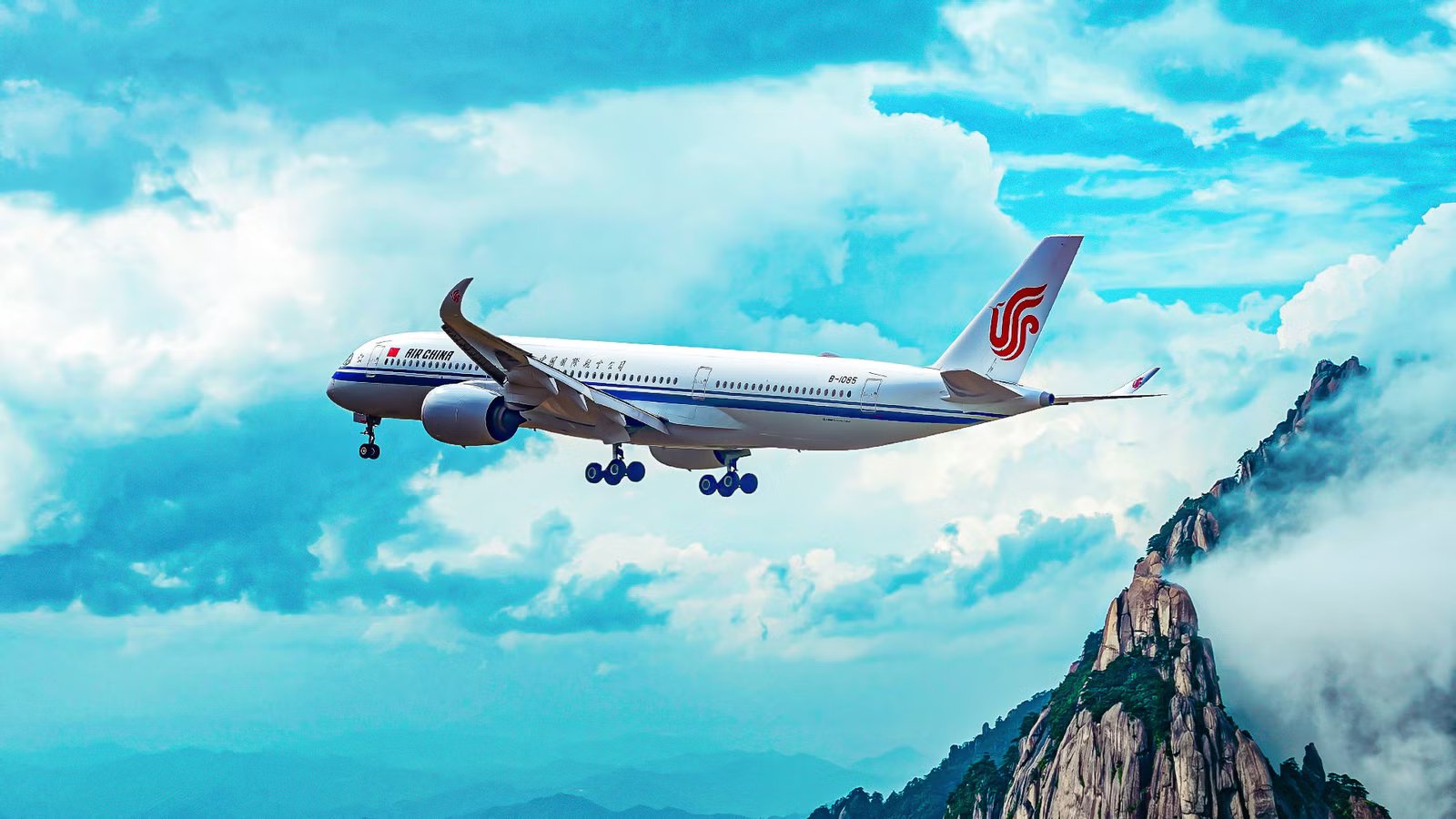
Airbus has secured another major order in China, with Air China and its subsidiary Shenzhen Airlines having put their names down for a combined 55 aircraft worth around $12.4 billion in list prices. Of course, airlines tend to receive a discount on the list price, especially when placing orders of this scale, but, even so, the deal represents a big financial win for Airbus ahead of the 2026 Farnborough Airshow.
The 55 aircraft are split between 15 A350-900 widebodies that will go to  Air China and 40 A320neo narrowbody twinjets that will go to Shenzhen Airlines. According to reporting on the matter by CNBC, Air China’s 15 extra inbound Airbus A350-900s are valued at $6.09 billion in list prices, while the 40 A320neos going to Shenzhen Airlines are worth a combined $6.35 billion. Let’s take a look at the deals.
Air China Has Increased Its Commitment To The Airbus A350

According to present fleet data made available by ch-aviation, Air China already has 28 units of the Airbus A350-900 at its disposal. These modern widebody twinjets are just 5.7 years old on average, compared to a fleet-wide mean of 10.6 years old. Now, however, its sub-fleet of A350-900s is set to boom, following an order for another 15 that it announced today in a Shanghai Stock Exchange filing.
Reporting on the matter by Reuters highlighted the fact that Air China expects to take delivery of these 15 extra jets between 2030 and 2032. Financially speaking, the publication notes that, while Air China will use its own funds in the deal, they will be combined with bank loans and other means. Air China Cargo also has ten A350F freighters on order, about which Vice President Wang Hongyan said in May:
“It will allow us to better match and meet the demands of the international air cargo market, laying a solid foundation for the company’s long-term stable development.”
Where Does Air China Fly Its Existing Airbus A350s?

As Air China’s joint most-numerous widebody twinjet model (it also flies 28 units apiece of the Airbus A330-300 and Boeing 777-300ER), the A350-900 sees extensive deployment on a wide variety of the carrier’s routes. Indeed, according to scheduling data made available by Cirium, an aviation analytics company, Air China has scheduled 1,351 A350 flights out of its various Chinese hubs this July.
Interestingly, despite the jet’s long-haul credentials, only 537 of these (40%) serve international routes. The most popular corridor on this front is Beijing (PEK) to London Gatwick (LGW), with 59 July rotations, followed by Beijing to Stockholm (ARN) on 58 and Barcelona (BCN) on 56. Copenhagen Kastrup Airport (CPH) in Denmark is the only other international route served more than daily, with 47 flights.
Air China’s Airbus A350-900 Layout (per aeroLOPA) | |
|---|---|
Class Of Travel | Capacity |
Business Class | 32 |
Premium Economy | 24 |
Economy Class | 256 |
Total | 312 |
While its range isn’t required on domestic duties, the A350’s capacity and premium options make it a good fit for some of Air China’s flagship internal routes. This July, the carrier has scheduled a total of 814 domestic services with the type, with Beijing to Guangzhou (CAN) being the most popular (78 flights out, 77 back). It will also operate 73 rotations between Beijing and Shanghai Hongqiao (SHA).
Shenzhen Airlines’ Narrowbody Boom

In a separate filing on the Shanghai Stock Exchange, Air China’s subsidiary carrier Shenzhen Airlines also announced that it would be ordering another 40 units of the Airbus A320neo. These deliveries, which ch-aviation says will take place between 2029 and 2032, will result in Shenzhen Airlines’ fleet of Airbus A320neo jets more than doubling. Indeed, it currently flies 35, aged 4.9 years on average.
Simple Flying Quiz
Think you really know Airbus?
Answer 10 questions and put your knowledge to the test
Think you really know Airbus?
Answer 10 questions and put your knowledge to the test
Easy (15s)Medium (10s)Hard (5s)
Elsewhere in the Airbus A320neo series, Shenzhen Airlines also already operates eight units of the stretched A321neo model, and has another 22 examples on order. These jets are aged just 2.2 years old on average, compared to an admittedly relatively low fleet-wide mean figure of 7.5 years old. This pair of orders comes just weeks after Airbus secured a $9.4 billion A330neo order with China Eastern.