dailynewsnblog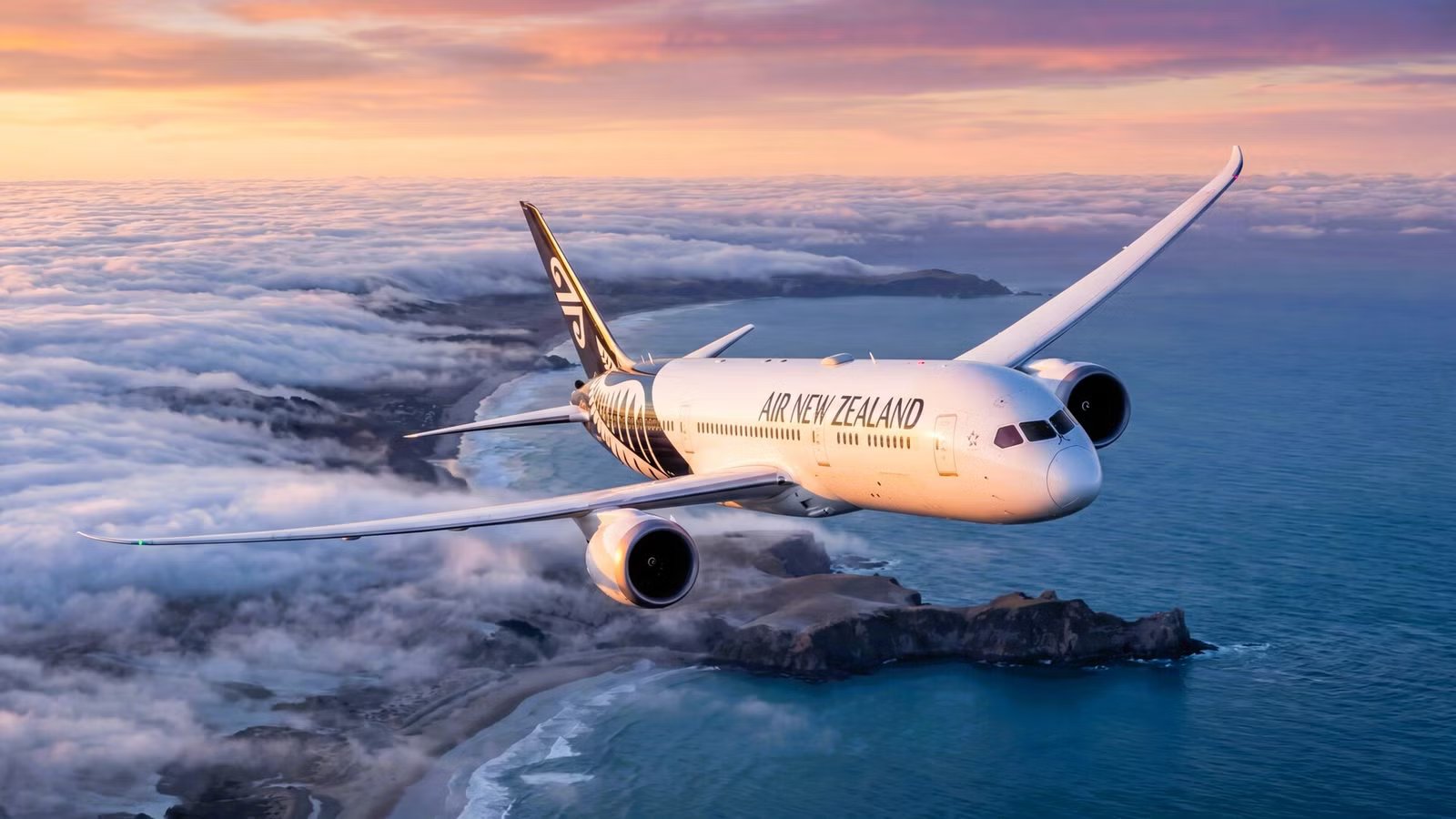
Air New Zealand has revealed where its new high-premium Boeing 787-9s will fly first in the coming months, ahead of its full deployment as part of the airline’s adjusted long-haul strategy. In a schedule filing flagged by AeroRoutes, the carrier outlined service for its new 219-seat Dreamliner from late June, with early appearances on ten proving routes before moving exclusively to Air New Zealand’s longest route from October.
Air New Zealand is now effectively pursuing a two-track Dreamliner plan. Its current 787-9 fleet is being retrofit into a common 272-seat standard, while its incoming new-build 787-9s will form a much more premium-heavy subfleet. Put simply, the airline is using one program to simplify the fleet it already has, and another to push harder into high-yield long-haul flying where sleep, comfort, and onboard differentiation matter most.
The Retrofit Program For The Current 787-9 Fleet

Air New Zealand’s current 787-9 fleet has long been split between two older configurations — nine carried 302 seats and five carried 275 seats. Since last year, the airline has begun standardizing all 14 in-service Dreamliners on a single 272-seat layout, in what the airline describes as the first full nose-to-tail retrofit of a 787-9 Dreamliner. The first aircraft spent 184 days in Singapore before returning to Auckland in April last year, and all 14 are due to be completed by the end of 2026.
The retrofit itself is much more than a cosmetic refresh. It introduces Business Premier Luxe, the carrier’s new elevated business class product, redesigned Business Premier and Premium Economy seats, a new inflight entertainment system, refreshed economy seating, and a new Sky Pantry concept. Air New Zealand has framed the project as the first new onboard product it has introduced in more than 15 years, and some would say a much-needed update of what was a decidedly old premium product.
|
Cabin |
Seats |
Key specifications |
|---|---|---|
|
Business Premier Luxe |
4 |
80-inch lie-flat beds, 24-inch 4K screens, fully closing door, and an ottoman/guest seat |
|
Business Premier |
22 |
Privacy screens, lie-flat beds, 24-inch 4K screens, and sliding dividers for middle seats |
|
Premium Economy |
33 |
41–42 inch pitch, redesigned shell-style seat with side privacy wings |
|
Economy |
213 |
31–33 inch pitch, updated seats and IFE, Sky Pantry access |
The retrofit has not been without its challenges, as Air New Zealand has had to launch this huge cabin program while also coping with fleet availability problems. The airline has said that Rolls Royce Trent 1000 engine maintenance requirements and a shortage of spares have meant that up to three Dreamliners are grounded at any time, impacting the schedule. The carrier currently has seven aircraft still to complete, two of which are currently parked at Alice Springs (ASP).
The New 219-Seat Dreamliner Is The Bigger Bet

Alongside the retrofit program sits the more intriguing part of the story: the incoming 787-9 subfleet. Air New Zealand still has ten new Boeing 787s due, split evenly between the 787-9 and the larger Boeing 787-10. It is the five 787-9s that will get the new Dreamliner interior, but with a far more premium configuration, shaped by research focused on sleep, comfort, and wellness. That’s a particularly important point for a carrier that flies some exceptionally long missions from an isolated home market.
The new 219-seat aircraft — which the carrier calls its “V3” configuration — reflects that philosophy very clearly: far fewer economy seats, while the number of premium seats increases to 94 across Business and Premium Economy. Later this year, Air New Zealand will also launch its world-first Economy Skynest product on its flagship  Auckland Airport (AKL) to
  New York JFK Airport (JFK) route. This will consist of six lie-flat pods that sit between Premium Economy and Economy, replacing five seats in the latter cabin, and will drop capacity further to just 214 seats.
|
Class |
Retrofit Standard |
New Premium |
With Skynest |
|---|---|---|---|
|
Business Premier Luxe |
4 |
8 |
8 |
|
Business Premier |
22 |
34 |
34 |
|
Premium Economy |
33 |
52 |
52 |
|
Economy |
213 |
125 |
120 |
|
Total seats |
272 |
219 |
214 |
At 219 seats, the new premium configuration taking flight in June will be one of the lowest seat-count 787-9s in airline service. But it is not quite the most premium. United Airlines takes that honor with its new 222-seat “Elevated” 787-9, which has eight Polaris Studio suites, 56 Polaris seats, and 35 Premium Plus seats, giving it 99 premium seats in all.

Bunk Beds In Economy: Air New Zealand To Launch World-First ‘Skynest’ In November
Air New Zealand’s Skynest: Revolutionizing long-haul flights with lie-flat pods.
ZK-NZS Starts The Story; JFK Is The Endgame

The first aircraft linked to this layout is ZK-NZS, which flew out from the  Boeing facility in Charleston last week, and is currently undergoing post-production work in San Antonio. It will enter commercial service by late June, initially touching a mix of regional Pacific destinations, as well as some limited long-haul markets, as Air New Zealand puts it through a bedding-in period for a very different cabin product. From October 25, AeroRoutes says the 219-seat aircraft is listed only on Auckland–JFK, with Skynest offered on JFK flights from November.
|
Destination |
Distance from Auckland |
Effective date |
Notes |
|---|---|---|---|
|
New York JFK |
8,833 miles |
June 27 |
All 3 weekly flights; sole listed route from October 25 |
|
San Francisco |
6,530 miles |
July 7 |
Excludes August 4–September 8 |
|
Honolulu |
4,405 miles |
July 1 |
All service by September 18 |
|
Perth |
3,316 miles |
July 4 |
Longer proving mission |
|
Papeete |
2,544 miles |
July 6 |
Excludes August 3–September 7 |
|
Rarotonga |
1,873 miles |
July 9–30; September 24 |
Limited-use island route |
|
Melbourne |
1,638 miles |
July 30 |
One-time operation |
|
Brisbane |
1,426 miles |
June 27 |
Earliest listed route |
|
Sydney |
1,342 miles |
September 20 |
Added later in rollout |
|
Nadi |
1,340 miles |
July 1 |
Short Pacific proving route |
JFK is also where the competitive picture sharpens. Qantas flies from  Sydney Kingsford Smith Airport (SYD) to JFK via Auckland with a 236-seat 787-9 that has 42 business and 28 premium economy seats. It also benefits from its
  oneworld partnership with
  American Airlines, which operates a hub at JFK, giving Qantas much broader North American feed opportunities at JFK.
Air New Zealand doesn’t have that same advantage, as its  Star Alliance partner, United, is based at
  Newark Liberty International Airport (EWR) — and why the carrier doesn’t fly there instead of JFK is a whole other discussion. But the 219-seat Dreamliner is how Air New Zealand plans to fight back on a route that it has struggled to make profitable. It is betting that a lower-density aircraft with far more premium seating and stronger sleep and comfort credentials will turn the financial tide. .
For a carrier that has faced significant engine-related disruption, intense competition, and the challenge of selling extremely long flights from a faraway market, the new 219-seat 787-9 looks less like a novelty and more like a very deliberate attempt to raise yields where the airline needs them most.