dailynewsnblog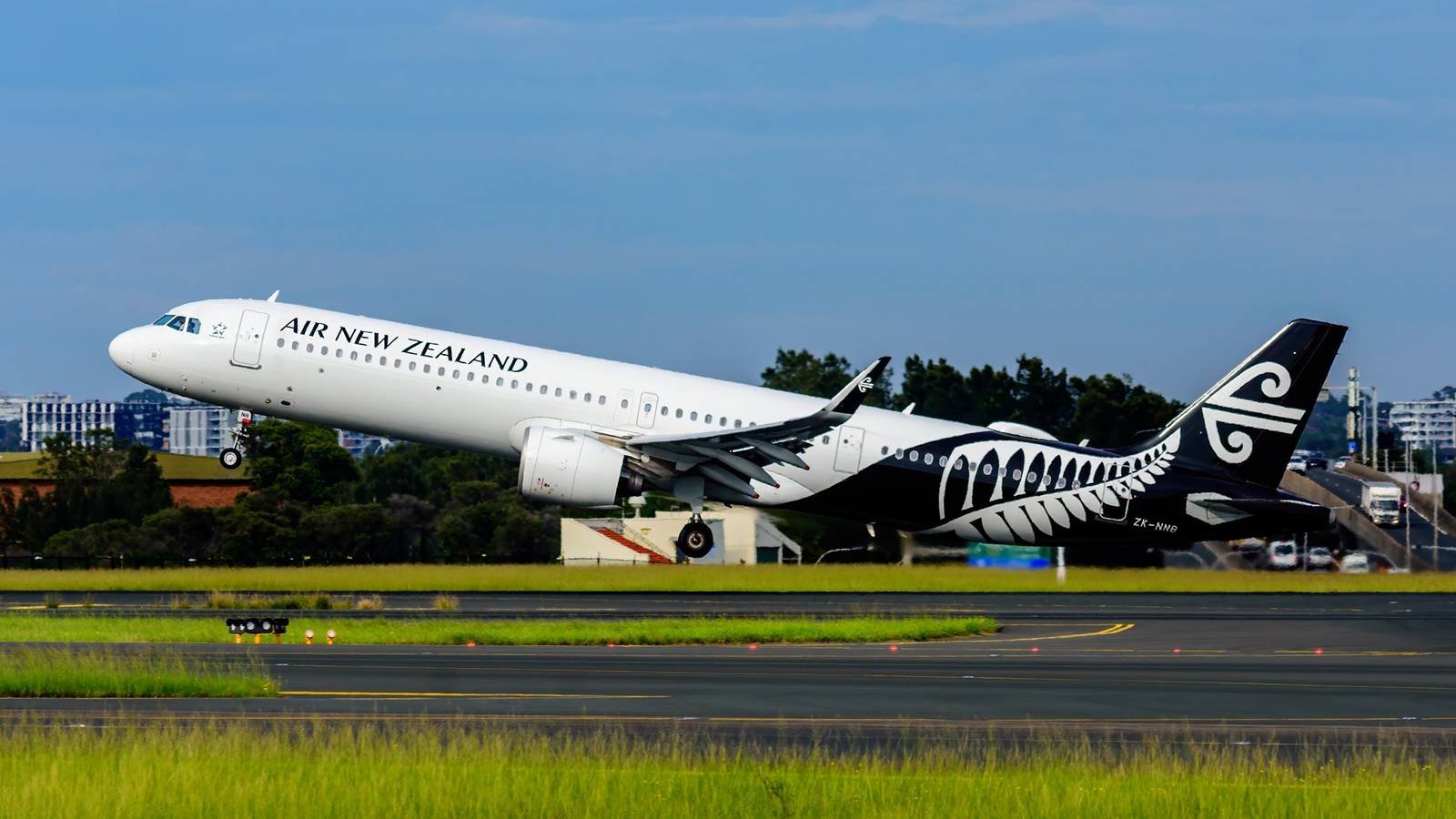
Travelers onboard a recent Air New Zealand flight NZ272 from Brisbane to Wellington experienced a ‘roller coaster’ ride of an approach to the New Zealand capital, as the gale force winds hammered the city. This forced the Airbus A321neo to abort its landing at Wellington Airport (WLG) and divert to Christchurch Airport(CHC).
According to reports, the A321neo had its tires briefly touch the ground at WLG before wind shear forced the plane to abort its landing and reconsider its options. This incident occurred on flight NZ272 on Friday, June 26. There are no reports of injury to anyone onboard, and the aircraft was able to divert and then resume normal operations.
NZ272 Lashed With Wind Shear On Approach To Wellington Airport

Unfavourable weather conditions in Wellington forced the cancellation of many flights on Friday, as gale-force winds hammered the western side of the country’s North Island. Wind shear affected this Air NZ flight as it attempted to arrive from Brisbane on Friday afternoon.
The airline confirmed that as the A321neo approached Wellington after its over three-hour flight from Brisbane Airport (BNE), it saw wind shear unexpectedly force the airline to abort its landing and reconsider a go-around or diversion to another airport. Air NZ Chief Safety and Risk Officer, Nathan McGraw, explained:
“When the wind shear occurred, the standard procedure of initiating a go-around was executed, during which the main wheels momentarily touched the runway. Due to the weather conditions at Wellington, the pilots diverted to Christchurch and made a safe landing.”
Safety Of Passengers And Crew Air New Zealand’s Number One Priority

As a result of the challenging conditions, NZ272 was forced to divert to Christchurch, and as the crew is well trained in these situations, all customers were reaccommodated onto another flight to Wellington, and the A321neo was able to resume normal operations. The dramatic landing attempt has been caught on camera, as shared below:
Wellington is renowned for windy conditions, and is a spectacle for plane watchers as aircraft handle challenging conditions. The reasoning behind this, as described by the New Zealand National Institute of Water and Atmospheric Research (NIWA), is that Wellington is windy because it sits on the edge of Cook Strait – the major gap between two mountain ranges running the length of the North and South Islands.
NZ272 was not the only flight that was diverted on Friday, with NZ254 from Melbourne Airport(MEL) to Wellington also being diverted, this time to Auckland. The NZ Herald notes that at one point, NZ254 was one of the most tracked flights on Flightradar24 that day. Weather conditions eased over the night, and on Saturday, the airport resumed normal operations; however, it is expected that the airport will be busier as displaced passengers are rebooked onto current services.
Emergency Landing: Air New Zealand Airbus A320neo Experiences Reported Hydraulic Failure
All passengers arrived safely, and the aircraft is undergoing a thorough inspection before returning to scheduled service.
Flight Data For Flight NZ272

Looking back at the flight data for this service, NZ272 was a regular scheduled service from Brisbane to Wellington on Friday, and the flight had a scheduled departure time from BNE at 9:15 AM. The departing flight had a slight delay from the Sunshine State, having eventually pushed back at 9:38 AM. The estimated flight time was around three hours.
Passengers onboard had an otherwise usual service; however, as the aircraft encountered the weather front that had been hammering the capital, this is where the situation started to turn. It shows that after the expected arrival time into Wellington of 2:45 PM had passed, the plane was unable to land at the airport due to the wind shear, and the plane diverted to Christchurch and touched down safely at 3:25 PM, making for a total flight time of approximately four hours.
The plane at the center of the event is ZK-NND, with data from ch-aviation identifying that the A321neo was first delivered to the carrier on February 21, 2019. It is configured in an all-economy class layout catering for 214 passengers. It carries the serial number 8629 and operates primarily for services to and from Wellington, Auckland, and Christchurch to the eastern coast of Australia. Following the incident that forced the plane to divert from Wellington to Christchurch, it has otherwise returned to normal service, shuttling passengers across the Tasman Sea.