dailynewsnblog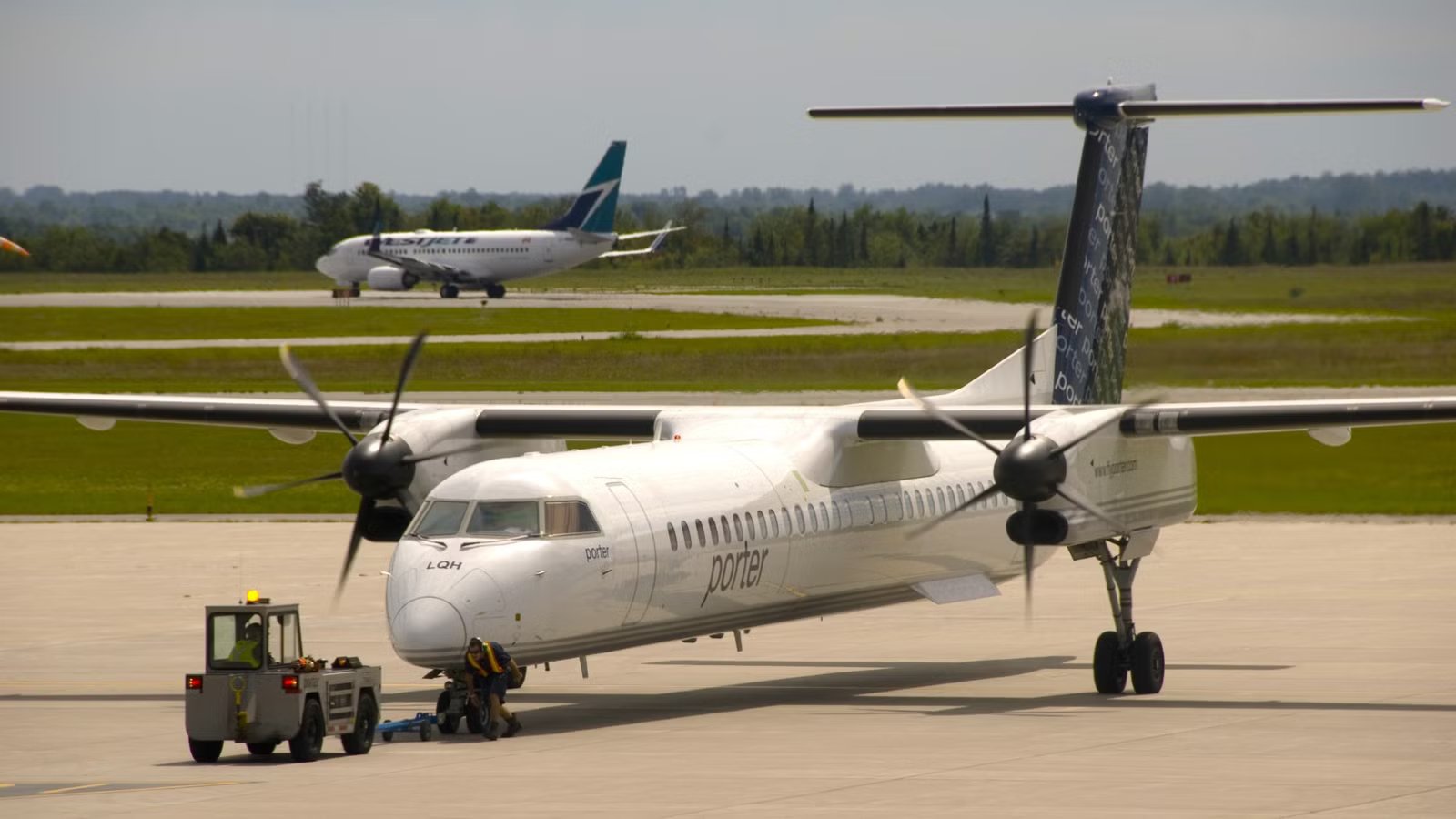
 Air Canada is the flag carrier of Canada, and is also the country’s largest airline, with a fleet of more than 200 aircraft. It is followed by WestJet and Porter Airlines.
Each of these three carriers offers a different onboard experience in terms of legroom, which also depends on the aircraft type that is operating the flight. In this article, we will use data from aeroLOPA to take a look at the different aircraft types operated by Air Canada, WestJet, and Porter Airlines, and examine the legroom that passengers can expect to find onboard each one.
Air Canada

The latest data from ch-aviation shows that Air Canada currently operates a fleet of 251 aircraft, including 32 Boeing 787-9s, 44 Airbus A220-300s, and 35 Boeing 737 MAX 8s. The Star Alliance carrier’s highest-capacity aircraft is the Boeing 777-300ER, which can accommodate up to a maximum of 450 passengers in a three-class configuration: 28 in business class, 24 in premium economy, and 398 in economy class.
Meanwhile, Air Canada’s lowest-capacity aircraft is the Airbus A319, which can carry just 136 passengers: 12 in business class and 124 in economy class. The best economy class legroom on Air Canada’s narrowbody fleet is found on the carrier’s Airbus A320s, which typically feature legroom of 31-33 inches. When it comes to seat width, the A220-300 offers the widest seats in economy class, at a pleasantly comfortable 19 inches.
Aircraft | Number In Fleet | Legroom (Economy Class) | Seat Width (Economy Class) |
|---|---|---|---|
Airbus A220-300 | 44 | 31 inches | 19 inches |
Airbus A319 | 12 | 31 inches | 17.2 inches |
Airbus A320 | 24 | 31 – 33 inches | 17.5 inches |
Airbus A321 | 34 | 31 – 33 inches | 17.5 inches |
Airbus A321XLR | 2 | 31 – 34 inches | 18 inches |
Airbus A330-300 | 20 | 31 – 32 inches | 18 inches |
Boeing 737 MAX 8 | 35 | 30 inches | 17 – 18 inches |
Boeing 777-200LR | 6 | 31 inches | 17 inches |
Boeing 777-300ER | 19 | 31 inches | 17 inches |
Boeing 787-8 | 8 | 31 inches | 17.3 inches |
Boeing 787-9 | 32 | 30 inches | 17.3 inches |
Surprisingly, the legroom on Air Canada’s widebody aircraft does not match up to that found onboard the carrier’s Airbus A320s. The Star Alliance carrier’s Boeing 787-8s, 787-9s, 777-200LRs, and 777-300ERs all feature 31 inches of legroom in economy class, with the comfiest seats found onboard the airline’s older Airbus A330-300s (up to 33 inches). The legroom found in economy class onboard each of Air Canada’s aircraft types is outlined in the table above.
WestJet

Canada’s second-largest airline is WestJet, which operates a fleet of more than 160 mainline aircraft. The carrier flies from three primary bases: Toronto Pearson International Airport (YYZ), Calgary International Airport (YYC), and Vancouver International Airport (YVR). The legroom found in economy class onboard each of WestJet’s non-regional aircraft types is outlined in the table below.
Aircraft | Number In Fleet | Legroom (Economy Class) | Seat Width (Economy Class) |
|---|---|---|---|
Boeing 737-700 | 35 | 31 inches | 17 inches |
Boeing 737-800 | 54 | 31 – 33 inches | 17 inches |
Boeing 737 MAX 8 | 65 | 31 – 34 inches | 17 inches |
Boeing 787-9 Dreamliner | 7 | 31 – 35 inches | 17.3 inches |
As the table shows, WestJet’s economy class seats on its narrowbody aircraft have a consistent width of 17 inches, while those found onboard its Boeing 787-9s offer slightly more passenger comfort at 17.3 inches. The carrier deploys its 787-9s on long-haul routes from its hub at Calgary International Airport (YYC), serving destinations including Seoul Incheon International Airport (ICN), Tokyo Narita Airport (NRT), and London Heathrow Airport (LHR).
Each of WestJet’s Boeing 787-9s can accommodate up to 320 passengers in a three-class configuration: 16 in business class, 28 in premium economy, and 276 in economy class (including 60 extra-legroom seats). On the narrowbody side, it did trial a high-density layout on its Boeing 737 fleet, but this change was reverted after extensive negative passenger feedback went viral.
Why WestJet’s Recent Cabin Retrofit Is Upsetting Passengers
The problems caused as a result of WestJet’s new narrowbody interiors.
Porter Airlines

Porter Airlines commenced operations in 2006, making it a relative newcomer to the Canadian aviation scene. Today, the carrier operates a fleet of 81 aircraft, serving key business routes as well as popular leisure destinations, such as Harry Reid International Airport (LAS), Fort Lauderdale-Hollywood International Airport (FLL), and  Orlando International Airport (MCO).
Last year, Porter Airlines expanded its footprint to vacation hotspots further afield, such as Puerto Vallarta Licenciado Gustavo Díaz Ordaz International Airport (PVR), Cancún International Airport (CUN), Liberia Guanacaste International Airport (LIR), George Town Owen Roberts International Airport (GCM), and Nassau Lynden Pindling International Airport (NAS). The legroom found in economy class onboard each of Porter Airlines’ aircraft types is outlined in the table below.
Aircraft | Number In Fleet | Legroom (Economy Class) | Seat Width (Economy Class) |
|---|---|---|---|
De Havilland Canada Dash 8-400 | 29 | 30 inches | 17 inches |
Embraer E195-E2 | 52 | 30 inches | 18.3 inches |
Porter Airlines’ fleet of Embraer E195-E2s is set to grow significantly over the coming months, the carrier expecting to take delivery of a further 28 of the aircraft. The airline’s E195-E2s offer a comfortable journey for passengers, with a seat width of 18.3 inches. However, those passengers traveling on Porter Airlines’ De Havilland Canada Dash 8-400s have to put up with a seat width of a rather tight 17 inches.
The bulk of Porter Airlines’ flights operated by the Dash 8-400 operate from Billy Bishop Toronto City Airport (YTZ), with Ottawa Macdonald-Cartier International Airport (YOW) serving as a mixed hub, with flights operated by both the Dash 8-400 and the Embraer E195-E2. Meanwhile, all of the carrier’s flights from Toronto Pearson International Airport (YYZ) are operated by the E195-E2.
Does Porter Offer WiFi On Its Planes?
The Canadian carrier offers WiFi onboard some of its aircraft.
What About Business Class?

When it comes to business class cabins onboard Air Canada, WestJet, and Porter Airlines, the comparison becomes less clear, with both Air Canada and WestJet offering lie-flat beds on their long-haul services operated by the likes of the Boeing 787-8, 787-9, 777-300ER, and Airbus A330-300. It goes without saying that such cabins offer an exceptional customer experience when it comes to comfort, making them perfect for the carriers’ longest flights.
Currently, Air Canada’s longest flight is between Vancouver International Airport (YVR) and Singapore Changi Airport (SIN), operated by the Boeing 787-9 and covering some 7,965 miles. Meanwhile, WestJet’s longest scheduled service is between Calgary International Airport (YYC) and Rome Fiumicino Airport (FCO), coming in at 5,265 miles long.
Porter Airlines, on the other hand, does not operate any widebody, long-haul services, and offers a limited number of short-haul business class seats on its Embraer E195-E2 aircraft. Each business class seat comes with a seat pitch of 36 inches. The carrier’s longest route is between Montreal-Trudeau International Airport (YUL) and San Francisco International Airport (SFO).
How Do They Compare To Air Transat?

Air Transat is Canada’s fourth-largest carrier, with a fleet of 43 Airbus aircraft, including 19 A321neos and 14 A330-200s. The legroom offered onboard Air Transat’s flights in economy class is slightly larger than that found on the majority of other Canadian airlines. For example, on the carrier’s A321neos, each seat has 31 inches of legroom and an impressive 18 inches of seat width. Air Transat’s Airbus A330-200s are primarily used on long-haul services to Europe, particularly during the peak summer months.
These widebodies offer economy class passengers 31 – 32 inches of legroom, which should be more than sufficient for the carrier’s longer flights, including its newly introduced services to Brazil. Since February 4, 2026, Air Transat has served Rio de Janeiro Galeão International Airport (GIG) from Toronto Pearson International Airport (YYZ) and Montreal-Trudeau International Airport (YUL), deploying its A330-200s on both routes, as reported by Aviation Source News.
Air Transat’s Airbus A330-200s are able to accommodate up to 345 passengers in a two-class configuration: 12 in business class and 333 in economy class. The carrier’s A330-300s are slightly larger, with space for up to 12 passengers in business class and 351 in economy class, giving a total capacity of 363 passengers.

Tempting? Air Transat Begins New 11-Hour Flights
Canada’s fourth-largest airline begins what has become its new longest route, but not for long.
Which Airline Offers The Most Legroom?

After analyzing the legroom available onboard each carrier in economy class, when it comes to short-haul narrowbody services, Air Canada offers the most legroom on flights operated by its fleet of Airbus A320s and A321s, with up to 33 inches of legroom. For long-haul widebody services, the most generous legroom can be found onboard WestJet’s fleet of Boeing 787-9s, with up to 35 inches of legroom available in certain seats sold with extra legroom.
The legroom found onboard Canada’s three largest airlines is largely in line with industry standards across most of the world, although a number of aircraft offer slightly more legroom in economy class than average, particularly when compared with low-cost carriers such as Spirit Airlines and Frontier Airlines. How do you find the legroom when flying on Air Canada, WestJet, and Porter Airlines? Which is your favorite aircraft type at each of these three major Canadian carriers? Share your thoughts and experiences in the comments!