dailynewsnblog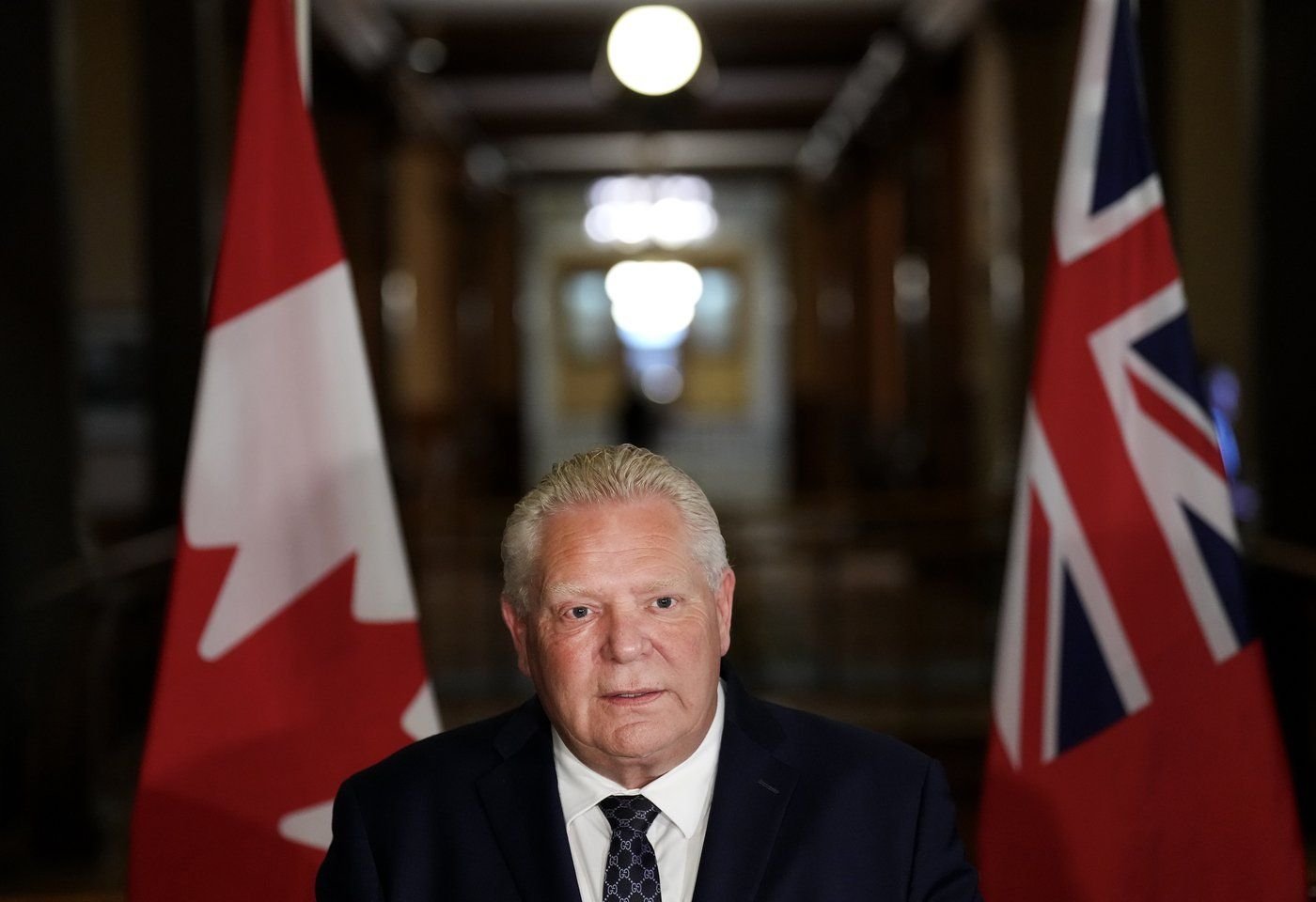
Ottawa is basking in sunshine today, but over at Queen’s Park, the PC caucus members may be dealing with another kind of heat.
Premier Doug Ford’s abrupt reversal on the taxpayer-funded jet, coupled with the admission that multiple inmates remain at large after being mistakenly released, is sparking up some pointed frustration from within his own ranks.
One Progressive Conservative caucus member, who spoke to QP Briefing on the condition of anonymity to air their concerns candidly, warned the controversies risk cutting directly against the party’s carefully cultivated populist image, built on fiscal restraint and a tough-on-crime message.
The “turbulence” began when the province confirmed it had purchased a $28.9-million Bombardier Challenger 650 for government travel, citing the premier’s extensive trips across Ontario, Canada and the United States. Within days, and after mounting backlash, Ford announced the plane would be sold, acknowledging concerns about affordability.
“I have heard and agree that now is not the right time,” Ford said.
Queen’s Park reporter Barbara Patronicio has more.

Also, the federal government has secured a brief extension of a court-imposed deadline to make changes to the Indian Act to restore status to those who had descendants that were enfranchised.
As iPolitics first reported last month, Ottawa gave notice it was preparing to move a motion to seek an extension to give Parliament more time to pass Bill S-2, which would make changes to comply with last year’s B.C. court decision.
That decision, known as the Nicholas ruling, gave Ottawa until the end of April 2026 to make changes to restore status to the descendants of enfranchised First Nations peoples.
On Tuesday, the government formally petitioned the court for a six-month extension of that deadline to October 30, though the judge deferred a ruling.
But a request to extend the deadline to next month to wait for the decision was granted after it was accepted by both parties, according to the lawyer representing the plaintiffs in the case.
Marco Vigliotti has more.

It’s a major blow to the NDP — of which Boulerice was once deputy leader — which will only hold five seats out of a total of 343 in the House of Commons following his departure.
The Journal de Montréal first reported Boulerice’s move to provincial politics.
CBC has more.
In Other Headlines
Internationally
Elsewhere, Donald Trump is sending his Middle East envoys Steve Witkoff and Jared Kushner to Pakistan to resume negotiations to end the war with Iran, which has lasted nearly eight weeks.
The White House spokesperson Karoline Leavitt confirmed the travel on Friday, saying that Witkoff and Kushner, Trump’s son-in-law, would meet Iran’s foreign minister, Abbas Araghchi, in Islamabad.
She said: “We’re hopeful that it will be a productive conversation and hopefully move the ball forward to a deal.”
Araghchihad announceda tour of Pakistan, Russia and Oman in an effort to see if there could be a basis to reopen peace talks that could end with a permanent US-Israeli commitment to cease attacks on Iran, now one of Tehran’s key demands.
The vice-president, JD Vance, who led a US delegation to Islamabad in the previous round of peace talks, is not travelling to Pakistan but will remain on “standby” in case of a breakthrough.
The Guardian has more.
Meanwhile, near the Kremlin several dozen people are queuing outside the presidential administration office.
They’ve come to submit petitions calling on President Vladimir Putin to end a crackdown on the internet.
Russian authorities have been tightening control of the country’s cyber space. Access to global messaging apps has been restricted and there are widespread disruptions to, even shutdowns of, mobile internet.
Petitioning the president is legal. But in an authoritarian state this is putting your head above the parapet.
And people are being made to feel that.
From across the street security officers are filming the petitioners – and us.
Read more from the BBC.
In Other International Headlines
The Kicker
A man’s best friend (dog), could mean more to the Mayans, new research suggests.
The Ancient Maya were moving dogs across long distances, not just as companions, but as commodities tied to status, ritual and trade.
After analyzing chemical signatures in dog remains, archaeologists found that some pups travelled hundreds of kilometres between highland and lowland cities long before modern or transport networks existing.
The National Geographic has more.