dailynewsnblog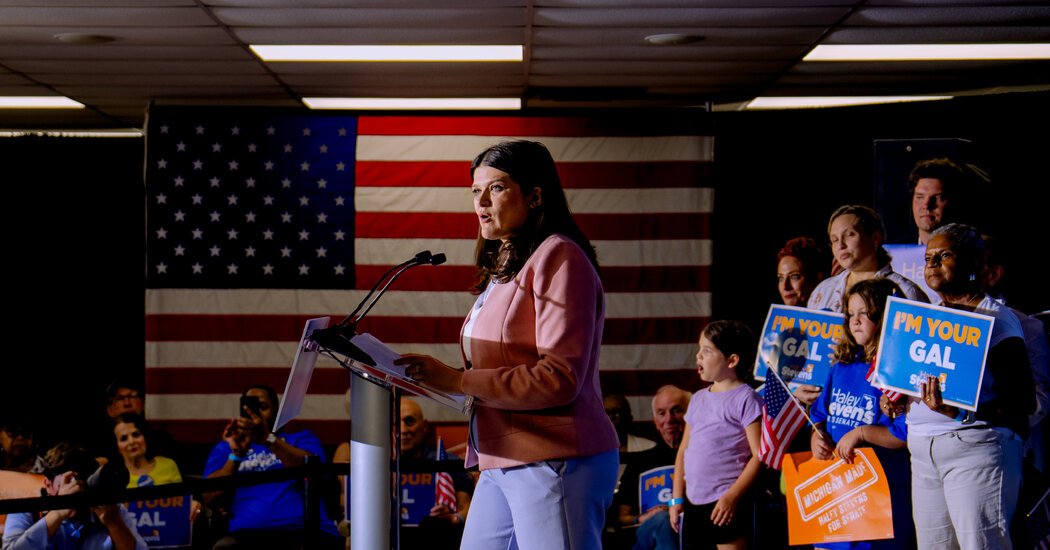
Rarely is the top issue in a high-profile election how, exactly, the contest has been funded.
But that has been the case in the Democratic primary race for Senate in Michigan, which has inflamed so many of the party’s explosive political debates.
Representative Haley Stevens, the moderate establishment-backed candidate, benefited from about $62 million in advertising spending from half a dozen outside groups. Over half of that sum came from the super PAC arm of the American Israel Public Affairs Committee, the country’s most influential pro-Israel group.
That spending gave her and her allies about a 9-to-1 spending advantage over her progressive rival, Dr. Abdul El-Sayed, and his allies, according to data from the media tracking firm AdImpact. Two main ads from the group targeted Dr. El-Sayed over his past criticisms of women like Michelle Obama and Gov. Gretchen Whitmer of Michigan and featured positive comments about Ms. Stevens from former President Barack Obama as part of her attempt to appeal to Black voters.
But Dr. El-Sayed spun the barrage of spending into an attack line, turning Ms. Stevens’s support from AIPAC in particular into a political liability in a state with a heavy Muslim population. He argued that Ms. Stevens would seek only incremental change because she was close to corporate donors.
Last week, at the final debate, the two candidates spent much of the first 15 minutes in a searing fight about super PACs, advertising trends and dark-money nonprofit groups with undisclosed donors. The clash underscored the central role that money in politics came to play in the contest.
In response to the very first question of the debate, Dr. El-Sayed called out Ms. Stevens for a pro-Israel vote she had recently cast. “That is the pro quo that comes with the quid,” he said, adding, “It really comes down to how you are funded.”
Ms. Stevens has not engaged much with questions about AIPAC support. In an interview published last week, she said some voters had “campaign finance zoomies” and stressed that other issues were much more important.
In his own much more limited advertising, including a closing spot featuring Representative Alexandria Ocasio-Cortez of New York, Dr. El-Sayed has called for less money in politics.
In recent years, the Democratic Party has been entangled in emotional debates about the United States’ relationship to Israel. Those arguments have often included a focus on the role of big-spending outside groups in elections, as left-wing activists seek to make AIPAC and its affiliated groups toxic and to politically punish Democrats who take their money.
And there has been a lot of that money in Michigan. The $31.9 million poured into ads in the state by AIPAC’s main super PAC, the United Democracy Project, is the most spent by a single group in a federal Democratic primary this cycle, according to AdImpact data. That makes Tuesday a test for AIPAC unlike any other that the big-money group has faced this cycle.
Dr. El-Sayed has also sought to highlight just how much of the pro-Stevens spending is being financed by donors whose identities remain hidden.
The United Democracy Project’s biggest donor is AIPAC, a nonprofit that does not disclose its donors. And all of the other pro-Stevens groups are financed by nonprofit groups that do not disclose their donors; are dark-money nonprofits themselves; or began spending late enough in the election cycle that they have yet to file paperwork with the Federal Election Commission that could reveal their donors.
Reid J. Epstein contributed reporting.