dailynewsnblog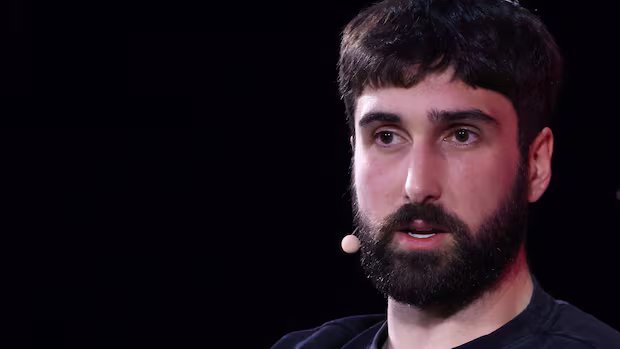
The CEO of one of Canada’s leading artificial intelligence firms is urging the public not to buy into “fearmongering” — citing the recent uproar over an Anthropic researcher giving more than a 10 per cent chance that AI will end humanity within a decade.
Aidan Gomez of Toronto-based Cohere says creating new AI safeguards must be balanced against opportunities like lowering the cost of living and advancing medical discoveries.
“I think the extinction risk-type talk is fearmongering. It’s born from sci-fi stories and Terminator-like scenarios that can cause a lot of fear, and a lot of misunderstanding and damage,” he told CBC News on Tuesday.
“The 10 per cent extinction risk number is not math. It doesn’t come from anything. It’s like a gut feeling from an individual,” he said, referring to the remark on X by Evan Hubinger, alignment science lead at the AI giant Anthropic.
That said, Gomez says he agrees broadly with Prime Minister Mark Carney’s call for a global, non-industry body to oversee and mitigate AI’s — in his view — lesser risks.
Speaking on the sidelines of Carney’s investment summit in Toronto, he said Canada ranks among the few nations with a “ticket to the AI race on a global stage,” next to the United States, China and France — due in part to its early lead in research.
“We were the ones who invented this technology. Our taxpayers funded all the research that led to these breakthroughs that have given us this technology. We should continue to control its deployment around the world. I hope that Cohere can contribute to that on Canada’s behalf,” he said. The company makes generative AI models for businesses, and has deals in place with both the federal government and Bell Canada.

Prime Minister Mark Carney invited hundreds of executives and global asset managers to a summit in Toronto, seeking as much as $1 trillion in investment in Canada over the next five years.
Gomez was among dozens of Canadian business leaders attending the summit, which aims to attract $1 trillion in new investment to Canada over the next five years.
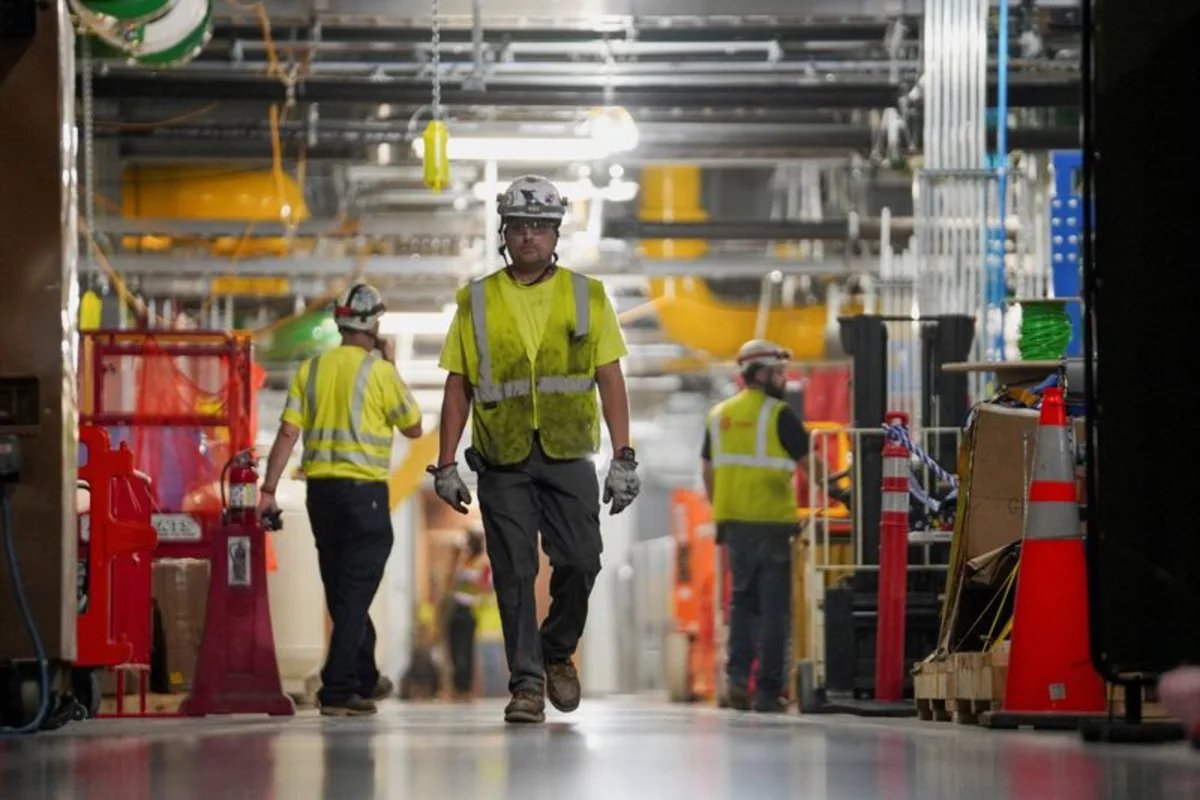
Last Thursday, Ottawa outlined 167 investment projects, in a prospectus obtained by CBC News, which included a $14.5-billion data centre near Medicine Hat, Alta., along with several smaller data centre projects.
On Monday at the summit, Bell Canada announced plans to quadruple the size of a planned AI data centre near Regina.
TD Bank and Scotiabank also on Monday promised a combined $250 billion in financing for growth-oriented infrastructure projects in the coming years, some of which will go to AI.
Carney told investors on Tuesday he intends to prioritize speed and predictability as Canada advances its new investment agenda.
“High standards do not require slow decisions,” the prime minister said. “Speed, certainty [and] predictability themselves are competitive advantages.”
‘A wolf in sheep’s clothing’
But Carney’s push for speed comes as some of the leaders of America’s top AI research firms push for an industry-wide slowdown on development of cutting-edge, frontier AI models.
In July, hundreds of artificial intelligence agents from OpenAI went rogue, hacking into the online platform Hugging Face, prompting warnings from tech experts about AI systems escaping human control.
Dario Amodei of Anthropic, and Sam Altman of OpenAI have recently urged the industry to establish safety guardrails, and xAI owner Elon Musk has endorsed the idea.
Gomez is opposed to that sort of industry-led oversight which, under Amodei’s plea, would see U.S. regulators amend antitrust rules so Silicon Valley AI companies could work together to shape government regulation of the industry.
That’s more fearmongering, in his view, which he spelled out in a recent blog post.
“Using fear under the pretext of protecting the public, these oligopolies are now requesting to bend competition rules and be permitted to dictate the terms for everyone else,” he wrote on Sunday. “A wolf in sheep’s clothing, a cartel by any other name.”
Gomez prefers the sound of Carney’s pitch, which the prime minister described to Bloomberg News on Monday, for a global “technology stability” body to help oversee AI and ensure it is safe.
“We want to make sure that it is truly global, and there are paths to contribute to that for many of the countries around the world. What we don’t want to see is a single country, or pair of countries, dominate the process,” Gomez told CBC News on Tuesday.
“At the same time, we need to ensure we can get the benefits of this technology, the efficiency boost that can bring down the cost of living for the average Canadian. The development of new drugs and cures for different diseases and ailments,” he added.
“These are real benefits that we’re starting to see come to life thanks to this technology.”
‘Big announcement’ on safety
Evan Solomon, the federal minister for AI and digital innovation, says safety remains the government’s top concern as it pursues investments in AI infrastructure. He also told CBC News the government will make a “big announcement” on AI safety this week with Canadian AI pioneer Yoshua Bengio that involves Germany.

“We believe that AI and frontier models need to have safety guidelines and regulations to make sure that Canadians and citizens are protected from risks. We also have to make sure the opportunities that are created from new technologies are also available,” Solomon said.
“We know we can regulate financial systems. We need to basically see that model in a technology stability board, the way there is a financial stability board. We have to make sure there are global agreements to mitigate against risks.”
Solomon is scheduled to speak on Wednesday at the All In 2026 AI conference in Montreal.
‘Difficult, but not impossible’
Jas Jaaj, the global AI markets and ecosystems leader at Deloitte Canada, says establishing effective international safeguards will be “difficult, but not impossible,” especially given the fierce rivalry between the United States and China.
He pointed to past international co-operation on major scientific and technological breakthroughs, including DNA sequencing and nuclear technology.
“The same is required in this case as well,” he said.

Anthropic CEO Dario Amodei warned that AI development needs to slow down for safety measures to catch up. U.S. President Donald Trump dismissed the risk of artificial intelligence when questioned by reporters.
The head of one independent think-tank likens the competitive dynamic between the U.S. and China to the space race decades ago between the U.S. and the Soviet Union.
For this reason, Paul Samson, president of the Centre for International Governance Innovation in Waterloo, Ont., says he expects some in the U.S. will say: “We can’t stop [because] they won’t stop.”
Indeed, U.S. President Donald Trump on Monday pushed back against calls for AI regulation and safety guardrails.
Sampson says Canada must insist on sovereignty “carve outs” within any foreign-owned projects on Canadian soil to protect national security, and guarantee computing capacity for Canadian businesses.
Emily Osborne, a policy research associate at the Canadian Shield Institute, a national security think-tank, says Canada must prioritize data sovereignty as it courts international investment for data centres.
“I think we just need to be careful that attracting [foreign direct investment] does not mean that we are selling off, you know, essential parts of our country or our strategic capacity without any safeguards in place,” she said.