dailynewsnblog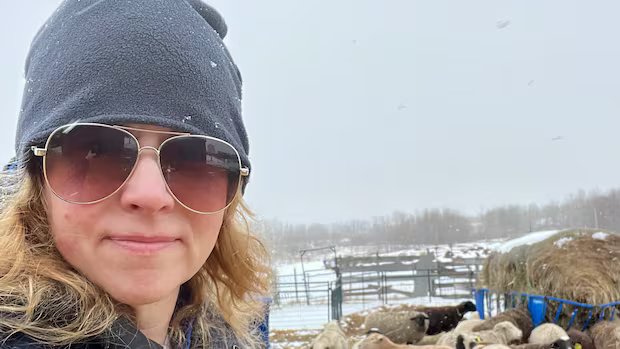
Teresa Patry is feeling gaslit by Alberta’s oil and gas regulator — and she’s not the only one.
The Vermilion, Alta., farmer and rancher has two active oil wells operating on her land, which, according to an independent air quality assessment, are venting a steady stream of methane and potentially dangerous chemicals downwind from where she lives with her family and livestock.
Patry can smell the fumes from her home, and she believes they are negatively impacting her health and that of her family and animals. But every time she calls the province’s energy regulator, she says they tell her everything is operating as it should be.
“Our home isn’t an industrial site, but it’s sort of been turned into one,” she told What On Earth host Laura Lynch.
The Alberta Energy Regulator (AER) said it could not comment on specific complaints by landowners, but told CBC it “regulates in accordance with government policy.”
Environmental advocates say they’ve heard from dozens of landowners like Patry, who have aging or decommissioned oil wells on their property that are polluting the environment and impacting their families’ health, but are getting little to no support from the province.
As Alberta works on plans to rein in methane emissions and deal with aging oil-and-gas infrastructure, those advocates fear the plight of ordinary people like Patry will continue to be ignored.
She thought she could trust the industry
In Alberta, companies are allowed to drill on private land if they own the mineral rights to what’s beneath the earth, though they are required to negotiate lease agreements and compensation amounts with landowners.
When Patry’s parents were asked to sign a lease in 2006, she says nobody batted an eyelash.
They were hardworking, blue-collar folks contributing to Alberta’s economy, and felt a kinship with oil and gas workers.
“The whole family was trusting,” she said. “I think there’s a lot of other landowners that were trusting that we had these really good regulators, and that’s just not the case at all.”
What On Earth25:19Are leaky, old oil wells poisoning people and the planet?
At first, she says, they barely noticed the wells. But as they aged, and ownership passed between several different companies, they became noisy and looked unkempt. She also started to become overwhelmed by a noxious odour, like from a gas station, whenever she was downwind of them.
“I get a headache from it immediately,” she said. “I feel like my face is burning.”
She would later learn these are signs of what’s called venting, the controlled release of unburned natural gas into the atmosphere.
Usually, the bulk of what vents is methane, a scentless greenhouse gas that’s more than 80 times more potent than carbon dioxide over a 20-year span, and is often unintentionally released during the production of fossil fuels.
Methane inhalation, in low concentrations, is not harmful, according to the Canadian Centre for Occupational Health and Safety. But methane leaks rarely contain methane alone.
“There’s all other gases mixed in it too,” Dr. Ulrike Meyer, a family physician and member of the advocacy group Canadian Physicians for the Environment (CAPE), said.
Those are called volatile organic chemicals (VOCs), which studies have linked to a slew of harmful health impacts, including rheumatoid arthritis, thyroid disfunction, heart and lung issues, infertility, blood clots, negative birth outcomes and, in some cases, cancer.
In a 2023 report, Alberta’s auditor general acknowledged the negative health impacts of VOCs from non-oilsands oil and gas infrastructure.
Animal sickness
Patry first started to seriously worry in 2016, when a flock of lambs in a pen near one of the wells died unexpectedly. She says AER sent an inspector who assured her everything was fine.
A month later, Patry was diagnosed with rheumatoid arthritis. A few months after that, her daughter developed thyroid issues.
In 2022, her son, now in his 20s and living away from home, started coughing blood after visiting the farm and doing some work outside. When she rushed him to hospital, doctor said he had a blood clot breaking down in his lungs.
At the time, she didn’t think to connect the health issues to the wells.
“We were sitting in the hospital and they said, ‘What were you doing? What were you exposed to?'” she said. “We’re, like, you know, ‘Exposed to?’.… You don’t put two and two [together].”
Her son has since recovered, she says, though he still has sinus issues whenever he visits.

It’s impossible to draw a direct line between the oil wells on Patry’s properties and the symptoms she describes. Much of the existing research shows a correlation between VOCs and negative health incomes, but can’t prove causation.
It’s also not clear which VOCs are leaking from the wells. AER declined to answer specific questions about her case.
Meyer works as family physician in Dawson Creek, B.C., a town with plenty of natural gas production. She says her patients who live in proximity to industrial sites often suffer nosebleeds, sinus problems, and even cancer.
She and other doctors are calling for independent research into the health impacts of industrial pollutants, and regulations requiring environmental assessments for even small-scale projects.
“I think the regulations are so lax when it comes to the oil and gas industry that they fulfil their due diligence because [the bar is] so low,” she said.
Energy regular says wells are compliant
Patry says she’s called the AER to report issues with the wells several times over the years. She’s also been in contact with elected officials, including Energy Minister Brian Jean.
But she says they all tell her the same thing: that everything is operating in accordance with provincial regulations.
CBC asked AER for comment about the concerns raised by a Vermilion landowner with oil wells on her property, a spokesperson said the regulator had responded to those complaints, and its inspections determined the wells aren’t venting more than is allowed under provincial regulations.
Jean declined an interview request from What On Earth and did not respond to emailed questions. Alberta Premier Danielle Smith did not respond to multiple requests for comment.

Tim Doty, a retired environmental inspector for the Texas Commission on Environmental Quality, says the AER’s response to Patry’s concerns is “not acceptable.”
Doty, who now works as an independent consultant, was recently commissioned by three environmental groups to conduct environmental assessments near industrial infrastructure in Canada in 2022 and 2025.
One of his last stops was Patry’s farm.
He inspected the wells using an optical gas imaging camera, which uses infrared light to show gas emissions that can’t be seen with the human eye.
“They just were continuously venting the whole time we were there,” he said, adding this was common at sites he visited in other provinces.
Doty’s device couldn’t pinpoint which chemicals were being emitted. Still, he advised Patry to close her windows and spend less time outside when the wind is blowing off the wells toward her home.
Patry said she became emotional in the car with her husband, after Doty told her what he had found.
“I said, ‘I’m not crazy.'”
Advocates say others are fighting similar battles
Phillip Meintzer, a Calgary organizer with the Coalition for Responsible Energy (CORE), says stories like Patry’s are common.
According to the provincial government, there are 466,000 oil wells in the province. Meintzer roughly 260,000 of them are “at the end of their lives.”
Another 80,000 are what’s known as “orphan wells,” inactive or abandoned infrastructure that are expensive to clean up and have become a headache. Patry has one of those on her land, too, as well as the two active ones.

In late March, the AER increased its levy for the Orphan Well Association, an industry-funded agency that assumes responsibility for wells when companies go bankrupt, from $144.45 million to $154.56 million.
And in 2025, the province released the Mature Asset Strategy, a government-commissioned report outlining recommendations for how to better deal with aging and abandoned oil and gas infrastructure.
Meintzer says all of Alberta’s plans fall short. And none of them help Patry.
“AER reform, at a bare minimum, is needed,” he said. “We definitely need stronger enforcement that protects ordinary people like Teresa.”
What On Earth26:25These Albertans want methane leaks plugged now
Patry, meanwhile, says she’s dreading the arrival of warmer weather, which brings south winds and those awful, headache-inducing fumes.
She says she feels like regulators have branded her “a troublemaker.”
“But I’ve just asked them for help,” she said. “I didn’t think we were that uncompassionate in this province.”