dailynewsnblog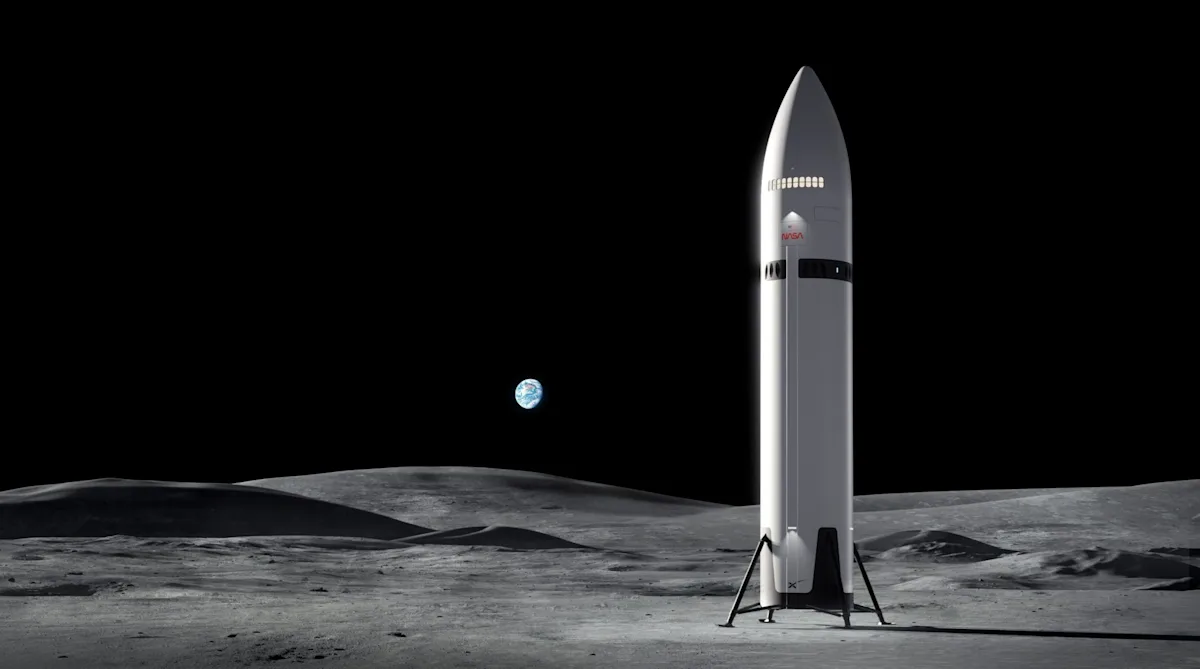
With a record-setting IPO in just a few weeks, SpaceX saw its rival in a contest to put astronauts on the lunar surface go up in flames, reinforcing its dominance in the space race and its primacy in NASA’s plans to go back to the moon.
On Thursday, a New Glenn rocket belonging to Jeff Bezos’ Blue Origin exploded during an engine-firing test at the launch pad in Cape Canaveral, ahead of a satellite launch scheduled for next week.
Blue Origin also planned to use the rocket to launch landers to the moon for NASA, delivering payloads and astronauts to the surface. SpaceX is jockeying to be selected by NASA for the lunar mission too, and may emerge as the only remaining option to meet an ambitious schedule.
The vulnerability highlights the multiple steps—and contractors—a lunar landing would entail. While NASA successfully sent astronauts around the moon last month in a Lockheed Martin Orion capsule launched by Boeing’s massive Space Launch System rocket, landing on the moon’s surface requires a separate spacecraft.
Next year, NASA plans to send astronauts into Earth orbit via the Orion and Space Launch System as part of its Artemis III mission. While in orbit, NASA expected to dock the Orion with either SpaceX’s lunar lander, a variant of the Starship, and/or Blue Origin’s lander, the Blue Moon.
But the New Glenn is supposed to launch the Blue Moon into space, and the rocket is now grounded as the cause of the explosion is investigated. Just days before the explosion, NASA awarded Blue Origin launch contracts, including one this fall for a Blue Moon lander mission to put NASA payloads on the surface.

“Blue Origin’s inability to launch Blue Moon anytime soon is likely to put the company out of the running for Artemis III,” wrote Wendy Whitman Cobb, a professor at the U.S. Air Force School of Advanced Air and Space Studies, in the Conversation on Friday. “This setback means that Artemis III, and NASA’s entire lunar exploration program, is likely to be dependent on SpaceX for the time being.”
Meanwhile, SpaceX is still developing the Starship. While a next-generation version of the giant rocket completed a test flight this month that was largely successful, more work needs to be done to produce a lunar-lander variant.
Whitman Cobb warned that if SpaceX can’t get Starship ready in time, then NASA may need to delay the Artemis III orbital-docking test by a year to 2028—meaning the Artemis IV mission to put astronauts on the moon will miss its 2028 timeline.
Further delays could also open the door again to Blue Origin, if it can get the New Glenn back on track soon and test out its lunar lander.