dailynewsnblog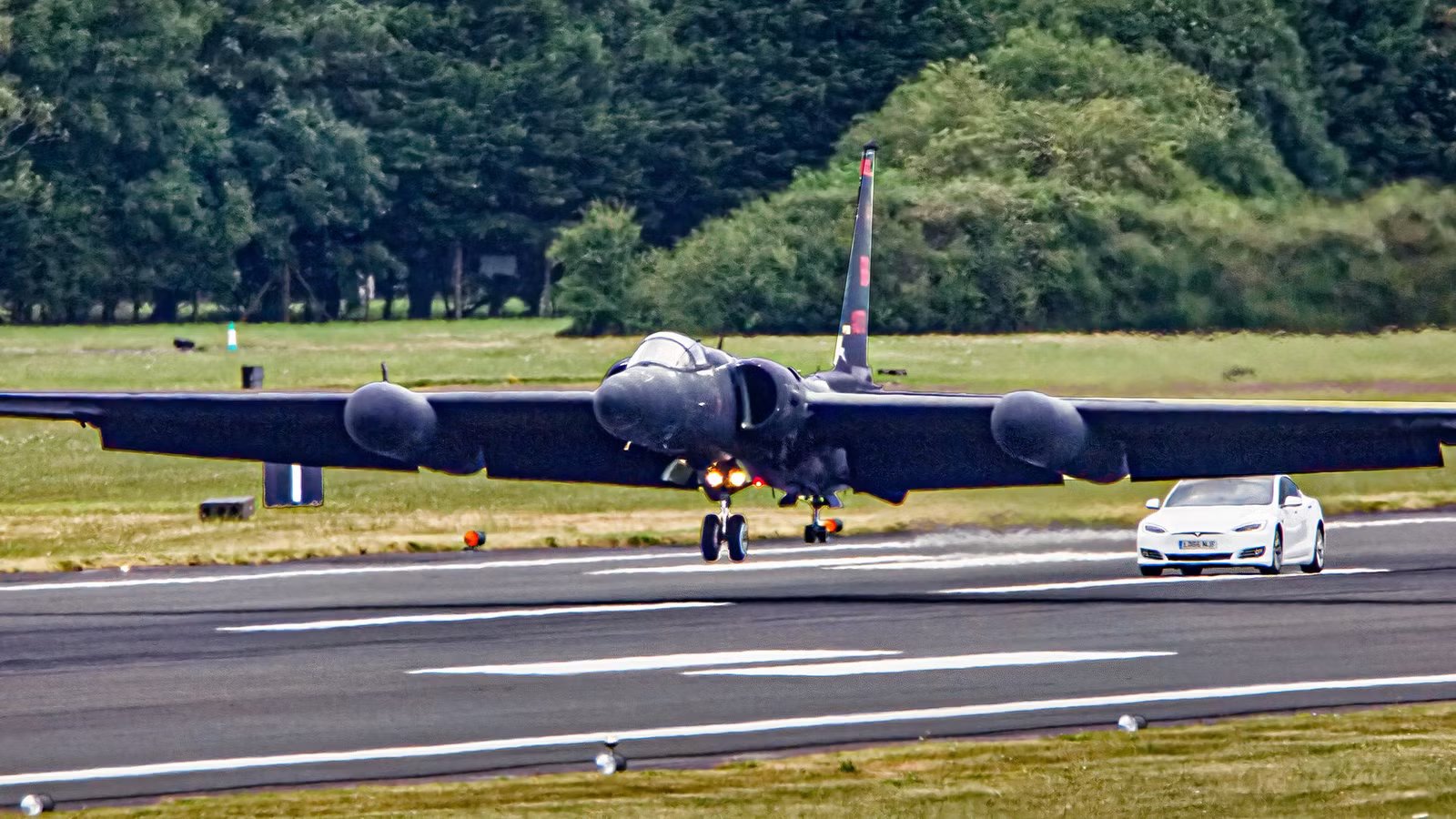
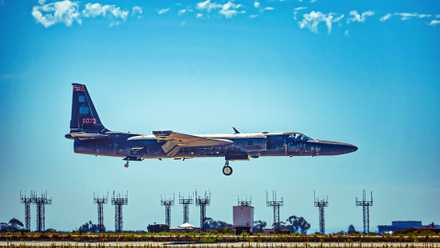
It is well known that the United States Air Force (USAF) has been attempting to divest legacy airframes to free up funding for newer aircraft. Chief among those selected for retirement are the Lockheed Martin U-2 “Dragon Lady,” and the Fairchild Republic A-10 Thunderbolt II. These venerable aircraft have been in operation with the USAF since the nerve-wracking days of the Cold War, when one miscalculation could have meant a large and destructive nuclear war.
While the A-10 and U-2 have served more than admirably and have amassed their own sizable fan base, the USAF would like to induct a host of new aircraft. These range from fifth-generation fighters and tankers to trainers that the USAF desperately needs to be on base, in order to aid in the process of getting new aviators winged and in the air.
As for the U-2s that get retired, they will be flown to Davis-Monthan Air Force Base, known as the “Boneyard”. Here they will be stored, maintained, and possibly used for spare parts, in order to keep those still in service, airworthy.
Retirement Life For The U-2

The most recent retirement of a U-2 occurred on April 5, 2024, at Beale Air Force Base; this aircraft had the tail number: 80-1085. It was taken off active duty after 40 years of service with the USAF, having amassed an incredible 17,882.3 flight hours.
Once retired, the remaining U-2s will be slated for Type 1000 Long-Term Storage at Davis-Monthan Air Force Base in Tucson, Arizona. This type of storage designation means that these aircraft will be fully maintained for potential recall to active duty. While returning to active duty seems unlikely, some of these aircraft will likely be used for testing purposes with Lockheed Martin, as discussed further below.
Prior to storage, the U-2s will undergo Programmed Depot Maintenance (PDM). This process is a major overhaul, primarily for active-duty aircraft; this process generally occurs every seven years or 4,800 flight hours (whichever occurs first). This is an extensive process, in which the plane is stripped, the aircraft is dismantled, and inspected for cracks or corrosion.
Davis-Monthan AFB is host to the 309th Aerospace Maintenance and Regeneration Group (309th AMARG), and they operate the “Boneyard”, a sprawling facility that contains roughly 4,000 aircraft and 280,000 pieces of production tooling equipment.
According to the USAF, the 309th AMARG “…aircraft regeneration, storage and preservation, critical aircraft parts reclamation, limited overflow depot maintenance, and aircraft disposal in support of the Department of Defense, allied warfighters, and other government agencies.” This valuable operation ensures that critical components reach the right aircraft in a timely manner, or are maintained for future use.
How Many U-2 Spy Planes Were Built?
Around a third remain in operation today with the USAF and NASA.
The USAF’s Reasoning For Retiring The U-2

The desire to retire the U-2 is due to several factors. The primary reason for this move is that US ISR satellites, their global coverage, and surveillance drones can now do the work with much less risk.
To this point, the long wings of a U-2 give it a prominent radar cross-section and are fairly easy to spot for modern air defense networks. And while the suppression of air defenses is one of the key first opening moves in a conflict, there is no guarantee that a U-2 will not be taken down. This is particularly true, given that adversary surface-to-air missiles can now reach the operational altitude of these aircraft.
Some of the most potent threats to the U-2 are the S-75 Dvina, S-200, S-300 family, S-400 Triumf, and the HQ-9. These anti-aircraft missiles can strike at an average altitude of 80,000 to 100,000 feet (24,384 to 30,480 meters). If the U-2 were to remain operational, any battle space or reconnaissance target the aircraft would hypothetically operate over could pose this threat to commanders.
|
U-2 Specifications |
Related Data |
|---|---|
|
Power plant |
One General Electric F118-101 engine |
|
Thrust |
17,000 pounds (7,711 kg) |
|
Wingspan |
105 feet (32 meters) |
|
Length |
63 feet (19.2 meters) |
|
Height |
16 feet (4.8 meters) |
|
Weight |
16,000 pounds (7,257.5 kg) |
|
Maximum takeoff weight |
40,000 pounds (18,000 kilograms) |
|
Fuel capacity |
2,950 gallons (11,166 liters) |
|
Payload |
5,000 pounds (2,268 kg) |
|
Speed |
410 mph (660 km/h) |
|
Range |
More than 7,000 miles (6,090 nautical miles / 11,265 km) |
|
Ceiling |
Above 70,000 feet (21,212+ meters) |
|
Crew |
One (two in trainer models) |
|
Unit cost |
Classified |
|
Initial operating capability |
1956 |
|
Inventory |
Active force: 33 (5 two-seat trainers and two ER-2s operated by NASA) Reserve: 0 ANG: 0 |
Drones, on the other hand, do not grow weary; they are operated from a very safe distance, and their operation provides the possibility of another qualified operator to take over without interrupting the mission. If a drone is lost, it is an inconvenience rather than a catastrophe, unlike losing a pilot.
Conversely, the U-2 is well-known as one of the most (if not the most) difficult aircraft to fly in the USAF inventory. This is because pilots must wear a pressure suit for their 10-hour missions, which causes extreme fatigue. Given the advanced age of the aircraft and the fact that it has been out of production for 35+ years (the last production model being the U-2S in 1989), spare parts are now scarce.
With the funding that would have been allocated to the operation and maintenance of the remaining U-2 fleet now freed up, the USAF can use it to purchase a list of other aircraft that it deems higher priority.
The Air Force Needs Newer Aircraft

The USAF intends to retire all remaining 23 U-2s from service. It would like to complete this task in or by 2027. With these iconic aircraft out of operation (out of a total of 149 aircraft to be retired), the USAF would like to purchase 108 new models. Among the aircraft that have been singled out within the $30.7 billion purchase order are: 38 F-35As, 24 F-15EXs, 23 T-7A Red Hawk trainers, and 15 KC-46 Pegasus refueling tankers.
An additional proposed investment of $3.2 billion will fund an unspecified number of B-21 Raider bombers. Further, $2.9 billion will be allocated to research and development related to the Raider. If this funding is approved, it will be a total of $6.1 billion for this sixth-generation stealth bomber program.
This funding for newer aircraft comes at a time when the United States military is beyond underway and refocused on great power competition (GPC). The latter is currently taking place, largely between the US and China, as both countries seek to out-position the other in terms of strategic positioning, allies, and natural resources on a global scale.
A key hallmark of GPC is the buffering of US allies in the Asia region, due to China’s heightened naval and aerial activity there, including daily flights over Taiwan, tense stand-offs and small-scale clashes with the Philippine Coast Guard. Preparing for GPC has seen the US’ military branches retool, reorganize, and restrategize for military confrontation, which would be wide-ranging and encompass all the conflict domains.

Before The F-35 Vs. After: How Air Combat Changed
Examining a paradigm shift in air warfare.
A Likely Future For The U-2 Dragon Lady

While this great aircraft will soon be retired from active duty status, this does not mean that the lights are out on its utility as an aircraft that can gather high value information in the role as a testing aircraft.
It looks highly likely that the U-2 has a productive future as just such a platform, according to the Aviationist. As of April 6, Lockheed Martin’s secretive Advanced Projects Division is actively seeking a U-2 pilot to work at its Palmdale, California, facility.
The job posting is looking for applicants with no more than two years outside of qualification on the U-2S, possessing 1,000 flight hours, being a graduate from a formal test pilot school, and having a background in flight-test disciplines. The latter include specialties such as weapons, avionics and flight sciences, in addition to experience as an instructor with experience in communication, leadership or program-integration experience.
Additionally, the prospective pilot must currently possess a Top Secret Clearance, and the compensation is within the range of $156,400 and $311,650 (£123,600-£246,200). All of this points to a clear and very useful future for this aircraft beyond high-flying and potentially dangerous missions around the world.
The Real Reason Why Boeing Is Building The F-47 Stealth Fighter And Not Lockheed
The jet will be built on stealth, speed, and strategy.
The U-2, Soon To Be Gone, But Not Forgotten

The U-2 Dragon Lady was rapidly developed by Lockheed Martin’s secretive research and development arm “Skunk Works.” This was due to heightened alarm among American policymakers and military officials about Soviet Russia’s accelerating efforts to catch up with and surpass the West during the Cold War arms race.
Its first operational flights over the Soviet Union took place on July 4, 1956, and from those and future flights, valuable information was collected regarding the disposition of Soviet air bases, anti-aircraft weaponry, missile, and submarine production. This amazing aircraft has been involved in many other military operations up to the present, during Operation Epic Fury.
While this Cold War icon is destined for the Boneyard, the aircraft will remain active, as a valuable surrogate platform, for the testing of technologies that will be developed and deployed on 5th and 6th-generation aircraft. Thus, the U-2 will be utilized to bridge the gap between legacy reconnaissance platforms and the future of US airpower, the latter being highly focused on airborne sensors and data-driven operations, where the speed of information and enhanced connectivity between operational elements will determine the victors and vanquished in a conflict or war.