dailynewsnblog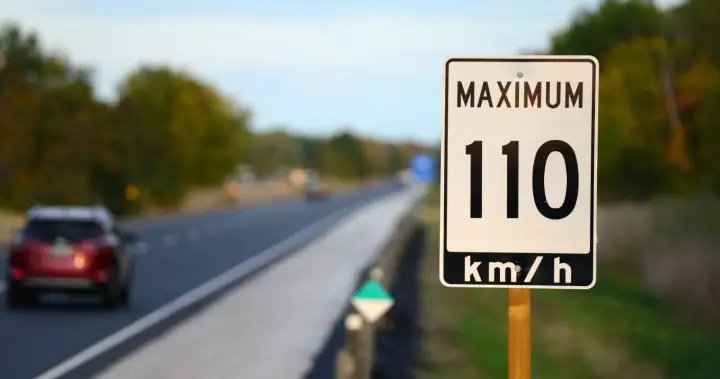
Road safety advocacy groups say Ontario’s highways may be built for higher speeds, but drivers must be willing to obey limits that are set to increase.

Franca Pisani knows all too well what can happen when the rules of the road aren’t followed. In 2024, her friend’s 23-year-old daughter was killed when a transport truck ran a red light and crashed into her vehicle.
That prompted Pisani to co-found the Caledon Community Road Safety Advocacy Group along with Amanda Corbett and Carmella Palkowski.
By the end of summer, the speed limit on nearly 1,000 km of provincial highways will increase from 100 km/h to 110 km/h, Ontario Minister of Transportation Prabmeet Sarkaria announced Wednesday. This has the group concerned.
“Let’s be frank here, people are already driving over the speed limit,” Palkowski told Global News. “You’re travelling with traffic on the 401, let’s say, you’re going 120, no problem, that’s the regular speed. And if people are comfortable going 20 over, going to 110, are we now going to be comfortable going 130, 140?”
The Ontario Safety League says in theory, an increase in speed should not affect driver safety. But in practice, mixed with other infractions like impaired or distracted driving, speed becomes more deadly.

Get breaking National news
Get breaking Canada news delivered to your inbox as it happens so you won’t miss a trending story.
“The consequences need to be delivered to them rather than to us in a crash that’s now happening at 110 km/h or 120 km/h rather than at 90 km/h or 100 km/h. Because the faster you’re going, the harder you’re going to hit something,” Angelo DiCicco, president and CEO of the Ontario Safety League, told Global News.
“A higher speed limit is not a licence to speed. Safety is about behaviour and [road] design and enforcement. It’s just not a number on a sign.”
The Ontario government says the speed limit increase is “helping get drivers where they’re going faster and safely.”
But Pisani said she’s not convinced the speed increase will make a meaningful difference in travel times.
“People are not going to be saving half an hour getting up to Wasaga beach on the 400 because now everybody’s going 110 when they’re sitting there in their car. I just find that that money could have been used better towards making the roads safer instead of faster,” she said.
Municipal police forces across Ontario have noted increases in traffic violations associated with speed and stunt driving. Under provincial law, a driver can be charged with stunt driving if they are travelling 40 km/h over the speed limit in a 80 km/h zone, or 50km/h over the limit in a 100 km/h or faster zone.
In the first six months of 2026, Ottawa police handed out 326 tickets for stunt driving and related charges, a 20 per cent increase from the same time period last year. Waterloo Regional Police charged 58 drivers were stunt driving in the month of May alone, the highest month yet in 2026. Peel Regional Police recorded a 154 per cent increase in street racing-related charges over a two-year period, rising from approximately 800 charges in 2022 to more than 2,100 in 2024.
“The penalties remain severe,” DiCicco said. “The speed limits might have changed, but Ontario’s stunt driving laws have not changed. So this isn’t a licence to go 10 km/h faster if you are in the mind of stunt driving.”
He said better education and enforcement is also needed to ensure other road rules are being followed to limit distracted and impaired driving. He said this can include renewed driver training or public safety campaigns.
An increase in speed could also cause more challenges in areas where many transport trucks are present, Pisani said. Transport trucks are pinned, limiting them to a maximum speed of 105 km/h, under the Highway Traffic Act. Increasing the speed limit to higher than this, Pisani said, could lead to more problems with passenger vehicles weaving in and out of traffic.
“Now you’re slowing down traffic and people are going to be more aggressive trying to get in front of these trucks and trying to get around these trucks,” she said.
Global News reached out to the Ontario Trucking Association but did not receive a response in time for publication.
© 2026 Global News, a division of Corus Entertainment Inc.