dailynewsnblog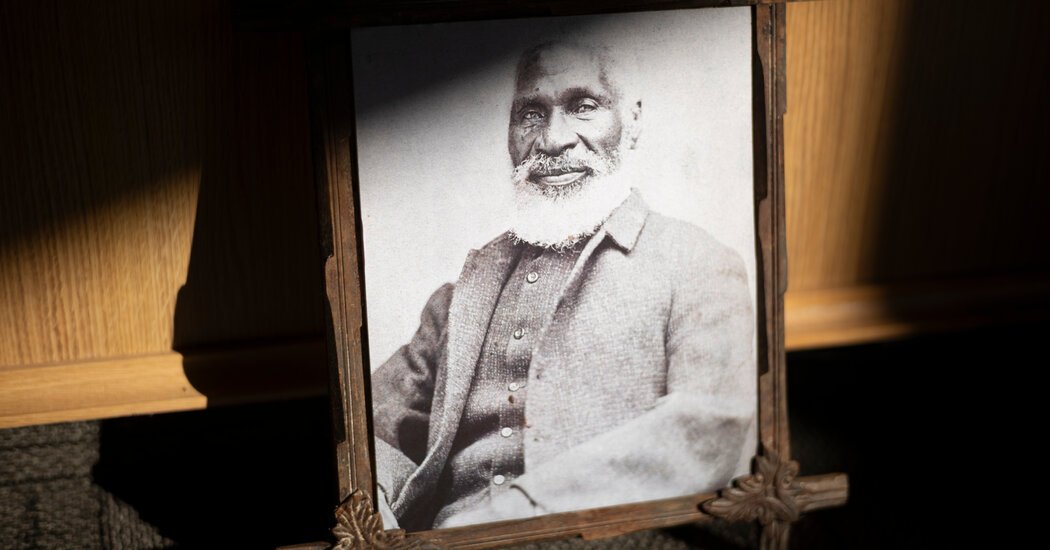
The first Monday in August is a holiday in many places across Canada. Many of them also give it an official name. In Ottawa, where I live, it’s Colonel By Day, after the British military engineer John By who supervised the construction of the Rideau Canal and who founded Bytown, the place that became Ottawa. But most Canadians just call it the Civic Holiday.
Among members of the Black community in southwestern Ontario, the weekend has a clear identity. Aug. 1 is Emancipation Day, the day in 1834 that slavery ended in most of the British Empire, including the Canadian colonies.
Recently, I wrote about Josiah Henson, the real-life inspiration for Uncle Tom in Harriet Beecher Stowe’s famous novel, “Uncle Tom’s Cabin,” who came to what is now Ontario in 1841. His story is extraordinary. Reaching Canada by way of the Underground Railroad, Henson then became one of its “conductors,” repeatedly returning to the U.S. to bring 118 people to freedom. In Dresden, Ontario, he helped establish a successful settlement for formerly enslaved people, and he also established Canada’s first Black educational institution.
But Henson’s legacy became overshadowed by the fictional character who was based on him. The success of Stowe’s 1852 novel helped propel the abolition movement by bringing the horrors of slavery to a wide audience, and many historians cite its influence as a factor in the political tensions that led to the Civil War.
But the name Uncle Tom would become a slur as Stowe’s wildly popular best seller was twisted by stage shows and knock off books into a pro-slavery tract.
Along with the photographer Ian Willms, I looked into the decadeslong fight led by Barbara Carter, Henson’s great-great-granddaughter, to replace Uncle Tom’s name with Henson’s on the family homestead, which thanks to her efforts is now called the Josiah Henson Museum of African-Canadian History.
After Dresden, Ian and I went to nearby Chatham, a city that during Henson’s days was estimated to have a population that was about one third Black.
Dorothy Wright-Wallace, the president of the Chatham-Kent Black Historical Society, and Edna Mason, a board member, generously and energetically showed us around the Black Mecca Museum and the surrounding neighborhood.
Down the street from the museum is the First Baptist Church, a modest red brick building. But like Henson’s life story, it too played a role in the events leading to the Civil War.
John Brown, a white abolitionist, was, like Stowe, a devout Christian. He saw eliminating slavery as his religious duty. But unlike the Stowe, Brown was determined to drive it away by force.
After fighting in battles over whether the Kansas territory would become a free or slave state, Brown convened what he called a constitutional convention at the First Baptist Church on May 10, 1858. His audacious plan was to recruit supporters for a guerrilla war that would fuel an uprising among enslaved people and wipe out slavery in the South. The mostly Black convention delegates adopted a provisional constitution for a new republic — which was supposed to coexist with the U.S. federal government in the South — and elected its officials. Brown was chosen as its army’s commander in chief.
Ultimately, only one Canadian colonist, Osborne Anderson — a free Black man who moved to Chatham from Pennsylvania — was among the 21 fighters who joined Brown in 1859 to raid the federal armory in Harpers Ferry, Va. Its guns were intended to arm the antislavery insurrection.
While the group managed to take control of the armory, a militia eventually arrived, and Brown’s revolution was over within two days. Anderson, a printer, escaped and later wrote a book about the raid. After being convicted of treason, Brown was hanged.
Brown lives on in ways besides the historic site plaques in Chatham.
When the Civil War broke out, Union soldiers honored his memory with a marching song that began gruesomely: “John Brown’s body lies a-mouldering in the grave.”
In 1861, months after the war started, Julia Ward Howe, an abolitionist poet, heard “John Brown’s Body” sung by troops in Washington. She soon published a poem that was then set to the marching song’s tune. That’s how “The Battle Hymn of the Republic” became the Union’s patriotic anthem.
Brown was no longer named in the lyrics. But from the start, her lyrics captured his militaristic approach to Christianity:
“Mine eyes have seen the glory of the coming of the Lord:
He is trampling out the vintage where the grapes of wrath are stored;
He hath loosed the fateful lightning of his terrible swift sword:
His truth is marching on.”
Ian Austen reports on Canada for The Times. A Windsor, Ontario, native now based in Ottawa, he has reported on the country for two decades. He can be reached at austen@nytimes.com.
‘You Aren’t Going to Like What Comes After America’
“Blaming Canada used to be such a fantastical idea that it was a joke,” Chrystia Freeland, the former deputy prime minister, minister of foreign affairs and minister of finance, wrote in a New York Times Opinion essay this week. “Yet here we are, with the actual president of the United States, well into his second term, blaming Canada for pretty much everything.”
Remy Tumin reported on the relocation of the Marineland beluga whales, which began last week. She discovered that there’s nothing ordinary about moving whales from one place to another.
Six whales made their way out of Canada on the first transfer flight — four to the Shedd Aquarium in Chicago and two to SeaWorld San Antonio — with 24 others expected to be transported in the coming weeks. Aquariums across the U.S. and Spain are working to relocate all 30 whales from the shuttered aquarium.
Read the full article.
Trans Canada
How are we doing?
We’re eager to have your thoughts about this newsletter and events in Canada in general. Please send them to nytcanada@nytimes.com.
Like this email?
Forward it to your friends, and let them know they can sign up here.