dailynewsnblog
A new bargaining chip may change the game
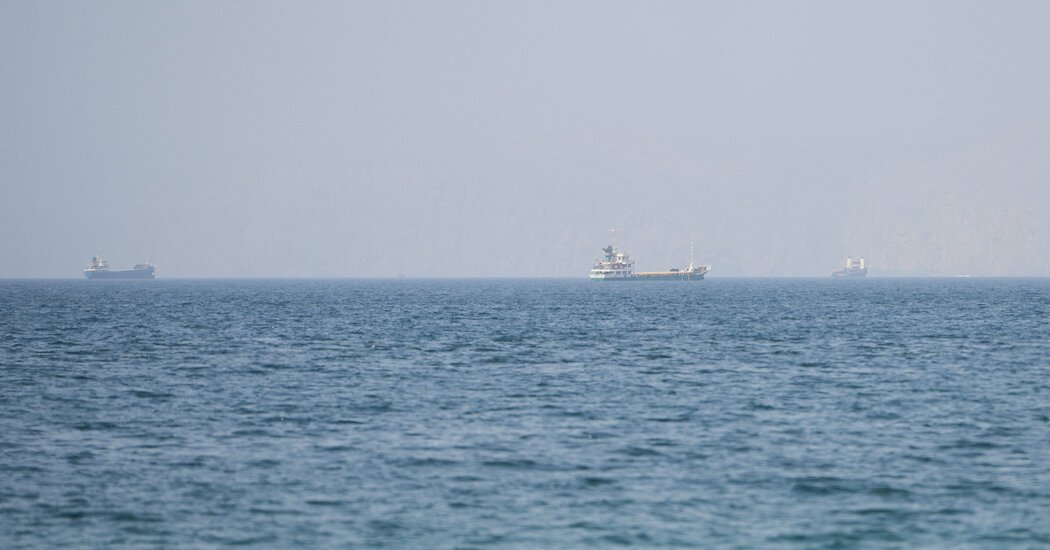
The most recent 40-day war has demonstrated that Iran has a new source of leverage: closing the Strait of Hormuz to commercial shipping. While Iran cannot unilaterally benefit from this leverage, given the US counter-blockade, it can use the threat of future closures to impose meaningful costs on US allies in the region, on global oil prices, and on the American and world economy. Unlike sanctions or military strikes, where costs fall disproportionately on Iran, disruptions to the Strait hurt both sides in a more proportional manner.
Therefore, a new agreement can link resolution of the nuclear issue, meaningful sanctions relief, and unrestricted flow of ships through the Strait together. If these elements are tied together, so that continued lifting of sanctions (i.e. not reimposing sanctions once they are lifted) depends on the normal flow of traffic through the Strait and vice versa, then both sides face higher costs if they break the agreement. The key difference between agreeing to keep the Strait open and agreeing to shut down the nuclear programme is that the former does not suffer from a time-inconsistency problem.
Political debt overhang: Why a small deal won’t work
Even if a new deal overcomes the time-inconsistency problem, it also needs to address political debt overhang so that the new agreement is presentable as a clear victory to domestic audiences on both sides.
From Iran’s perspective, the central weakness of the 2015 deal was not only its vulnerability to reversal but also the limited economic gains it delivered. Sanctions relief proved partial and fragile, and the agreement did not generate the level of investment or trade integration needed to create durable constituencies in favour of its continuation. From the US perspective, the deal was viewed as too narrowly scoped. The absence of clear channels through which US and allied firms could benefit reduced domestic support, while concerns over the expiration of key provisions reinforced the perception that it provided limited long-term leverage.
A revised framework can address these deficiencies by embedding stronger, more visible economic linkages into the agreement itself. Rather than treating sanctions relief as a passive outcome, it can be structured as an active mechanism tied to specific large-scale investments, particularly in civilian infrastructure and the energy sector. This helps Iran’s middle class the most and can also create stakeholders with a direct interest in the agreement’s survival. Iran’s frozen assets, instead of being released as unrestricted liquidity, could also be channelled into financing these projects.
A role for China
Given the depth of mistrust between Iran and the US, reaching a comprehensive agreement through direct negotiations alone will be difficult. China is uniquely positioned to play a decisive role in brokering a deal. As Iran’s single largest oil customer, Beijing enjoys substantial trust in Tehran and meaningful economic leverage. China also has strong incentives to act: importing roughly 10 million barrels of oil per day, a $40 increase in oil prices costs China approximately $150 billion annually, with total impacts likely exceeding $200 billion when higher LNG, fertiliser, and other input costs are included. China is also well positioned to supply the capital goods needed for Iran’s investment in renewable energy and civilian infrastructure. The planned Trump-Xi summit in mid-May 2026 provides a natural moment to advance elements of a deal.
The narrow path forward
We do not underestimate the obstacles. Both sides have incentives to project strength and signal they can outlast the other. Without a comprehensive agreement, the Strait is unlikely to remain stably open.
But the structural logic points toward an eventual deal. The costs of continued confrontation are real and mounting. The new symmetry of leverage provides, for the first time, a credible mechanism to enforce compliance over time. And the scale of potential economic gains creates the basis for a package large enough to overcome political debt overhang on both sides. The question is whether leadership in Washington, Tehran, and Beijing will recognise this window before it closes.
References
Farzanegan, M R and N Habibi (2025), “The effect of international sanctions on the size of the middle class in Iran”, European Journal of Political Economy 90: 102749.
Johnson, S and A Kermani (2026), “Is a lasting US–Iran deal now possible? Overcoming time inconsistency and political debt overhang”, CEPR Policy Insight No. 150.
Laudati, D and M H Pesaran (2023), “Identifying the effects of sanctions on the Iranian economy using newspaper coverage”, Journal of Applied Econometrics 38(3): 271–294.