dailynewsnblog
Terminally Online

This is Terminally Online: PC Gamer’s very own MMO column. Every other week, I’ll be sharing my thoughts on the genre, interviewing fellow MMO-heads like me, taking a deep-dive into mechanics we’ve all taken for granted, and, occasionally, bringing in guest writers to talk about their MMO of choice.
About a week ago, one of my colleagues asked me, “Whatever happened to Empire of Sports?” it’s an MMO we covered in issue 197 of PC Gamer back in 2009. Developed by a french studio F4, it was basically designed to be an MMO version of Wii Sports: A big hub where you could go play soccer, tennis, ski—that sort of thing. You can find the interview below, in case you’re curious.
The answer is: Nothing really happened to Empire of Sports. It was one of those sad but uneventful anti-success stories of the MMO goldrush between 2005-2015: It released in 2007, trundled along for a decade without much in the way of fanfare, and then shut down in 2016.
Image 1 of 2


But it did have me thinking, what other weirdo games came and went from that era? So I decided to roll up my sleeves and find some interesting cases, which I’d like to present to you today in celebration of their strangeness and in mourning for a time gone by. Games like these simply don’t exist anymore, and may never again.


These games aren’t even necessarily that good. They are, however, important milestones in the genre that I’d like to talk about, either because they were ahead of their time or, as is the case with our first example, unleashed a great evil into the world.
Pandora’s Lootbox
Zhengtu Online, as identified by PCG contributor Steven T. Wright back in 2017, is credited as the progenitor of the dreaded lootbox. Here’s an article that first appeared in the Chinese newspaper Southern Weekly, archived by Danwei, that describes a then 27-year-old sonogram technician Lu Yang falling down the proverbial lootbox stairs:

“Gamers can buy keys and chests from the system for cheap: one yuan per set. When the key is applied to the chest, the screen will display a glittering chest opening. All kinds of materials and equipment spin inside the chest like the drums on a slot machine as the wheel of light spins. Where it stops indicates what you’ve won.”
It’s a fascinating window into the pre-legislation wild west of lootboxes—we might think about them as a mostly modern phenomenon, but here they were, consuming people’s lives back in 2007. Yang even describes a web cafe that she frequented, where promotional materials and posters encouraged you to spend more and more money:
“The awe-inspiring hero in the posters tacked up at the entrance to every web cafe stared at you, and diligent salesmen frequently appeared beside gamers.”
Zhengtu Online closed in 2018, but in its heyday, it apparently boasted a monthly profit of 120 million Yuan ($15.52 million at the time). Adjust for inflation, and that’s 174 million Yuan in today’s money, or $25 million. Basically, it made a crapton of money.
Not the cheeriest example on this list, but an important one—Zhengtu struck upon the formula that would consume the markets of the day, starting a trend of effective money generation that we’re still dealing with, albeit never in quite such a brazenly corruptive form.
The Red Pill
Per this excellent retrospective by PCG contributor Luke Winkie. The Matrix Online had a ton of DNA I see now in popular live service games—released in 2005 and living for four short years, the game was a mess, but it also had some novel ideas.
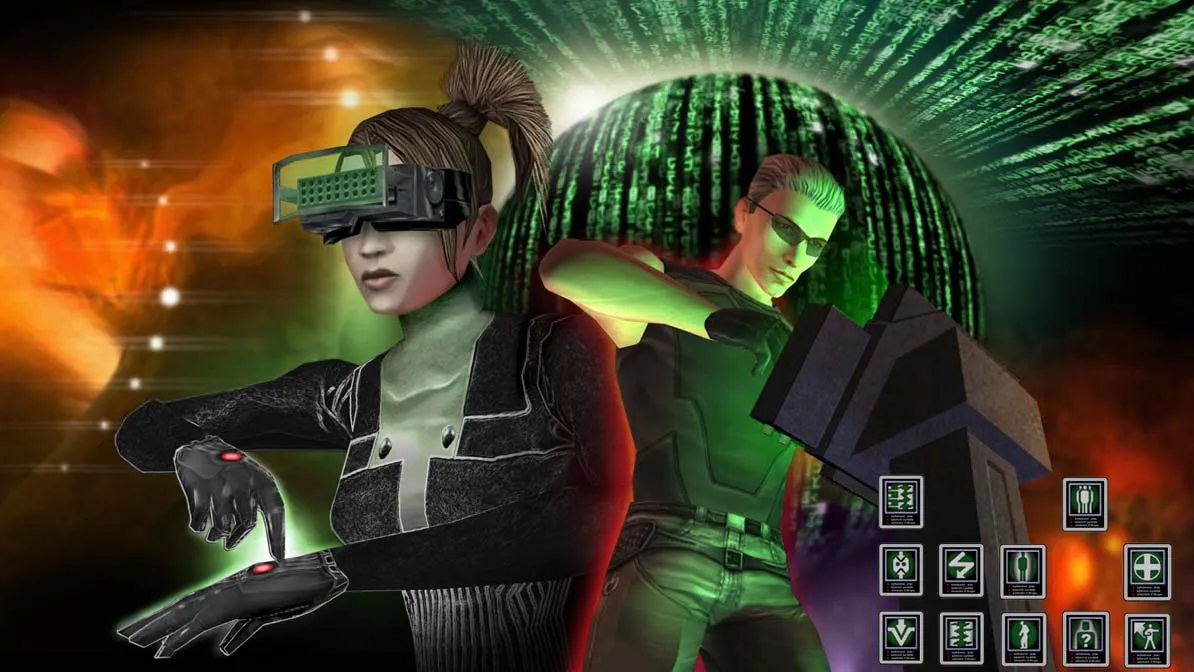
For instance, players could swap out abilities whenever they wanted with a flexible class system—speaking with Winkie, a player named Dan said: “In other MMOs when you chose your role you had to stick to it, but I loved the freedom to change my loadout when it suited me.”
And while not quite a direct analogue, there are plenty of MMOs that’ve had some form of this system, or developed one over time. WoW has long since abandoned hefty respec costs, allowing you to pretty much retool your entire build and specialisation whenever you get a free moment. Final Fantasy 14 lets you level every single class on the same character, too.
The Matrix Online also had a “Live Events Team, which was composed of genuine Sony developers who would take control of important lore characters—think Morpheus or Seraph—and act out a crucial junction of the narrative in real time.”
I can’t help but feel echoes of that, both in later events to try and capture a sense of living progression (think Guild Wars 2’s “living world”), or in the big events that take place in the modern day’s live service games, like Fortnite. It almost feels like a prototype of that craft, and the fact it happened with an IP as big as The Matrix boggles the mind.
Everything I read about The Matrix Online makes it sound like it was ahead of its time, for better and for worse—but I salute the fact it tried, recklessly and messily.
A long, dark fall
Darkfall arrived in 2009, and made it to 2012—and, like The Matrix Online, it was similarly ambitious and similarly short-lived. It was a full-loot PvP MMO, which produced all the banes and boons you’d expect out of that concept. It also struggled at its launch, with developer Aventurine having to quite literally throttle its sales because of its server traffic.
I won’t go into the full story of what caused Darkfall to peter out over the next few years—it’d take far too many words—but one central part is that this thing was simply too competitive. The grindiness of an MMO (and Darkfall was a very grindy game) jutted up against players’ desire to optimise. Exploits were found in quantities Aventurine, which had already struggled with the game’s release date alone, simply couldn’t tackle in a satisfactory manner.
That’s not to say the ideas Darkfall had were poor—when I look at the core concept of Darkfall, and other large-scale PvP MMOs, I think a whole lot about extraction shooters. Of course, something like Arc Raiders isn’t necessarily comparable at a 1:1, but it does circumvent a few issues.
The need to grind in games like Arc is nixed by both having a seasonal loot structure and by limiting players’ time in the outside world to those bitesized windows, and while you’ll never have the kind of large-scale efforts and classic MMO feuds that Darkfall was aiming for, the social interaction, the psychological warfare, and the uncertainty of a hostile environment filled with players that could help or hinder you?
That’s all there. Darkfall, like The Matrix Online, also feels like an ambitious proto-concept for the kinds of games that now dominate a massive slice of the industry.
Otherland
The last game from my little excursion into the annals of MMO history is Otherland—releasing at the tail-end of the goldrush in 2015, I cannot say that Otherland was a good game. But it is absolutely bloody fascinating. You can read PCG contributor Matt Elliot’s downright concussive experience with the game, which I shall quote here:

“My initial reaction is one of pervading, intangible wrongness … I’m never sure if I’m doing things correctly because the feedback is always just off. It’s like playing Guild Wars with someone else’s severed hands. While suffering from the flu. More generally, I have no idea who anyone is, where I am, or what I’m doing.”
The problem, and blame, somewhat lies in the concept: Otherland was based off Tad Williams’s science fiction series of the same name. William’s downright cyberpunk vision of the future envisioning a full-immersion VR world is considered to be somewhat prophetic and, indeed, pretty good grist for an MMO.
And while Otherland, to put it bluntly, kinda sucked, I’m quite simply enthralled reading through the archives of its zones: A steampunk simulation of Mars in the throes of revolution. A multi-story mall with a seedy underbelly. A virtual chess-board who—actually, no, I cannot do a better job describing this than the site itself did. Here’s a quote:
“Have you ever had a strange dream where you were a mere pawn on a chessboard and nothing you did could change your doomed fate? Well, this nightmare is true for every citizen of EightSquared, a simulation of a living, breathing chess board. Queens, bishops and rooks are locked in eternal warfare, with death and rebirth happening daily without anyone seeming to care.”
From a worldbuilding perspective, this shit rules. Oh, and there’s also Bug World, where there’s bugs.
Otherland is a fascinating failure because of how deeply interesting it could’ve been. So much so that YouTuber Josh Strife Hayes went on a multi-hour long video series just dissecting the thing—and its closure in 2021 also feels like the final nail in the coffin of this period of MMO history.
In an industry plagued by studios trying to reach for (as Jack Emmert puts it) WoW-level scope, you just don’t get little weirdos like this anymore. I don’t mean to sound cynical, but we all know that a 2026 version of The Matrix Online would be some kind of bland survival crafting game that takes no risks. And you certainly wouldn’t get Otherland.
That old-school spirit does still live on in games like Project: Gorgon, but these days it’s either indie or nothing. So raise a glass to the weirdos of the MMO goldrush—whether they unleashed microtransactional evil onto the world, were punished for making a template a few too many years before it became popular, or were simply too ambitious and harebrained for their own good. I shall miss those halcyon days.