dailynewsnblog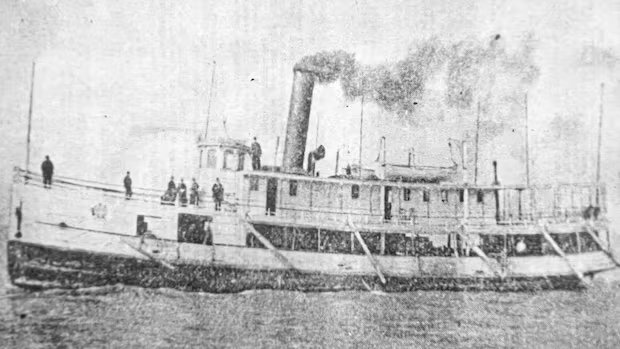

Listen to this article
Estimated 3 minutes
The audio version of this article is generated by AI-based technology. Mispronunciations can occur. We are working with our partners to continually review and improve the results.
A group of marine archaeology enthusiasts will take to a southwestern Ontario beach this summer to learn more about a fatal shipwreck that happened more than a century ago.
The SS Erie Belle was a steam tug that violently exploded in 1883 on Lake Huron, just south of Kincardine, according to conservation and wildlife biologist David Galbraith. It instantly killed four people on board, and another two people who were injured in the weeks after.
Archaeology experts know a faulty boiler caused the wreck, but Galbraith is now leading an underwater survey to find out more details.
“My family has a cottage along the shore of Lake Huron, so for many years, I was growing up visiting the boiler that sits on the beach,” Galbraith told CBC’s Afternoon Drive.
“It has always been in my imagination and consciousness … and it got to a point this year where in speaking with friends, they said, ‘Let’s see if we can actually document it.’”
Afternoon Drive9:12Details of a shipwreck: The SS Erie Belle
David Galbraith, a conservation and wildlife biologist and a member of the Ontario Marine Heritage Committee, shares what enthusiasts like him are hoping to learn about the wreck of the 19th-century steamship, the SS Erie Belle.
The province issued a formal marine archaeology license for Galbraith and his team of volunteers to do the survey starting this summer. The group will not remove any artifacts, Galbraith said, adding that they only plan to measure, record and take photos of the site.
The Ontario Heritage Act forbids anyone without a proper license from altering or recovering artifacts from known marine archaeological sites.
A first step into the water
Galbraith, who is a member of the Ontario Marine Heritage Committee (OMHC), will spend time at the aptly-named Boiler Beach throughout the summer.
Retired marine archaeologist and fellow OMHC member Scarlett Janusus said the survey will be a notable step in understanding more about the region’s history.

“Every piece of marine heritage is so important. The written records are not always accurate, they’re not always complete, and we don’t know a lot of the history of exactly why this steamship blew up,” she said.
“I think it’s important in the whole scheme of marine heritage, specifically for the Kincardine area.”
Janusus said she’s been supportive of Galbraith’s project as there is an overall need for more marine archaeology in the province.

“This out of sight, out of mind concept has been around for a very long time for underwater research,” she said.
Galbraith’s fieldwork is expected to continue into August, but said he expects this will be just one part of a longer learning process.
“I’m a trained scientist. The more you ask questions, the more questions you ask,” he said.