dailynewsnblog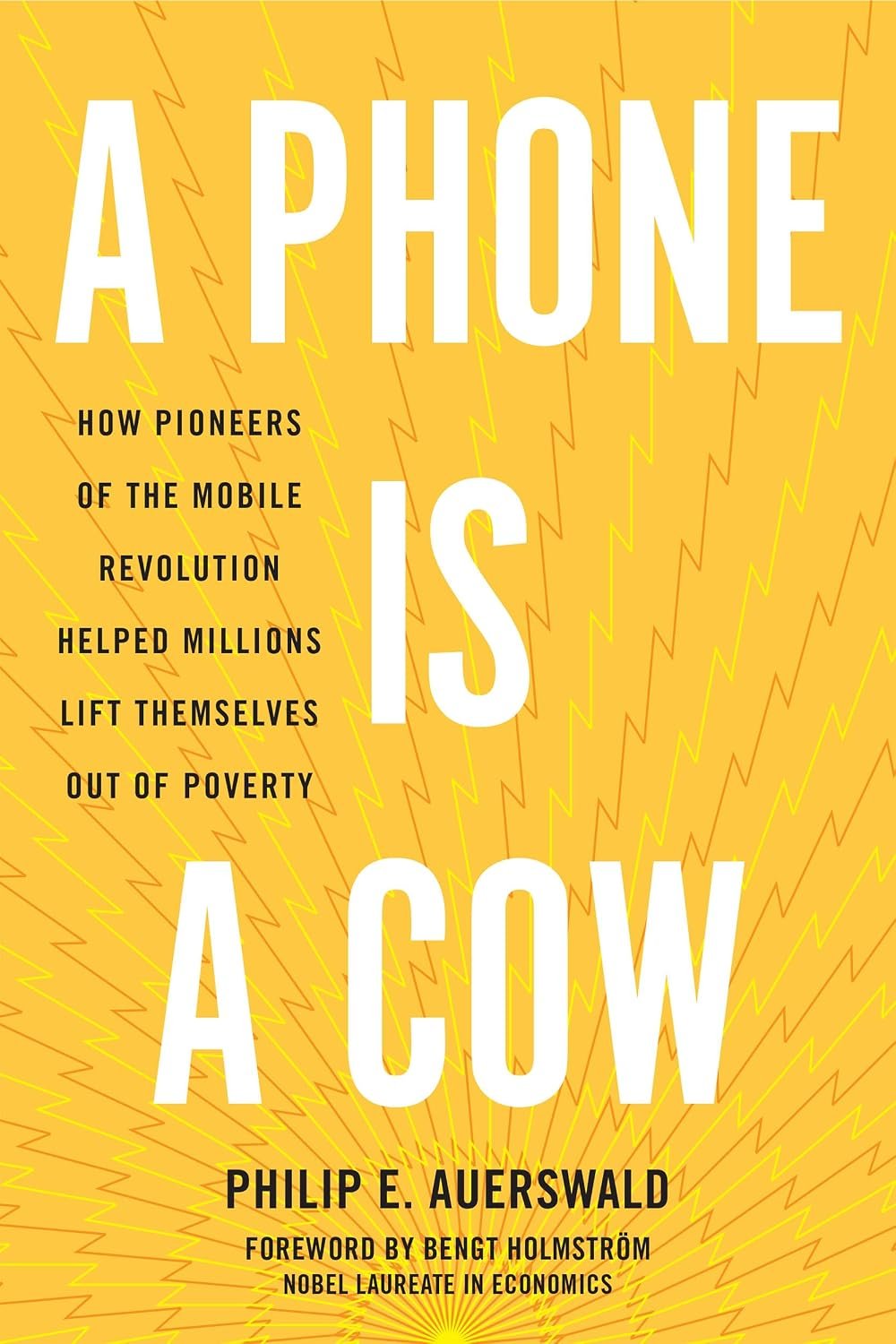
 Philip Auerswald’s A Phone is a Cow is three books in one, it’s a history of the mobile phone, it’s a business biography of Iqbal Quadir, who brought the cell phone to Bangladesh at at time when that seemed quixotic and doomed to fail, and it’s a theory of economic growth. It succeeds on all three levels.
…relatively few technologies have managed to reach the majority of the world’s people. Fire. Writing. The cookpot. The portable radio. These all succeeded. Yet most people in the world have never flown in an airplane. Most do not own a car or a bicycle. And, until recently, most still did not have access to a safe, sanitary toilet in their home. The list goes on.
The mobile phone reached the global majority more rapidly than any technology that had come before. How did this happen?
The title, by the way, comes from Quadir’s insight that just as Grameen Bank lent to villagers so they could purchase productive assets like a cow, Grameenphone could lend villagers the money to buy a phone—which then became a revenue-generating asset in its own right.