dailynewsnblog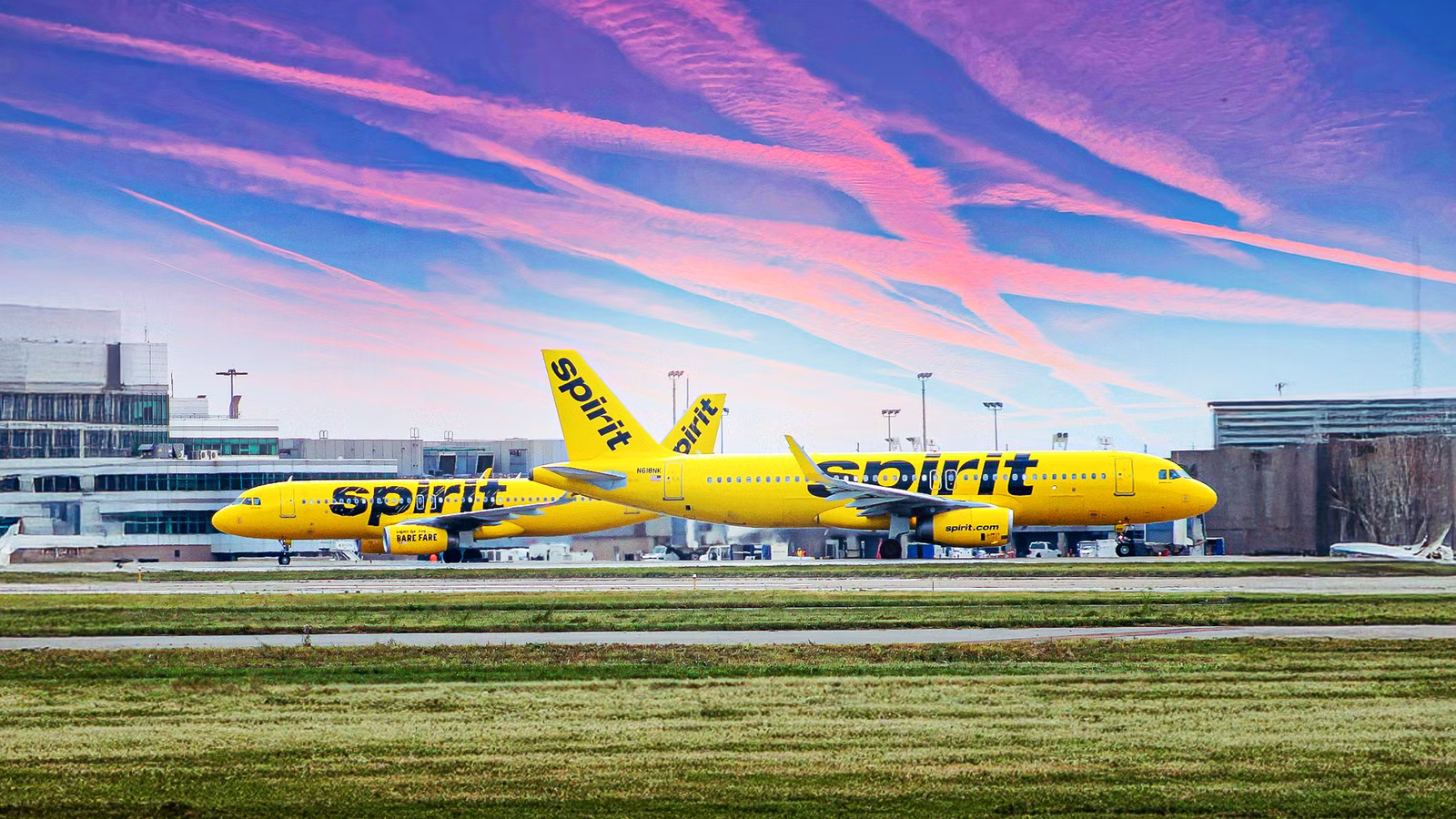
The Airbus A320neo is the most popular commercial aircraft program of all time. The A320neo line is booked up for years and is selling at a substantial price premium, while A320neo lease rates are quite high. It’s mainly the A321neo variant that’s been experiencing unprecedented sales success, but the A320neo variant has also been reasonably popular.
Airbus is ramping up A320neo production to meet demand, and sales continue to be steady, while the A321neo on its own has outsold the Boeing 737 MAX family. However, something odd has happened in Goodyear, Arizona, as the local scrapyard has recently dismantled two Airbus A320neos formerly operated by Spirit Airlines. One was just three and a half years old, while the other was only six months the former’s senior.
These two are the youngest airliners of the current generation to have ever been scrapped, and it’s a striking contrast to what’s occurring in the market for new A320neo family aircraft. You don’t usually scrap four-year-old examples of an in-demand type, let alone the most successful aircraft type in the commercial aviation industry.
Scrapping Young Airbuses

On May 2, 2026, Spirit Airlines ceased all operations, in what was the largest airline shutdown in the US in decades. Suddenly, dozens of Airbus A320s, A321s, A320neos, and A321neos hit the market, and the airline was shedding planes even before it collapsed. Some were picked up by lessors to lease out or sell to other operators; US airline upstart Magnifica Air recently acquired an A321neo formerly flown by Spirit and will reconfigure it with a luxury interior. However, this wasn’t the case for N950NK and N959NK (which were rejected by Spirit before its shutdown).
These two planes were purchased by EirTrade Aviation in February 2026 and flown to Phoenix Goodyear Airport (GYR), home to a major storage/scrapping facility run by AerSale, Inc. Just like most aircraft flown to Goodyear, N950NK and N959NK were subsequently scrapped. At four years and three-and-a-half years old when purchased, respectively, they’re the youngest commercial airliners to have ever been scrapped in recent history, but what really makes this remarkable is that demand for new A320neo family aircraft is otherwise limitless.
These are hardly an anomaly either. N969NK, an even younger A320neo, was purchased by Killick Aerospace shortly after Spirit’s shutdown and flown to Marana Pinal Airpark (MZJ), where it, too, will be torn down for parts, or more specifically, its engines. Even before the ex-Spirit frames, nearly a dozen A320neos have already been scrapped for their engines, and we’ve even seen two A321neos scrapped. This wouldn’t make sense at all during normal times, but the engines have become disproportionately valuable compared to the rest of the plane today.
Problems With The GTF Engine

The A320neo is offered with either the Pratt & Whitney PW1100G (often referred to as simply the GTF) or the CFM LEAP-1A. Both engines are incredibly fuel-efficient, with the CFM focusing largely on thermal efficiency through advanced materials, while the GTF uses a gearbox to cut fuel burn. The gearbox has worked remarkably well, and airlines love the economics of their PW-powered A320neos, but the problem is that the PW1100G has been plagued by significant durability issues.
Initially, it was discovered that air seal leaks were causing metal particles to enter the oil system, which proved particularly problematic for airlines operating the A320neo in challenging climates, such as IndiGo. Later on, issues were discovered with the knife-edge seal that resulted in engine shutdowns midflight, which required extensive redesigns and repairs. In addition, the PW1100G started experiencing excessive in-flight vibrations, while multiple A320neo family aircraft powered by the GTF have suffered in-flight shutdowns.
In 2023, it was found that contaminated metal powder was used to produce some engine components, leading to premature cracking. Pratt & Whitney recalled thousands of engines, but the massive number of engines needing rework overwhelmed the company’s MRO network. Meanwhile, the manufacturer was also suffering from supply chain constraints and struggling to meet volume for new deliveries. This, combined with the need to repair/provide new engines, resulted in worldwide groundings while some new planes left the factory without engines.
The Worth Of The Engine Versus The Airframe

Pratt & Whitney has made significant progress on its PW1100G groundings, but you still see grounded aircraft, and airlines are generally short of Pratt & Whitney engines. Airlines don’t even have enough engines to keep the A320neos in their fleets flying, let alone take on more new A320neos, so this makes the engines more valuable than the airframe itself. Meanwhile, it’s much more expensive to induct, insure, retrofit, and operate a new aircraft than a set of engines, so the rest of the aircraft gets scrapped.
Catch what other flight trackers miss
Emergency squawks, holds, NOTAMs — live signals, no signup.
Open tracker
Catch what other flight trackers miss
Emergency squawks, holds, NOTAMs — live signals, no signup.
Open tracker
This shouldn’t be a permanent trend in the market; when issues with the PW1100G resolve themselves, the value of a single engine should decline as they become more available and more durable. For now, however, PW1100Gs are a scarce component. Meanwhile, the A320neo is virtually identical to older A320 models apart from the engines, and so once the engines are removed, the airframe is taken apart for the rest of its components. But while the A320neo’s situation is primarily due to the engine issues, airframes have long been valued lower than specific components.
Even on ancient aircraft reaching 35 or 40 years old, the engines are by far the most valuable components of the plane and are the first to be removed from a plane awaiting scrapping. The landing gear is typically the next most valuable component, followed by the cockpit displays and APU. The actual airframe is usually worth significantly less than the landing gear and only somewhat higher than the flight deck screens or APU. Increasingly, airliners are being valued as a combination of multiple high-value components, while the airframe is essentially just a platform.
Unusual Behavior At Airlines

The Spirit airframes were made available on the market as the airline was actively looking to cut its fleet, and these aircraft were A320neos. While the A320neo has been well-received, it’s less desirable than its larger sibling. More telling are the two IndiGo A321neos, which were also scrapped for their engines after their standard six-year lease term was up. The A321neo is in higher demand than any airliner in service, and it’s telling that the lessor saw more money in parting the aircraft out rather than placing these two planes with another airline.
Wizz Air currently operates nine Airbus A321XLRs, the new long-range variant of the A321neo, and it’s parked three of them to cannibalize them for their GTF engines. The A321XLR is heavier and slightly more fuel-thirsty than the A321neo on shorter flights, and Wizz Air has shut down the Abu Dhabi operation that the A321XLRs were originally intended for. However, it’s striking that the airline is now pulling engines off brand-new A321neos to keep more of its standard planes flying.
Airbus A320neo Family Variants | Subvariants |
|---|---|
Airbus A319neo | ACJ319neo |
Airbus A320neo | ACJ320neo |
Airbus A321neo | A321LR, A321XLR |
Meanwhile, there are still hundreds of A320neos grounded around the world because of GTF issues. Operators have had growth plans and fleet renewal projects delayed due to the drop in capacity, while ACMI companies are seeing more business from GTF operators. Meanwhile, defunct Indian airline Go First claimed that its shutdown in 2023 was partially due to PW1100G problems, as nearly all of its aircraft were GTF-powered A320neos. Engine problems and groundings have also been cited as a contributing factor behind Spirit Airlines’ demise.
Similar Problems With The Airbus A220

The PW1100G is just one variant of the PW1000G family, which also includes the PW1500G and PW1900G. The latter is used by the Embraer E2, while the former is used on the Airbus A220. The PW1500G has been particularly problematic, but whereas the A320neo is offered with two engine models, A220 customers may only select the PW1500G. When issues arise with the engine, the aircraft is significantly more affected, resulting in a higher proportion of grounded aircraft and even more unusual decisions.
A220s are desirable planes, but the added maintenance and ownership costs arising from the engine issues change the equation dramatically. EgyptAir retired all of its A220s in 2024 for this reason, while Air Austral intends to follow suit shortly. Retiring a new aircraft type due to problems with the engines is very unusual. In addition, SWISS has announced that it will retire all of its A220-100s, as it’s opting to take their engines and place them on their grounded A220-300s, which are more economical to operate than their smaller counterparts.
Problematic engines and aircraft aren’t unprecedented in the industry, but what is noteworthy is that it’s occurring on such a massive scale. There are thousands of A320neos in service, hundreds of A220s in service, and over 200 Embraer E2s. Any issues with these planes will be felt all over the world, but particularly with A220 operators since the aircraft is sole-sourced and the PW1500G has been especially problematic.
With this and other factors, we’re therefore seeing airlines pay closer attention to durability, reliability and MRO availability when selecting aircraft as well as engines. No matter how efficient a powerplant might be, it won’t cut down an airline’s fuel bill if the plane isn’t moving due to engine issues, and so the industry is now valuing dependable engines higher than in the past.