dailynewsnblog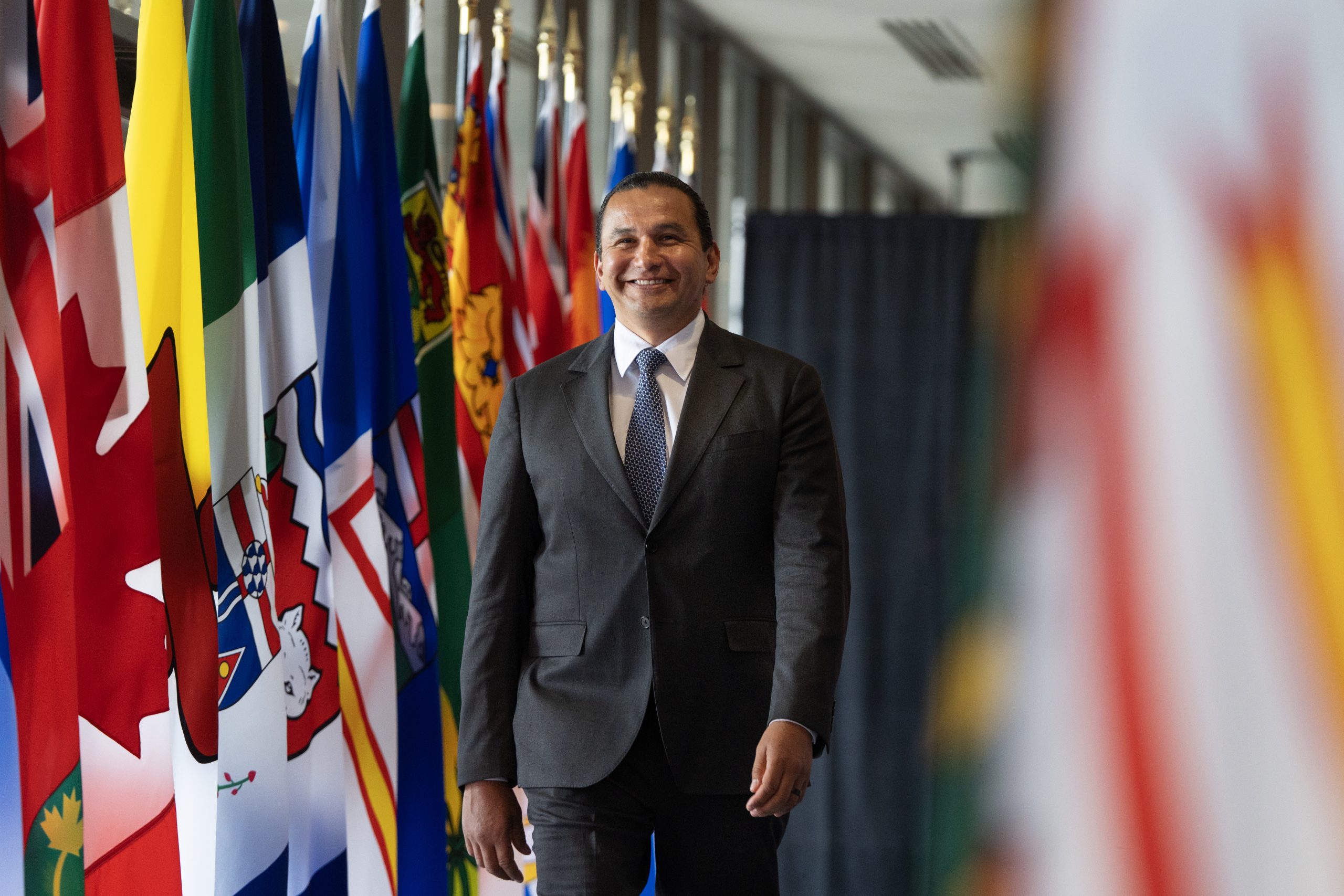
Welcome to Economic Insights, your twice-weekly deep dive into the major projects and policy shifts shaping the Canadian economy.
Stories we are following:

– Low market potential for oil and gas at the Port of Churchill.
A 2023 study commissioned by Transport Canada found workable, near-term opportunities to move more cargo through the Port of Churchill with minimal upfront investment, but calls the overall feasibility of a significant expansion “nuanced.”
iPolitics obtained the report by private consultant PwC in response to an informal access-to-information request after it was referenced in a departmental briefing to Parliament.
Feedback from oil and gas players is also mostly redacted, but the report files both commodities under its “opportunities with weak market potential” heading.
The study states that communities voiced broad support for more use of the railway and the port generally, although “viewpoints on the most attractive opportunities… varied significantly.”
“Aspirations include the movement of select commodities, additional tourism and local job creation. However there was significant opposition to any plans involving the movement of oil,” notes the report.
Read our analysis here.
– He’s open to it, though.
Manitoba Premier Wab Kinew declined to join an Alberta-Ontario pipeline proposal earlier this month, citing the need for further consultation with First Nations. On Wednesday, however, he said a pipeline connection to the Port of Churchill would be a possibility, and that an expansion of the infrastructure there could be a seen as a favour to gain his support.
“I love Alberta, I love Albertans, so (I’m) willing to entertain the idea,” he told reporters at a meeting of premiers in Charlottetown Wednesday.
More on that here.

– Quebec signs deal to work with Ottawa on project reviews.
Quebec and the federal government have reached an agreement in principle to eliminate overlapping environmental reviews of major projects, streamlining assessments for major developments such as mines and ports.
Ottawa had wanted these “one project, one review” agreements in place with every willing province by the end of 2025.
That deadline slipped as talks dragged on with the last holdouts, Quebec and Saskatchewan, until Monday, when Quebec became the latest to strike a deal.
The deal marks a shift for a province that has long been a critic of the Impact Assessment Act, the 2019 law on Ottawa’s role in reviewing major projects.
Pierre Gratton, president and CEO of the Mining Association of Canada, called it “something the sector had wanted for decades and never expected to see.”
We have that story.
By the numbers:
$90: Where WTI crude per barrel was trading Thursday morning, up about 3.8 per cent, with Brent up 4.6 per cent to $98.44 — its highest since late May — after attacks on tankers off Saudi Arabia and threats from Donald Trump.
Eight: The number of stops on Alto’s high-speed line if Kingston gets a station.
One: The number of days Hudson Bay’s ice-free window increases by annually, based on ice cover observed between 1979 and 2025.
Major projects watch:
– The CEO of Alto’s proposed high speed rail tells the CBC Kingston will probably get a station based on the public feedback, adding one more stop to an itinerary that includes Toronto, Peterborough, Ottawa, Montréal, Laval, Trois-Rivières and Québec City.
– According to reporting by The Logic, Invest in Canada is pitching a “high-impact deals hub” and a “Canada Dealbook” catalogue to court foreign investors, with an internal plan suggesting there are challenges with multiple federal departments chasing FDI on incompatible objectives and metrics.
– The Respective Territories of the Haisla Nation, Metlakatla First Nation, Nisga’a Nation, Halfway River First Nation and Ts’il Kaz Koh First Nation in B.C. recently travelled to Ontario to learn more about small modular reactors.
– The three Maritime provinces and Natural Resources Canada signed an MOU Thursday to study whether a regional approach to electricity beats three provincial ones.
Headlines: