dailynewsnblog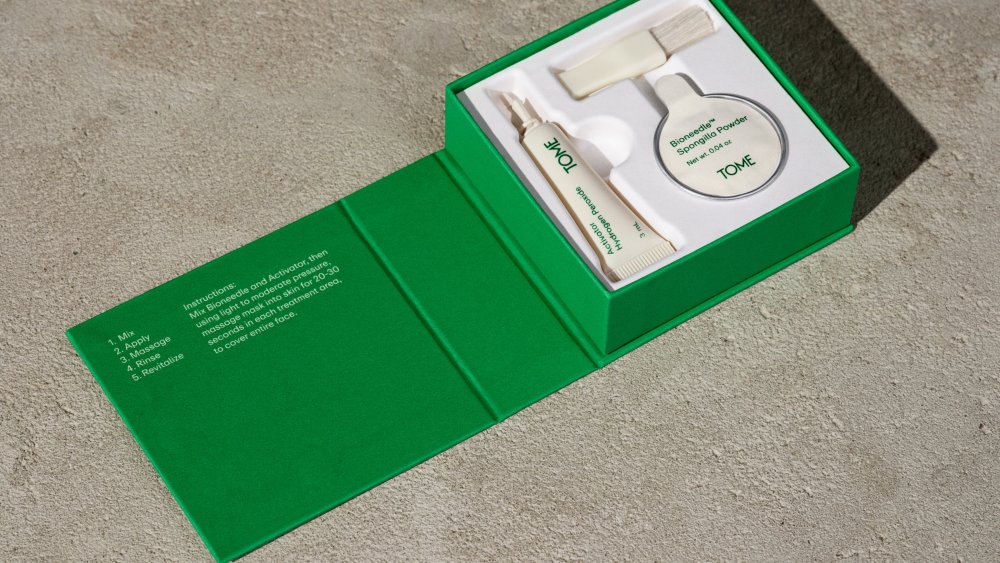
Dermata Therapeutics is leaving the prescription ingredient development game — and applying its learnings to launch an inaugural skin care brand, called Tome.
Debuting direct-to-consumer on Aug. 25, Tome consists of a once-weekly Foundational Treatment product that aims to address discoloration, acne, fine lines and uneven texture by accelerating cell turnover.
“We’re calling it microneedling lite,” said Gerry Proehl, who cofounded Dermata in 2014 alongside SkinMedica cofounder Tom Hale, and serves as president and chief executive of the company today.
Priced at $178 for a pack of four, the Foundational Treatment is powered by Spongilla lacustris, a natural freshwater sponge that Dermata initially had been testing for use in a prescription acne product in 2017 before pivoting to harness the ingredient for an over-the-counter brand.
“The cost to continue [the prescription] development was high, and the time to get it to market was probably four to five years,” said Proehl. “What we saw over the time we were developing it was a shifting marketplace, where people were seeking over-the-counter treatments for acne, rosacea, psoriasis and general aesthetic treatments versus doctor’s visits.”
Spicules, or microscopic rods that create micro-openings in the skin, are the superpower of Spongilla lacustris, allowing the ingredient to puncture more deeply and increasing its exfoliating capabilities.

The Foundational Treatment
Courtesy
“Our needles are not as deep as microneedles; they won’t go into the dermis, they’ll go into the epidermis, but they’re going to have a lot of the same effects — causing turnover of dead skin and allowing to generate new skin,” Proehl said.
Each Foundational Treatment comes with a 0.04-ounce cup of Bioneedle Spongilla Powder — Tome’s powdered form of Spongilla lacustris formulated without preservatives; a hydrogen peroxide activator, and an application brush. The powder and applicator are meant to be mixed, applied to the face and washed off after 15 minutes.

The Foundational Treatment will offer subscriber pricing at $160.20 for four treatments, or 10 percent off.
“You’ll get redness, typically for 24 to 36 hours, and then between 24 to 72 hours you’re likely to get some peeling of the skin,” said Proehl, who anticipates the core Tome consumer will be “experienced skin care enthusiasts.”
It’s likely to be folks who are going to aestheticians once a month or every couple of months, and this is a product that they can use in between visits,” Proehl said.
From a distribution point of view, Tome isn’t pursuing mass retail, but rather looking to establish itself in the professional channel via aestheticians and other providers who can offer the Foundational Treatment as an in-office service and potentially sell it to consumers.
The approach is a timely one: some of skin care’s buzziest brands today are also the most science-driven, with U.K.-based Medik8, for instance, getting its start DTC and through the professional channel before being acquired by L’Oréal for more than $1 billion in 2025 and entering Sephora for the first time this month.
“This product is powerful enough to be used in the office, but safe enough to use at home,” said Kyra Peckaitis, who joined the Dermata team this year as vice president of marketing at Tome. “[We’re] going to create, I believe, a great army of skin care professionals that are invested in using this product.”